Best Sectional Couches for Small Spaces That Actually Fit


A lot of small-space shoppers are in the same spot right now. The listing says “apartment-size sectional,” the width looks manageable, the fabric looks right, and the room still feels one wrong click away from becoming a traffic jam.
That's why most advice on the best sectional couches for small spaces misses the problem. Width is only the headline. Footprint is the truth. The chaise return, the walkway, the door swing, and the way people move through the room decide whether a sectional feels like a mistake that swallowed the apartment.
In Ann Arbor and across Southeast Michigan, that distinction matters more than style trends. A small living room doesn't need a smaller personality. It needs cleaner geometry, better craftsmanship, and a piece that earns its floor space for years instead of forcing another replacement in a short time. That's the difference between a disposable buy and a durable investment.
The Small Living Room Dilemma Most Shoppers Walk Past
A shopper finds an “apartment-size sectional,” checks the width, and feels confident for about ten minutes. Then the chaise shows up on the floor plan and steals the walking lane.
I see this constantly in compact Ann Arbor living rooms. The sofa body looks disciplined against the wall, but the return projects into the room far enough to squeeze the coffee table, tighten the path to the kitchen, and make the whole layout feel crowded. The tag was not lying. It was incomplete.
Why the label misleads
Retail labels favor the easiest number to market: width. Real fit depends on the whole footprint. Compact-room buying guidance often points shoppers in rooms under 200 square feet toward sectionals around 72 to 90 inches wide and 32 to 38 inches deep, while also stressing that chaise length and circulation carry equal weight in the decision.
The step many online shoppers miss is the chaise return dimension, because product pages often show the headline width first and bury the long-side measurement farther down the specs.
A sectional can fit the wall and still fail the room.
The better sequence is simple. Check the long side. Check the short side. Check the chaise return. Then check the open lane beside it and the room's daily path of travel. Fabric, arm style, and color come after that.
The relief comes from math, not luck
A compact sectional works when the room keeps functioning after it arrives. Space-planning guidance for small living rooms regularly recommends leaving about 30 to 36 inches for circulation, and design references commonly treat a room around 11 by 13 feet as a more comfortable threshold for many sectional layouts (living room clearance and room-size planning guidelines).
That is the question smart buyers ask first in a small room: will people still move through this space without turning sideways?
If you are trying to make a small room feel big, start with traffic flow, not styling. The right sectional adds seats, defines the room, and earns its footprint for years. The wrong one forces a fast-furniture replacement because nobody enjoys living around it.
Sizing Rules That Actually Decide What Fits
You see this mistake in real living rooms all the time. The sectional fits the wall on paper, arrives looking reasonable, then the chaise cuts into the doorway, the coffee table gets shoved too close, and one side of the room turns into a sidestep lane. Width did not fail the room. Footprint math did.
The five-step footprint check
Measure the usable room, not the full room.
Ignore the broad real-estate dimensions for a minute. Count only the space you can furnish after door swing, radiators, vents, trim, floor lamps, and outlet access are accounted for.Tape the full sectional outline on the floor.
Mark the main run, the return, and the front edge. Tape where the coffee table would sit too. Shoppers who mark only the back wall width nearly always approve a sectional that projects too far into daily traffic.Judge clearance by what the chaise faces.
A chaise aimed at a window is usually easier to live with than one aimed at a doorway, hall opening, or staircase approach. The problem is not only the open lane beside it. It is the pinch point at the end of the chaise, where people turn, pass, and carry laundry, backpacks, or a tray.Measure the delivery route before you get attached.
Front door width, stair landings, hallway corners, elevator depth, and tight turns decide whether the sectional can even enter the home. A beautiful custom order still has to make the turn.Check the open position, not just the closed footprint.
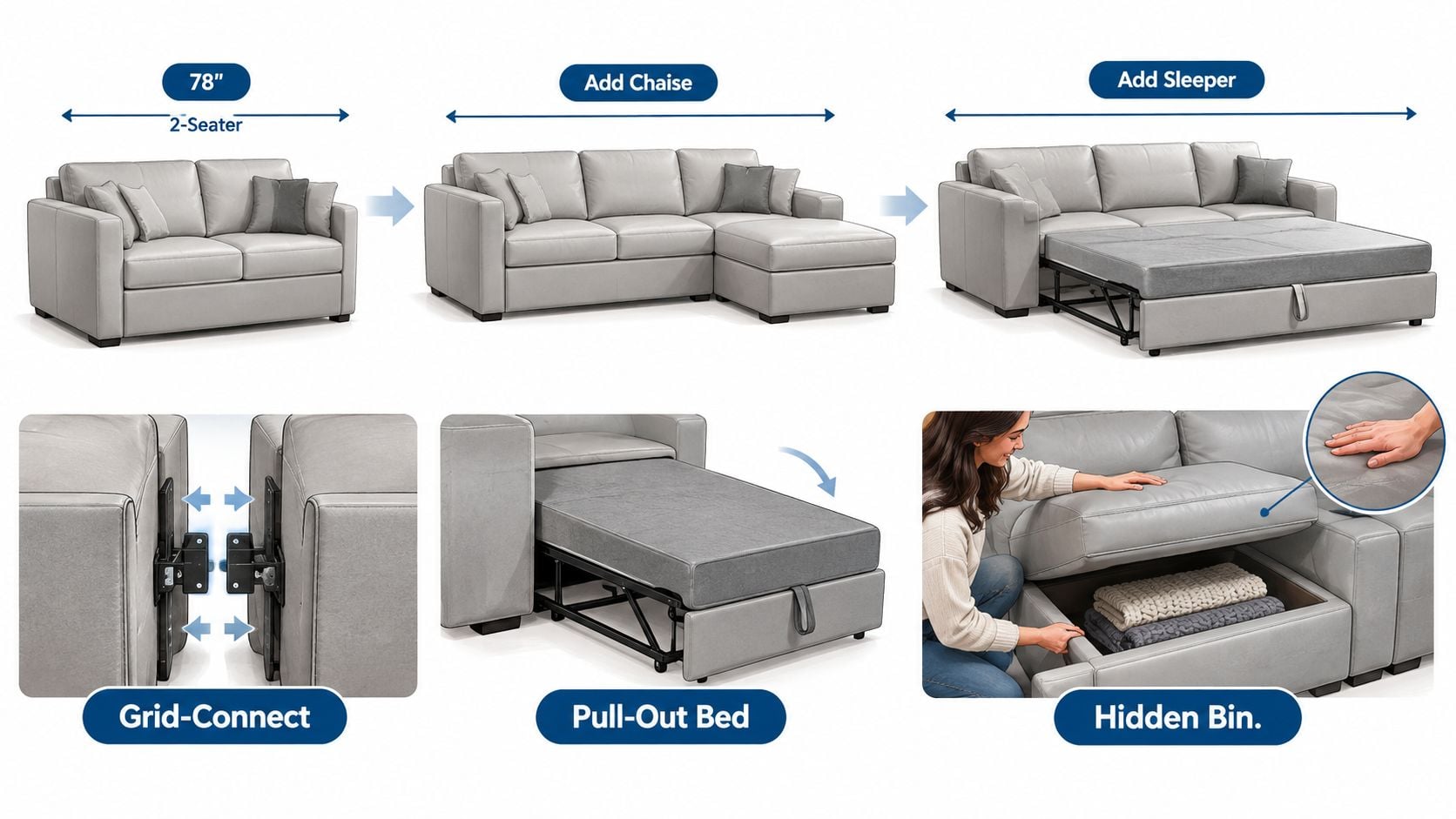
Recliners, sleepers, and lift-up storage components all need operating room. Closed dimensions sell furniture. Open dimensions decide whether you enjoy it.
The chaise return is the measurement that gets buried
Retail listings love the headline width because it looks manageable. The longer return is the number that causes trouble.
For a small room, I would rather see a shorter chaise and a room that still works than a generous sprawl that blocks the natural route from entry to seating. That trade-off matters more if the chaise points toward a doorway. In that layout, even a decent wall fit can feel cramped because the room loses its turning radius at the exact spot people use most.
That is why heirloom-quality sectionals deserve stricter measuring than fast-furniture buys. If you are ordering a piece built to last, you do not want to discover after delivery that the return should have been trimmed, reversed, or swapped for an ottoman.
Practical rule: The chaise should stop before it starts bossing the room around.
What belongs on the measurement card
Carry these numbers before you browse:
- Usable room width and length
- Longest uninterrupted wall
- Distance from sectional front to coffee table zone
- Clearance at the end of the chaise, especially near a doorway
- Delivery constraints, including stairs, halls, and elevator depth
- Open-space needs for sleeper or reclining mechanisms
A homeowner trying to refresh a small living room usually gets a better result by correcting the floor plan first and styling second. The room is blunt. It tells you fast whether the sectional earns its footprint.
If you want a cleaner process, keep this step-by-step furniture measuring guide open while you tape the layout.
Compact Configurations Worth a Closer Look
A small sectional earns its keep by solving a floor plan problem. Width alone does not decide that. The test is how far the return reaches into the room, how much turning space it steals, and whether people can still pass the coffee table without sidestepping.
That is why shape beats style in a compact room. A beautiful sectional with the wrong return length will feel oversized every day you own it.
Five layouts that actually work in tight rooms
| Small-Space Sectional Configurations Compared | Best Room Size | Total Footprint (approx.) | Main Trade-Off |
|---|---|---|---|
| Compact L-shape with short return | Smaller square room | Roughly 80 to 95 inches on the main run, with a modest return | Less room to fully stretch out |
| Apartment-size U shape | Wider open-plan room | Broad wraparound footprint with more depth on both sides | Crowds closed rooms quickly |
| Two-piece modular with ottoman | Flexible apartment layout | Changes by arrangement | Weaker corner definition |
| Reversible chaise sectional | Room with layout constraints or likely future moves | Similar to a compact L-shape | Usually fewer custom details |
| Small-space sleeper sectional | One-bedroom or guest-ready room | Deeper seat deck and heavier overall footprint | Firmer sit, bulkier frame |
What each configuration is good at
Compact L-shape with short return
Start here unless your room gives you a clear reason to do something else. A short-return L-shape gives you corner seating without pushing a long chaise into the main walkway. It is the most dependable answer for a true small living room because the footprint stays honest.
Apartment-size U shape
This one only works when the room is wide enough to support it. In an open-plan apartment, a U-shape can mark off the living area and keep the seating group from floating. In a closed room, it usually eats circulation and makes the center of the room feel pinched.
Two-piece modular with ottoman
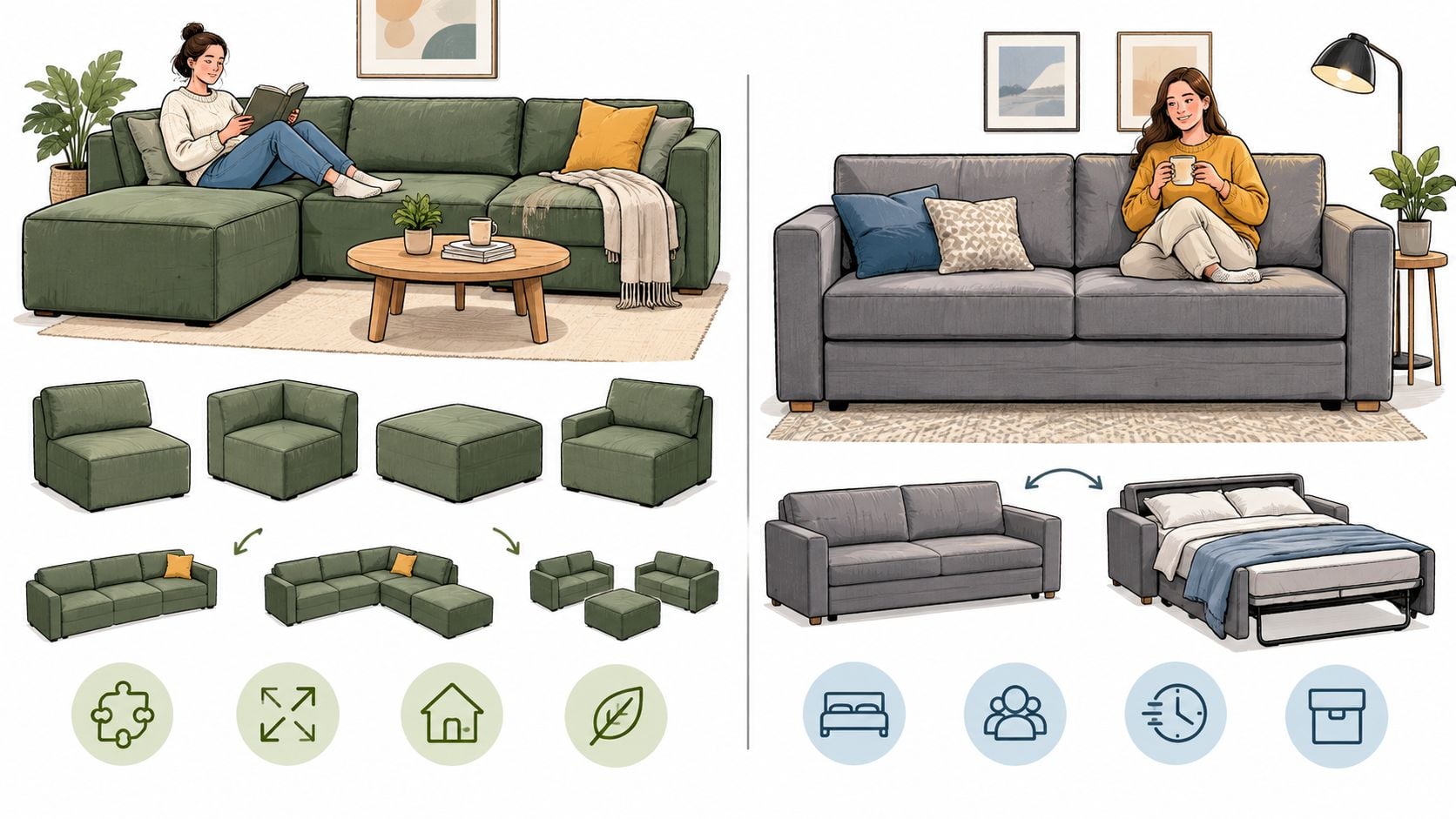
This is the practical choice for shoppers who need the room to change shape. You can build an L one day, pull the ottoman free when guests come over, or square it off for movie night. That flexibility matters more than people think, especially in apartments where one extra path through the room can make the whole layout feel calmer.
Reversible chaise sectional
A reversible chaise fixes a lot of real-world problems. Radiator on the wrong wall. Door swing on one side. Better light from the opposite window. If your next home may flip the room left to right, this configuration saves you from replacing the whole piece.
Small-space sleeper sectional
Buy a sleeper when you need a guest bed, not because it sounds useful. The mechanism adds depth and weight, and you will feel that in both the look and the sit. Still, in a one-bedroom home, combining seating and sleep space can justify the extra inches.
One blunt rule applies to all five: if the return gives you one more seat but cuts off the natural walking path, it is the wrong configuration.
For a more detailed look at sectional options for apartments, narrow the shape first, then move on to arm width, cushion depth, and custom sizing.
Why Modular and Sleeper Designs Earn Their Space
A small room gets exposed the minute overnight guests show up or you move one wall worth of furniture to a new apartment. That is when a fixed sectional starts feeling temporary, and a modular or sleeper design starts earning its keep.
Modularity pays off when the room changes
Modular sectionals make sense in small spaces for one reason. They let you adjust the footprint without replacing the whole piece. If your first layout needs a 78-inch sofa with an ottoman, but your next place can handle a chaise return, separate modules give you options that a one-piece frame does not.
That flexibility only counts if the math still works. A corner unit, armless chair, and ottoman can be rearranged, but each piece still needs to preserve the walking lane you measured earlier. In real rooms, the winner is usually the modular setup that can shrink for daily use and expand only when you need it.
Sleepers are worth the extra bulk only when they replace a real bed need
A sleeper sectional should solve a clear problem. If guests stay over often, or the living room doubles as a spare room, the added mechanism and depth make sense. If not, you are hauling extra weight and giving up cleaner proportions for a feature that stays folded up.
The same rule applies to storage chaises. Hidden storage is useful when it keeps bedding or media clutter out of sight. It is not useful if the chaise lid is awkward to open because the coffee table sits too close or the return already crowds the path through the room.
That is the difference many small-space guides miss. Width alone does not decide value. Full footprint, open-bed depth, chaise return, and clearance in front of the piece decide whether a multi-use sectional helps the room or clogs it.
Construction matters more with movable and convertible pieces
Modular connectors, sleeper mechanisms, and lift-up storage tops create more stress points than a plain stationary sofa. Weak hardware gets sloppy fast. Loose connections show up first when you rearrange modules, move homes, or pull out the bed a few times a month.
Buy the better frame. Buy the better mechanism. In a compact room, you will use every function harder because one piece is covering more jobs.
That is also why custom order matters here. A made-to-order sectional lets you match the function to the room instead of accepting a bulky stock piece built for a generic floor plan. If you are weighing a sleeper, storage chaise, or modular layout as part of a broader small-home strategy, Tyner Furniture's guide to choosing multi-functional furniture for modern homes is worth reading before you place an order.
Comfort Choices That Matter When Space Is Tight
A small-room sectional fails in one of two ways. It either looks trim and sits like a waiting-room bench, or it feels plush for ten minutes and starts crowding the room every day after that. The right comfort setup lands in the middle, and the measurements decide it.

The comfort details that earn their footprint
Start with the seat, not the overall style. In compact rooms, a sectional usually feels best with a moderate seat height, a usable depth, and arms that do not waste inches. Low lounge profiles look sharp on a screen, but they get old fast if you are constantly standing up, hosting family, or sitting upright to read. Extra-deep seats create the same problem for shorter adults. They force a slouched posture unless you add pillows, and now the sofa is taking up more floor space without giving better daily comfort.
Arms are the easiest place to spot wasted bulk. A slim arm gives you more actual seat width inside the same outside footprint. That matters in apartments, condos, and older Ann Arbor living rooms where every inch has to justify itself. Tight backs also tend to work better than heavily padded pillow backs because they hold a cleaner line and keep the sectional from feeling swollen.
Here is the blunt version:
- Choose a sit height that feels easy to get in and out of.
- Skip extra-deep seats unless everyone using it is tall and prefers a laid-back posture.
- Favor narrow arms over wide rolled arms.
- Pick a back that supports upright sitting if the room serves conversation, reading, and TV instead of naps only.
A sectional can measure correctly on paper and still lose on comfort if those interior dimensions are off.
Cushion fill and upholstery change how the room lives
In a tight living room, you do not interact with the sectional only when you sit. You see it from every angle, brush past it in the traffic path, and rely on it harder because one piece is doing more work. That is why cushion construction matters more than shoppers expect.
Go firmer than your first impulse. A seat with some structure usually wears better, looks better, and keeps the room from feeling sloppy after a year of use. Plush loose cushions can feel inviting in the showroom, but they tend to collapse visually faster and ask for more straightening. If you are ordering for long-term value rather than a quick style fix, buy the better seat core and be done with it.
Fabric choice should follow real use. Performance fabric makes sense for heavy daily traffic, kids, and mixed-use rooms. Leather can be a strong option if you want an easy-clean surface and a polished look, but the feel is more specific, especially in colder months. Slipcovers solve some maintenance problems, though they usually read more casual and less refined than a fully upholstered custom piece.
Sit test with your room habits in mind
Do not do the quick perch and call it good. Sit long enough to settle your back. Put your feet on the floor. Lean into the corner seat. If the chaise is part of the layout, use it the way you will at home, not the way it photographs.
I tell shoppers to test for the posture they use most. If you read, scroll, watch a full movie, or talk with guests for an hour, the sectional should support that without forcing you to constantly readjust. In a small space, comfort problems show up faster because there is nowhere else in the room to escape them.
If the sectional is going into a basement family room, the surrounding envelope matters too. Lower ceilings, darker walls, and tighter natural light can make a bulky silhouette feel heavier than it did on the sales floor. Trademaster Construction finishing ideas are useful to review because wall finish and lighting change whether a compact sectional feels settled or overbuilt.
Building the Right Piece Through Custom Orders
A small room punishes close-enough furniture. Miss the chaise return by a few inches or add a thick arm you did not account for, and the whole layout starts feeling cramped every day.
Custom ordering makes sense after you have the full footprint nailed down. Width matters, but it is only part of the decision. Questions are how far the chaise projects, how much visual weight the arms add, whether the corner shape steals usable seat space, and how much walkway you keep once the piece is in place.
Build from footprint first
At Tyner Furniture, custom-order upholstery gives shoppers a way to start with the room instead of starting with a stock frame and forcing compromises. That matters in small living rooms because two sectionals with the same wall width can behave very differently on the floor. One may leave a clean path past the coffee table. The other may block the route to a hallway or crowd a radiator, window, or door swing.
Get the footprint right first. Then choose the details that change the feel without breaking the plan: left or right chaise, tighter or fuller arm, standard or apartment scale depth, leg style, and fabric.
Good custom choices age better
The payoff is not just appearance. It is staying power.
A sectional ordered to the right proportions has a better chance of surviving the next apartment, condo, or room reshuffle because the sizing was deliberate from day one. That is how shoppers avoid the fast-furniture cycle of buying a piece that barely fits, living with the irritation, then replacing it a few years later. Heirloom-quality custom upholstery costs more upfront, but a well-built frame with the correct measurements is the version you keep.
Keep the order process simple
Shoppers get in trouble when they pick fabric first and measurements second. Reverse that.
Start with four numbers: overall width, chaise return, total depth, and the circulation clearance you refuse to give up. After that, choose the seat and back style that fits how the room will be used. Upholstery and finish come last. That order keeps the project manageable and cuts down on expensive mistakes.
If you want to see the sequence before visiting, Tyner's guide to getting started with a custom order lays it out clearly.
Plan Your Sit Test in Ann Arbor
Saturday afternoon, a couple walks into the Ann Arbor showroom with one wall photo, a phone full of screenshots, and no hard numbers. Ten minutes later, the problem shows up. The room can take a 92-inch sofa, but the chaise return they saved online would choke the walkway to 22 inches and clip the door swing. That is the kind of mistake a sit test should catch before an order is written.
Come in with measurements, not guesses. Bring doorway width, the tightest hallway turn, elevator dimensions if you have them, the wall length, and the maximum chaise return your room can handle while still leaving a usable path through the space. A photo helps, but the four numbers matter more because small-room sectionals fail on footprint math, not on color.
Then sit with a purpose.
Test the seat depth with your feet flat on the floor. Check whether the back height supports your shoulders or leaves you perching. Look at the arm from two angles. A thick rolled arm can eat precious inches in a condo living room, while a tighter track arm often gives you the same seating width in a smaller overall footprint. Those trade-offs are hard to judge online and obvious in person.
Use the showroom visit to compare two or three compact layouts, not twelve fabrics. The right test is simple. Can you get the comfort you want without giving up circulation clearance? Can the chaise return stay contained instead of overrunning the room? Does the sectional feel like a piece you will keep for years, or like a compromise you will resent by winter?
Tyner Furniture in Ann Arbor gives shoppers a place to answer those questions with the actual dimensions in hand. Quick Specs, custom-order upholstery options, and side-by-side sit tests make it easier to choose a sectional built to the room and built to last, instead of one that merely fits the wall on paper.
For shoppers comparing the best sectional couches for small spaces, Tyner Furniture offers compact configurations, custom-order upholstery, Quick Specs for special orders, and a showroom setting where fit and comfort can be tested in person. A visit to the Ann Arbor showroom is the easiest way to compare footprints, feel materials, and do a real sit test before ordering a sectional built for the room instead of merely squeezed into it.