Stressless Recliner Dimensions: A Complete Sizing Guide

A shopper can measure a living-room corner perfectly and still end up with a recliner that doesn't work. The chair may fit upright, yet the headrest can meet a window trim, the back can stop short of its intended recline, or the ottoman can block the walkway. That's why Stressless recliner dimensions need to be matched to both the room and the person using the chair.
The right choice isn't just the size that looks attractive on the showroom floor. It's the size that keeps the feet planted, supports the thighs, meets the shoulders correctly, and leaves enough floor area for the chair to move. A careful recliner buying guide helps, but the final decision should come from actual measurements and a proper sit test.
Why Stressless Recliner Dimensions Matter Before You Buy
A customer measures the available wall, sees that an upright recliner will fit, and feels confident about the purchase. Then delivery day arrives. Once the chair reclines, the backrest reaches into the curtain area, the ottoman sits too close to the coffee table, and the chair's swivel arc cuts across the main path through the room.
That mistake happens because a recliner is not a static piece of furniture. Its footprint changes as the sitter opens the backrest and extends the leg support. Overall depth on a product listing describes the chair in its upright position, not necessarily the space it needs during everyday use.
Room geometry comes first
A chair that fits tightly against a wall may still be unusable if the mechanism needs additional clearance. Open-plan homes, apartments, and condos make this more important because circulation routes often run close to seating.
The same issue applies to delivery. The frame must pass through doors, hallways, and turns before it reaches the intended corner. Overall width matters, but the chair's height, packaging, base shape, and turning space can matter just as much.
Practical rule: A recliner fits only when it can open fully without touching walls, windows, tables, or traffic paths.
Stressless built its sizing philosophy around movement and body fit, so choosing Small, Medium, or Large is a geometry decision. The upholstery, wood finish, and configuration still matter, but they come after the chair's working footprint and seated proportions have been confirmed.
The Heritage Behind Stressless Sizing
Stressless recliners were introduced in 1971, and the brand states that the first model used a patented sliding system and was designed as the first recliner to account for different body builds. The company later expanded that idea into multiple chair sizes, reflecting the practical reality that people need different proportions rather than one universal frame. The brand's official history describes how recliners increasingly came in different dimensions for smaller, slimmer, taller, and wider users through its Stressless history.
That history still matters on a showroom floor. Small, Medium, and Large aren't decorative labels placed on the same chair. Width, depth, seat height, and back support can all shift as the size changes.
Sizing is part of the design
A properly scaled chair allows the backrest to meet the sitter's body where it should. The seat supports the legs without pressing sharply behind the knees, while the headrest reaches the head rather than stopping at the upper shoulders.
This is also why Stressless models such as the Consul, Mayfair, and other recliners should be treated as individual seating systems. A familiar model name doesn't eliminate the need to check the size, base, upholstery, and exact configuration. Current product availability and dimensions can be reviewed through Tyner's Stressless collection.
The brand's Norwegian design heritage gives the sizing framework a clear purpose. The chair should adapt to the sitter's proportions, not force the sitter to compensate with cushions, awkward foot placement, or a slouched posture.
What Every Dimension Number Actually Measures
A dimension chart becomes useful only when each number is connected to a real decision. Overall width tells whether the chair can pass through an opening and how much side-to-side room it occupies. Seat width tells whether the sitter has comfortable shoulder and hip room once seated.
Read the spec sheet in order
| Measurement | What It Controls |
|---|---|
| Overall width | Doorway access, side clearance, and total frame footprint |
| Overall depth | Upright front-to-back space before recline |
| Overall height | Clearance beneath windows, shelves, artwork, and trim |
| Seat width | Interior room between the arms |
| Seat depth | Thigh support and lumbar contact |
| Seat height | Foot placement, knee angle, and ease of standing |
| Backrest height | Support for the lower back, shoulders, neck, and head |
Overall width is usually measured across the chair's widest frame point, often the arms. It's the number to compare with doorways and neighboring furniture, but it isn't the same as usable seat width.
Overall depth describes the chair from its front edge to its rear while upright. That figure must be checked alongside the full-extension footprint, because the chair occupies more room once it reclines.
Overall height runs from the floor to the highest part of the chair, commonly the headrest. It matters near low windows, shelving, wall art, and sloped ceilings.
The seated dimensions decide comfort
Seat width controls how freely the sitter can settle between the arms. Extra width can help a broader user, but too much open space may leave a smaller sitter without consistent lateral support.
Seat depth affects the underside of the thighs and the distance to the lumbar curve. A fixed chair seat pan should be no greater than 16.9 inches deep, while adjustable seat height guidance commonly places the useful range between 15 and 22 inches for maintaining support and reducing knee-pressure compression during longer sitting periods, as outlined in this recliner seating guide.
Seat height determines whether the feet rest naturally on the floor or ottoman. Backrest height determines whether the chair supports the lumbar area, shoulders, neck, and head in the intended positions. These seated measurements usually matter more than the chair's exterior appearance.
Small, Medium, and Large Compared Across Two Models
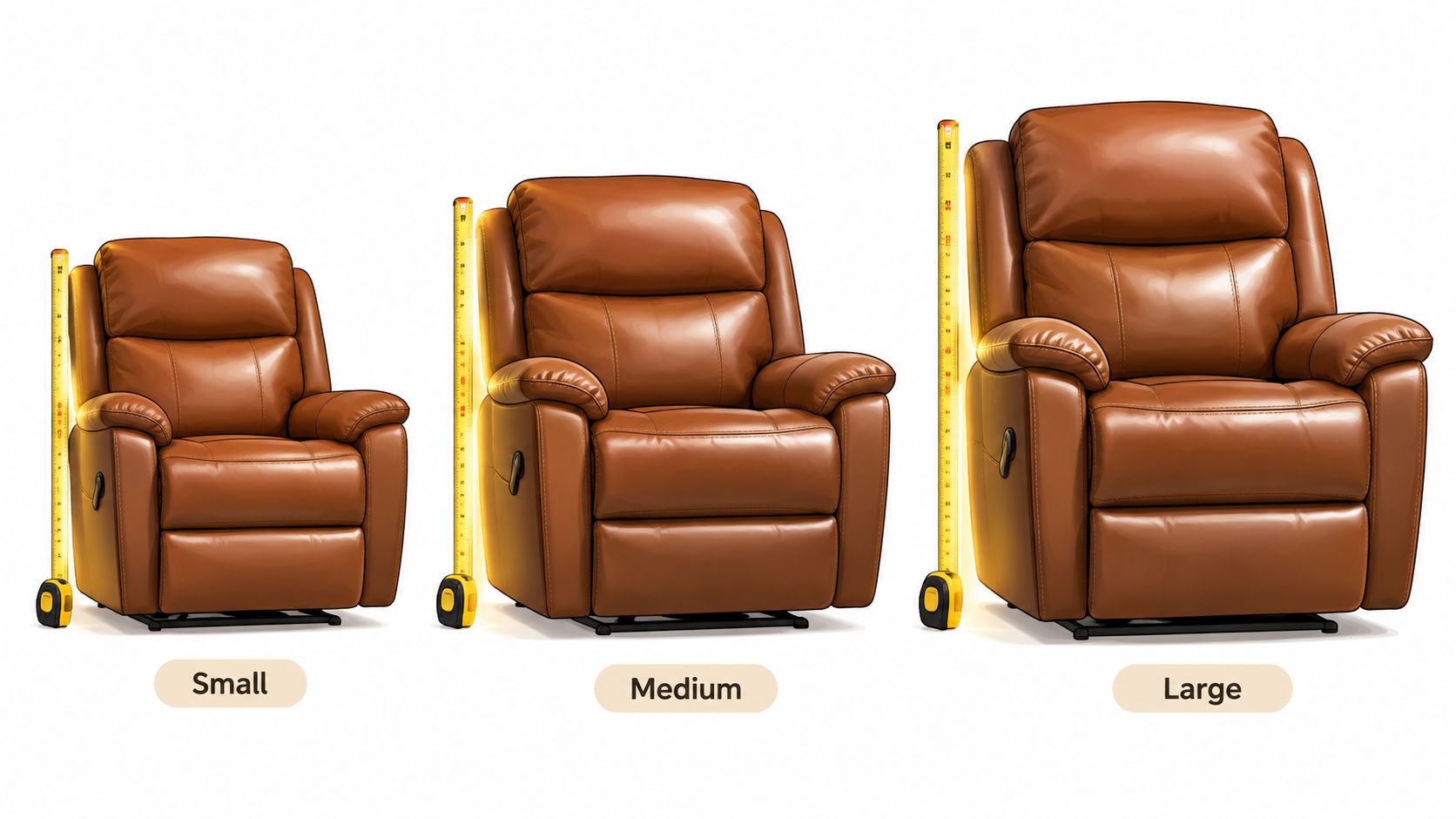
Stressless size labels become easier to understand when the dimensions are viewed side by side. A Stressless Wing listing shows Small at 79 cm wide by 72 cm deep by 97 cm high, Medium at 82 cm wide by 73 cm deep by 103 cm high, and Large at 91 cm wide by 77 cm deep by 103 cm high, according to this Wing recliner size listing.
That comparison shows the key point: the frame grows across the size range. The change isn't limited to upholstery volume or visual scale. The larger chair occupies more width and depth, and its height can shift enough to change the relationship between the sitter's shoulders, head, and backrest.
A verified model comparison
The available product data does not provide complete Small, Medium, and Large measurements for every seven spec-sheet categories across both a Consul and a Mayfair. The table below therefore keeps unsupported cells clearly marked rather than filling them with estimates.
| Measurement | Consul Small | Consul Medium | Consul Large | Mayfair Small | Mayfair Medium | Mayfair Large |
|---|---|---|---|---|---|---|
| Overall width | Not listed in verified data | 27.95 in | Not listed | Not listed | Not listed | Not listed |
| Overall depth | Not listed in verified data | 29.92 in | Not listed | Not listed | Not listed | Not listed |
| Overall height | Not listed in verified data | 39.37 in | Not listed | Not listed | Not listed | Not listed |
| Seat width | Not listed | Not listed | Not listed | Not listed | Not listed | Not listed |
| Seat depth | Not listed | Not listed | Not listed | Not listed | Not listed | Not listed |
| Seat height | 15.0 in | 15.7 in | 16.5 in | Not listed | Not listed | Not listed |
| Backrest height | Not listed | Not listed | Not listed | Not listed | Not listed | Not listed |
The Consul seat-height progression is confirmed by an independent listing, while a Wing listing reports seat heights of 16.9 inches for Small, 17.3 inches for Medium, and 17.7 inches for Large in that model's configuration, as shown in this Stressless Wing specification page. Other current listings show broader dimensional shifts, including one model that moves from 34.25 inches wide, 35 inches deep, and 41.5 inches high in Small to 38 inches wide, 35.75 inches deep, and 45.25 inches high in Large, with seat height moving from 18 inches to 19.5 inches, as documented in this Stressless Mike dimension listing.
Base style and model configuration can change the final measurements. A showroom chart is a starting point, not permission to skip measuring the exact chair and base selected.
How Seat Height Shifts by Size
Seat height is the dimension shoppers often underestimate. A chair can have the right width and still feel wrong if the seat places the knees too high or leaves the feet reaching for the floor.
For the Consul, one verified listing shows seat height moving from 15.0 inches in Small, to 15.7 inches in Medium, and 16.5 inches in Large, with the overall chair dimensions also increasing by size. A separate Wing listing shows 16.9 inches in Small, 17.3 inches in Medium, and 17.7 inches in Large, confirming that seat height is tied to model and configuration rather than one universal Stressless measurement.
Why a small height change feels significant
A shorter sitter generally needs a lower seat to keep both feet supported and the knees in a stable position. A taller sitter may need the additional height of a larger size to avoid excessive knee bend and pressure at the front edge.
Seat height also interacts with seat depth. If the seat is too high, the sitter may slide forward to place the feet properly, weakening contact with the lumbar curve. If it's too low, standing can become more difficult and the pelvis may settle below the position intended by the chair's back support.
Seat height is a posture dial. It changes how the hips, knees, feet, thighs, and lumbar support work together.
The best choice is the smallest size that provides full thigh contact, neutral foot placement, and continuous back support. That recommendation depends on the exact model, base, and the sitter's proportions.
Calculating the Real Footprint With Recline
A product page may list a chair depth of roughly 30 inches, but upright depth isn't the number that should be taped onto the floor. Independent recliner sizing guidance notes that upright depth commonly runs about 35 to 40 inches, while full recline can extend the depth to roughly 60 to 70 inches, depending on the chair design, as explained in this recliner dimensions guide.
Use the wall-to-front calculation
A practical room check works like this:
- Measure upright depth. Use the exact model and base, not a generic size label.
- Add wall clearance. Allow at least 5 inches for a partial recline and up to 10 inches for a full recline, depending on the mechanism.
- Add the chair depth and clearance. A Medium chair at roughly 30 inches deep, plus 8 inches of clearance, requires about 38 inches from the wall to the front of the chair.
- Check the sides. Swiveling bases need room to turn, while a separate ottoman or LegComfort configuration can project outward into the room.
The front edge also needs breathing room. A recliner may avoid the wall but still interfere with a coffee table, sofa, doorway, or walking route when the foot support extends.
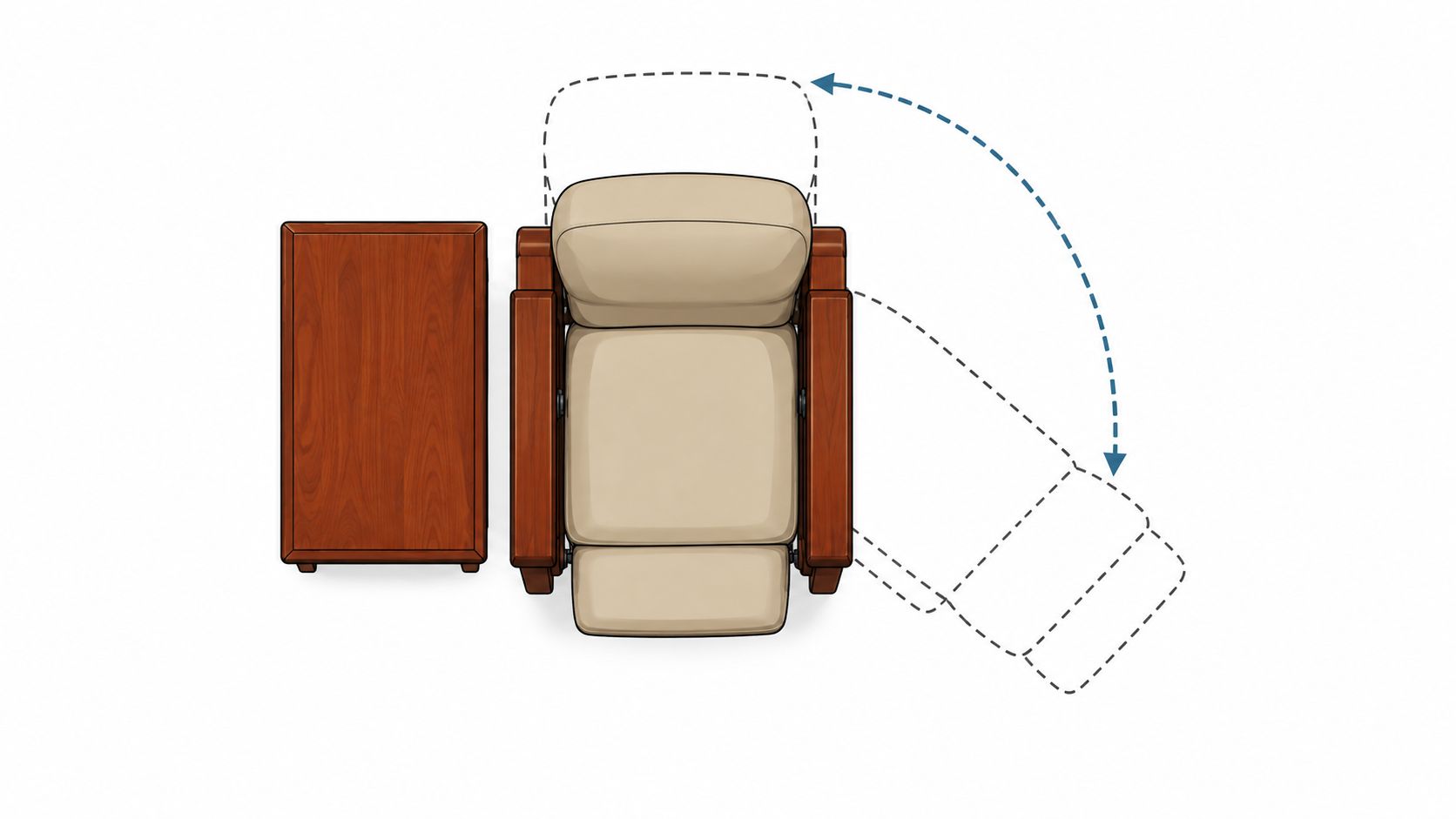
Before ordering, tape the upright and reclined outlines directly onto the floor. The recliner dimensions resource can help shoppers identify the measurements to verify, but the floor test should use the precise product configuration.
Matching Dimensions to Your Body for Ergonomic Fit
A chair can fit the room and still miss the sitter. Ergonomic fit depends on how the seat, backrest, arms, and headrest meet the body during ordinary sitting and reclining.
Seat depth is easiest to evaluate by measuring from the back of the hip to the back of the knee. A seat that reaches too far can press into the knee area and interrupt circulation. A seat that falls short can leave the thighs unsupported and pull the sitter away from the lumbar curve.
Turn personal measurements into furniture decisions
Seat height should be compared with lower-leg length. The goal is stable foot placement without forcing the knees too high or allowing the legs to dangle. Backrest height should be compared with seated shoulder height, especially for taller shoppers deciding between Medium and Large.
Total width should reflect shoulder and hip breadth, but the widest chair isn't automatically the most supportive. The backrest pitch also matters because it determines whether the reclined posture feels open and relaxed or too closed around the torso.
A helpful showroom check includes:
- Thigh contact: The cushion supports most of the thigh without pressing sharply behind the knee.
- Lumbar contact: The lower back stays connected to the chair rather than floating forward.
- Head support: The headrest meets the neck and head, not the upper shoulder blades.
- Foot placement: Feet rest naturally on the floor or ottoman without reaching.
- Arm position: The shoulders stay relaxed instead of lifting toward the armrests.
Some shoppers also use a neck-support accessory while evaluating a sofa or reading chair. A medium black neck pillow for sofa can be a useful reference for the kind of cervical support a sitter prefers, but it shouldn't be used to compensate for a fundamentally incorrect recliner size. More guidance on posture-focused seating is available through ergonomic seating solutions.
Why a Smaller Size Can Be the Better Fit
A larger recliner isn't automatically more comfortable. Reseller guidance places Small around 5 feet 4 inches and under, Medium around 5 feet 5 inches to 6 feet, and Large at 6 feet and taller, as shown in this Stressless body-fit listing.
Those recommendations exist because body proportions change with size. A shorter sitter in a Large chair can sit too far forward from the lumbar curve, lose consistent thigh support, and find the headrest landing behind the shoulders instead of at the head.
Smaller can improve both posture and planning
A properly scaled Small or Medium chair can deliver stronger contact along the backrest, steadier feet, and a more natural relationship with the ottoman. It also generally places less demand on doorways, side clearance, and full-recline floor area.
The choice still depends on torso length, leg length, shoulder breadth, and preferred recline position. Height is a strong starting point, not a substitute for sitting in the exact chair.
| User Height | Recommended Size | Primary Reason |
|---|---|---|
| 5 feet 4 inches and under | Small | Keeps the seat and backrest proportions closer to shorter legs and torso |
| 5 feet 5 inches to 6 feet | Medium | Provides a balanced starting point for average proportions |
| 6 feet and taller | Large | Adds width, height, and back support for longer limbs and torso |
The better rule: Choose the size that keeps the body in contact with the chair. Extra room isn't useful if it breaks lumbar, thigh, or head support.
Quick Reference for Choosing Your Size
A practical decision starts with three filters: the sitter's height, the sitter's build, and the room's usable footprint. The chair needs to support the person without crowding the room during recline.
Use this showroom framework
- Under 5 feet 4 inches with a slimmer build: Start with Small. The shorter frame can improve lumbar contact and foot placement.
- Between 5 feet 5 inches and 5 feet 10 inches with an average build: Start with Medium. It's the most versatile first option across many recliner lines.
- Above 5 feet 10 inches or with a broader frame: Test Large. Additional width and backrest length may better support the shoulders, thighs, and head.
- Limited room footprint: Favor Small or Medium when the available area is tight, then verify the extended position rather than relying on the upright outline.
The furniture arrangement changes the answer. A recliner with a separate ottoman needs a different plan from a zero-wall configuration. A wide-base Easy Chair uses more floor area than a Classic high-back design, and a swiveling base needs clear space at the sides.
The final decision rule
When two sizes both seem plausible, the smaller size usually wins if it preserves complete thigh support and neutral foot placement. The larger size earns its place when the smaller chair leaves the knees unsupported, the shoulders crowded, or the headrest too low.
A showroom sit test should include upright sitting, ordinary recline, full recline, and standing. Online dimensions establish whether the chair fits the room. The body decides whether it fits the person.
Longevity, Warranty, and the Cost-Per-Year View
Correct sizing protects more than daily comfort. It helps the chair perform as intended, which supports the value of choosing durability, craftsmanship, and heirloom construction instead of treating the recliner as a temporary purchase.
Stressless states that its warranty structure includes 2 years on power batteries and 1 year on leather or fabric upholstery, with the upholstery coverage including stitching and zippered assemblies when the product receives care according to approved leather-maintenance guidance, as detailed in the company's warranty FAQ.
Consider ownership, not just the transaction
A cost-per-year view asks how long the chair remains useful and comfortable, rather than focusing only on the initial purchase decision. A well-fitted recliner is less likely to be abandoned because the sitter's feet don't reach, the lumbar area feels unsupported, or the chair dominates the room.
That long view also favors maintainable upholstery and replaceable components where available. Buyers should confirm the exact warranty terms, care requirements, and service options for the selected model and configuration.
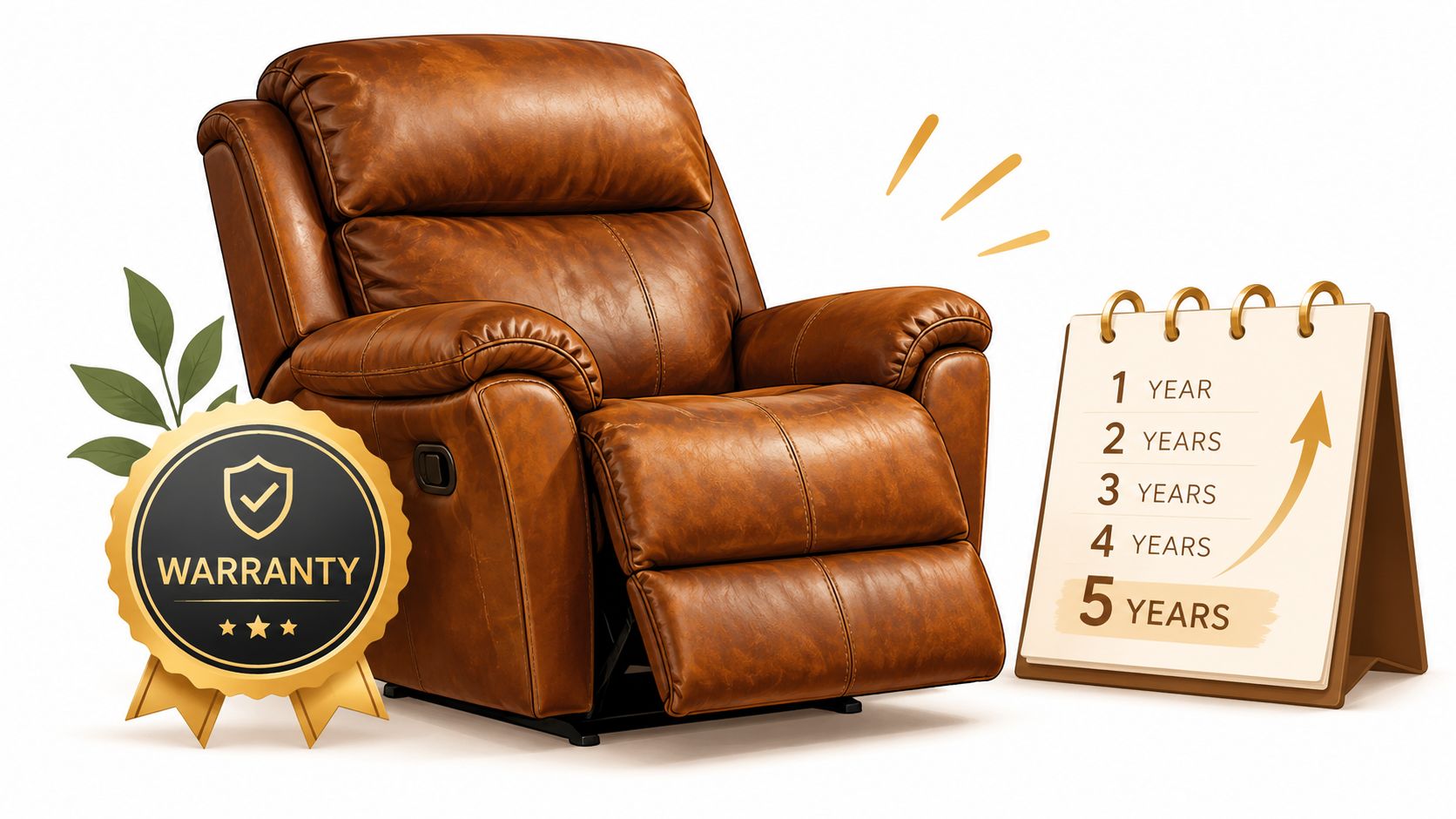
Tyner's warranty information gives shoppers a place to review coverage details while evaluating a long-term furniture investment. The same value logic applies across the home. Tyner's selection extends from the Home Office to Outdoor Spaces, including bespoke upholstery, made-to-order configurations, and solid wood furniture designed as heirloom pieces.
Visit the Ann Arbor Showroom for a Sit Test
A dimension chart can tell a shopper whether a chair should fit. It can't show whether the headrest meets the neck correctly, whether the thighs feel supported, or whether the recline motion feels natural.
The South State St. showroom in Ann Arbor gives Southeast Michigan shoppers the chance to test the difference between Small, Medium, and Large in person. Sitting upright, reclining, using the ottoman, and standing from each size reveals details that an online listing can't capture, including the buttery feel of top-grain leather, the reach of the footrest, and the way the backrest supports the shoulders.
Tyner Furniture has served the community since 1957, creating a local legacy built around guidance, customization, and lasting value. In-stock is just the beginning. Shoppers can explore Stressless sizing, finishes, fabrics, and configurations, as well as made-to-order Canadel dining options and hand-crafted solid wood pieces with the weight and integrity of cherry, oak, or maple.
Special Financing may be available for qualifying purchases, and the Low Price Promise helps keep the value competitive. Customers should bring room photos, a tape measure, and the exact wall and walkway measurements, then allow about 30 minutes for a thorough sit test.
Tyner Furniture offers Stressless recliners with exact product specifications, personalized size guidance, and made-to-order choices for finishes, fabrics, and configurations. Visit Tyner Furniture in Ann Arbor for a sit test, or browse the online Quick Specs before arranging a purchase that fits both the body and the room.