Ann Arbor Corner Buffet Cabinet: Your Expert Guide

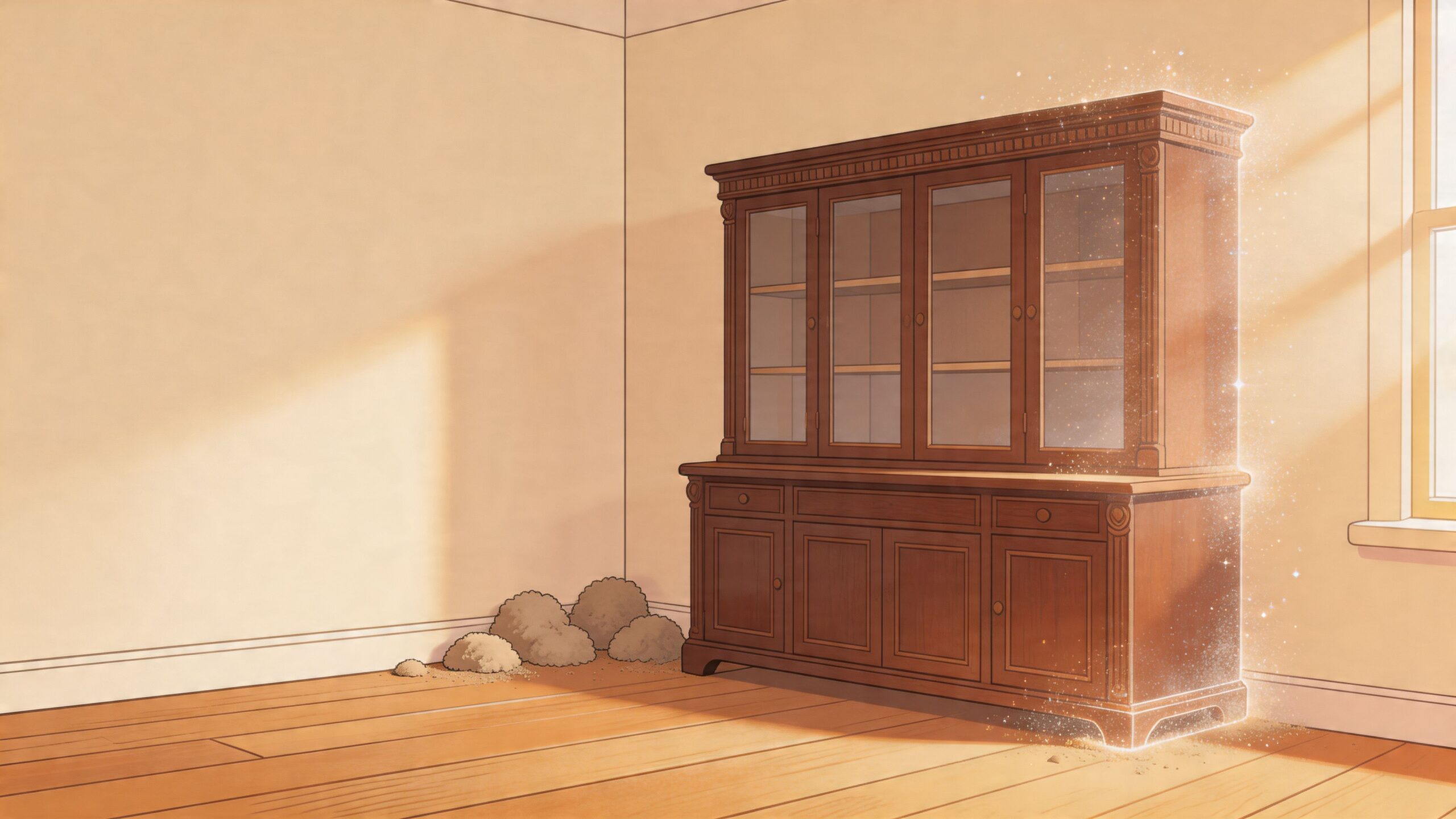
That empty dining room corner usually starts the same way. A plant goes there for a while, then a basket, then nothing. Dust wins, the wall looks unfinished, and you still don’t have a good place for serving dishes, linens, or the pieces you only bring out when family comes over.
A well-chosen corner buffet cabinet fixes more than one problem at once. It gives the room purpose, adds a working surface, and turns a dead angle into storage that feels intentional instead of improvised. In older homes around Ann Arbor, that matters even more. Corners aren’t always clean, floors aren’t always level, and standard case goods don’t always sit the way a showroom photo suggests they will.
Good corner furniture has been solving that exact problem for a very long time. The best versions still do. They just do it with better hardware, better joinery, and more flexibility in finish and layout than often expected.
Table of Contents
- Introduction Your Guide to Timeless Corner Storage
- Why a Corner Buffet is a Smart Investment
- How to Measure for a Perfect Corner Fit
- The Enduring Value of Solid Wood Craftsmanship
- Designing Your Bespoke Corner Buffet
- Styling Your Buffet for Beauty and Function
- Your Ann Arbor Shopping Checklist
- Frequently Asked Questions for Michigan Homes
Introduction Your Guide to Timeless Corner Storage
In a lot of homes, the hardest space to furnish isn’t the big wall. It’s the corner that’s too visible to ignore and too awkward for a standard sideboard. That’s where a corner buffet cabinet earns its place.
It doesn’t read like a compromise when it’s done well. It reads like the room was planned around it. You get a serving surface where you need it, enclosed storage below, and a chance to display glassware, pottery, or inherited dishes instead of hiding everything behind larger, bulkier furniture.
Why this piece still works today
Corner buffet cabinets aren’t a new design trick. They became popular in American dining rooms and parlors in the early 1700s and were built to make use of underused corners, with production peaking in major urban centers by the late eighteenth century, which helped establish them as symbols of efficient, status-displaying storage, as noted in this history of the American sideboard.
That history matters because the same basic need still exists. Many homeowners want more storage without crowding walkways or losing a whole wall to a larger case piece.
A strong corner piece should feel settled, not squeezed in.
What makes a good one
The right cabinet does three jobs at once:
- Uses overlooked space well so the room feels finished
- Stores the right things from platters to linens to barware
- Holds visual weight in a corner without making the room feel heavy
In practice, that means looking beyond style names and staged photos. Shape, depth, door swing, shelf layout, wood movement, and how the piece meets the wall all matter. A corner buffet cabinet can be one of the smartest furniture purchases in a dining room or living space, but only if it fits the house and how you live in it.
Why a Corner Buffet is a Smart Investment
Some furniture fills space. A corner buffet cabinet improves it.
That distinction matters when you’re buying a piece you expect to live with for years. A corner buffet doesn’t just occupy a footprint. It turns a low-function area into working storage and serving space while preserving the room’s main walls for art, windows, or larger furniture arrangements.
It solves a layout problem cleanly
A regular sideboard often asks too much from a smaller dining room. It needs a longer wall, it projects farther into the room, and it can make circulation feel tight. A corner form uses space that usually goes unused, so the room keeps its flow.
That’s part of why the form lasted. Historically, these cabinets were built specifically to maximize corner space in American homes, and that practical role is central to their appeal, as covered in the introduction.
If you’re comparing options, it helps to think of a corner buffet as a layout tool as much as a storage piece. Buyers who are also weighing hutches, servers, and sideboards may find it useful to review these dining storage decision points.
It gives you value beyond storage
A good cabinet should earn its keep every week, not just on holidays.
Here’s where a corner buffet cabinet usually proves itself:
- Daily order: It gives you a home for placemats, candles, chargers, and serving pieces that otherwise drift into multiple rooms.
- Entertaining ease: It creates a natural landing zone for drinks, desserts, or buffet-style meals.
- Design balance: It anchors a corner that might otherwise feel empty, especially in open dining and living spaces.
Practical rule: The best furniture investments remove friction from daily life. They don’t just look finished in a photo.
It ages better than trend-driven pieces
Trendy storage often depends on surface effect. A corner buffet cabinet depends on usefulness. That’s a safer long-term bet.
The style can shift with hardware, finish, lighting, and what you place on top of it. The function stays relevant. That’s what makes it an investment piece rather than a short-term decorating move. When a cabinet gives you storage, service space, and architectural presence in one footprint, it tends to outlast whatever decorating cycle is current this year.
How to Measure for a Perfect Corner Fit
Most corner buffet mistakes happen before the cabinet ever arrives. People measure one wall, glance at the room, and assume the rest will work itself out. It won’t.
A corner piece has to satisfy more conditions than a straight sideboard. It has to fit the angle, clear the baseboard, open properly, and still leave the room easy to move through. In older Ann Arbor homes, uneven floors and trim details make that even more important.
Start with the walls, not the cabinet
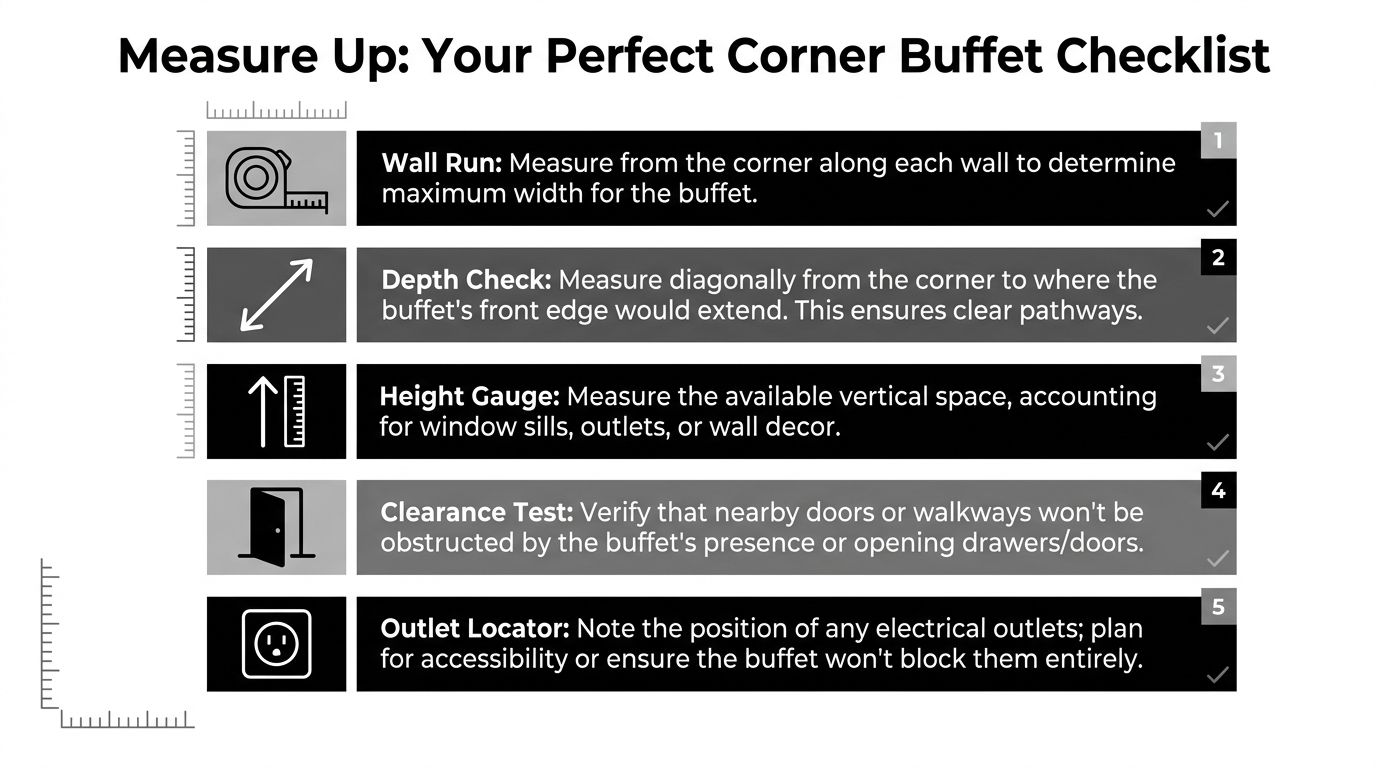
Measure from the corner outward along both walls. That tells you how much room the cabinet can claim before it starts fighting the rest of the layout.
A frequent challenge in older Ann Arbor homes is fitting furniture into awkward corners with baseboard conflicts or uneven floors. Many guides skip practical measurements such as diagonal corner fits, which are typically 24 to 36 inches per side, and door clearance, which often needs 18 to 24 inches, making bespoke sizing especially useful in tricky rooms, as noted in this corner cabinet product reference.
For a broader measuring walkthrough, use this furniture measuring guide.
Use a tape outline on the floor
Painter’s tape helps more than people expect. Mark the front edge, the side reach, and the swing area for doors or drawers. Once the outline is on the floor, stand back and walk through the room.
Check these points carefully:
- Traffic path: Make sure people can pass by comfortably when the cabinet is in place.
- Door action: Open nearby doors and picture cabinet doors fully extended, not just cracked open.
- Visual balance: Confirm the cabinet won’t crowd a radiator, window casing, or adjacent dining chair.
If a cabinet fits only when every door stays shut, it doesn’t fit.
Don’t ignore the house itself
Corners in newer builds are usually more predictable. In many Southeast Michigan homes, they aren’t. Baseboards can push a cabinet forward. Older floors can create a slight lean that becomes obvious once glass doors or stacked dishes are involved.
A quick pre-purchase checklist helps:
| Check | Why it matters |
|---|---|
| Wall run | Confirms the cabinet won’t overtake the room |
| Diagonal fit | Shows whether the front edge will sit naturally |
| Baseboard depth | Prevents gaps or awkward forward tilt |
| Door clearance | Keeps drawers and doors usable |
| Floor level | Helps avoid rocking or visible lean |
A corner buffet cabinet should look built for the spot. Good measuring is what gets you there.
The Enduring Value of Solid Wood Craftsmanship
Material tells you what kind of relationship you’re about to have with a piece of furniture. Some cabinets are made to get through a move, a few holidays, and maybe one rearranged room. Others are built to stay.
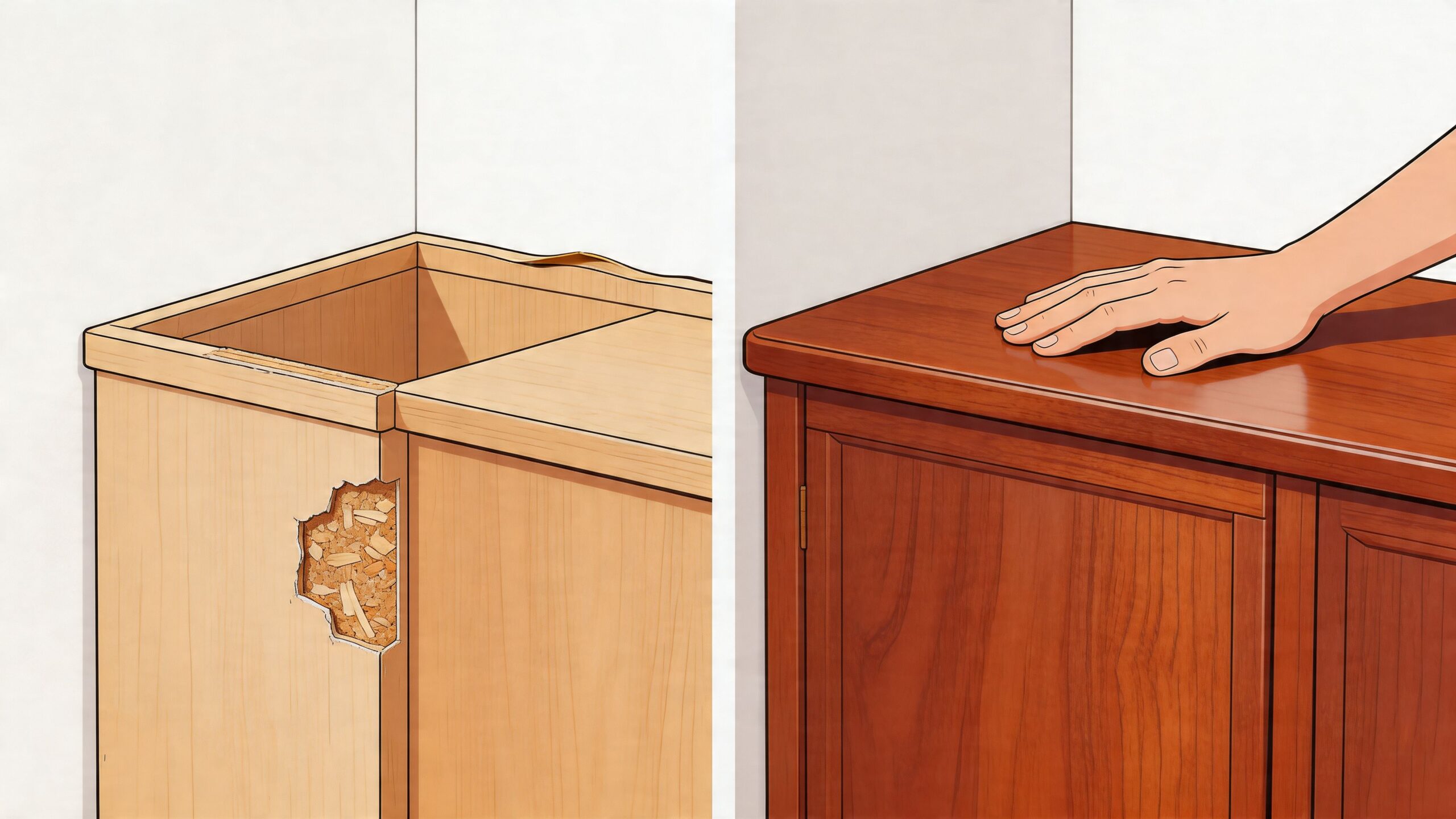
You can usually feel the difference before anyone explains it. The weight of solid cherry wood is steadier in the hand. Quarter-sawn oak has a grain you can see and feel, not a printed pattern trying to imitate one. Doors close with more certainty. Shelves don’t sound hollow. That tactile difference isn’t marketing language. It’s construction.
What solid wood does better
A corner buffet cabinet lives a working life. People load it with dishes, serving bowls, seasonal pieces, trays, bottles, and linens. In a family dining room, that storage gets used, not admired from across the room.
Amish-crafted corner buffets use mortise-and-tenon joinery with North American hardwoods, yielding 3,000 to 5,000 psi tensile strength. That makes them up to 3x superior to common alternatives in shear-loading scenarios and contributes to near-zero joint failure rates over 50-year lifespans in high-use dining environments, according to these Amish buffet construction details.
That kind of joinery matters because corners concentrate stress. A cabinet that sits snugly in a corner often carries weight in a compact footprint. Inferior joinery may look acceptable at first, but over time you start seeing racking, loose doors, drawer drift, and top panels that don’t stay true.
If you want a deeper look at wood species and long-term performance, this hardwood guide for longevity and style is a useful companion.
What mass-produced alternatives often get wrong
Not every engineered piece is poorly designed. But many mass-market cabinets rely on shortcuts that show up quickly in real homes.
Common weak points include:
- Thin veneers over lighter cores that chip at edges and corners
- Mechanical fasteners and glue-heavy assembly that can loosen under repeated use
- Shelf structures that look sturdy but don’t inspire confidence once loaded
- Finishes that sit on the surface instead of becoming part of the material
A corner buffet cabinet also has a visibility problem. It sits where light often hits it from two directions. If the finish is flat or the grain lacks depth, the piece can look tired much sooner than a better-built cabinet in the same room.
Buyers don’t usually regret choosing better wood. They regret replacing weaker furniture sooner than they expected.
Why this matters in Michigan homes
Southeast Michigan gives furniture a real test. Seasonal heating dries interiors out. Summer humidity asks wood to respond gracefully. Better materials and better construction handle those shifts with less drama.
That’s why heirloom-quality, hand-crafted pieces remain the safer value over time. A cabinet built with integrity can be refinished, re-styled, and moved from dining room to living room without losing its usefulness. A lower-grade piece often reaches the point where repair isn’t worth the effort.
The forever-home view
If you’re furnishing for the long term, cost-per-year is the right lens. A substantial solid wood corner buffet cabinet may ask more from you upfront, but it tends to ask less from you later. Less maintenance. Less worry about sagging or failed joints. Less chance that you’ll be shopping again because the original purchase didn’t hold up.
That’s the difference between buying furniture and choosing an heirloom.
Designing Your Bespoke Corner Buffet
Standard sizing works well in standard rooms. Plenty of rooms aren’t standard.
That’s why a bespoke approach makes so much sense with a corner buffet cabinet. This piece often has to answer to trim, window placement, nearby dining chairs, existing wood tones, and the simple fact that one side of a room may ask for different proportions than another. When the cabinet is made-to-order, those constraints stop being problems and start becoming design inputs.
Fit comes first, then finish
A custom piece should solve the room before it decorates it. Start with the architecture. How much projection can the room handle? Do you need a taller upper section for display, or a lower profile that won’t crowd a window line? Should the cabinet feel like a quiet built-in, or should it stand out as a focal point?
Once shape and scale are right, material choices become more meaningful. Wood species change the mood completely. Cherry brings warmth and depth. Oak gives a more grounded, classic look. Maple can read cleaner and more refined depending on the stain.
For a practical look at the ordering process, this custom furniture guide shows how made-to-order decisions become manageable.
The details that make it yours
Customization gets interesting at the smaller decision points. That’s often where the cabinet stops feeling generic.
Consider these elements:
- Door style: Glass doors lighten the visual weight and invite display. Solid doors hide utility items better.
- Hardware finish: Antique brass can add age and warmth. Simpler hardware tends to feel more architectural.
- Interior layout: Adjustable shelving matters more than often recognized, especially if your storage mix changes seasonally.
- Finish tone: Matching exactly isn’t always necessary. Coordinating with nearby dining furniture often looks better than forcing a perfect match.
Canadel is especially helpful for households trying to unify a broader dining space, because made-to-order programs let buyers think in terms of the whole room rather than one isolated cabinet. The same logic applies elsewhere in the home. A room feels calmer when storage, dining, and even seating choices are considered together. That’s one reason people also appreciate the customization mindset behind Stressless. Different category, same principle. Furniture should adapt to the person and the room.
The best bespoke pieces don’t look customized for attention. They look customized because nothing else would have fit as well.
A corner buffet cabinet works hardest when it feels inevitable, as if the room had always been waiting for it.
Styling Your Buffet for Beauty and Function
Once the cabinet is in place, styling should support how you live, not just how the room photographs. A corner buffet cabinet usually looks best when the top stays purposeful and the interior stays organized enough that you can find what you need on a busy evening.
Style the top in layers
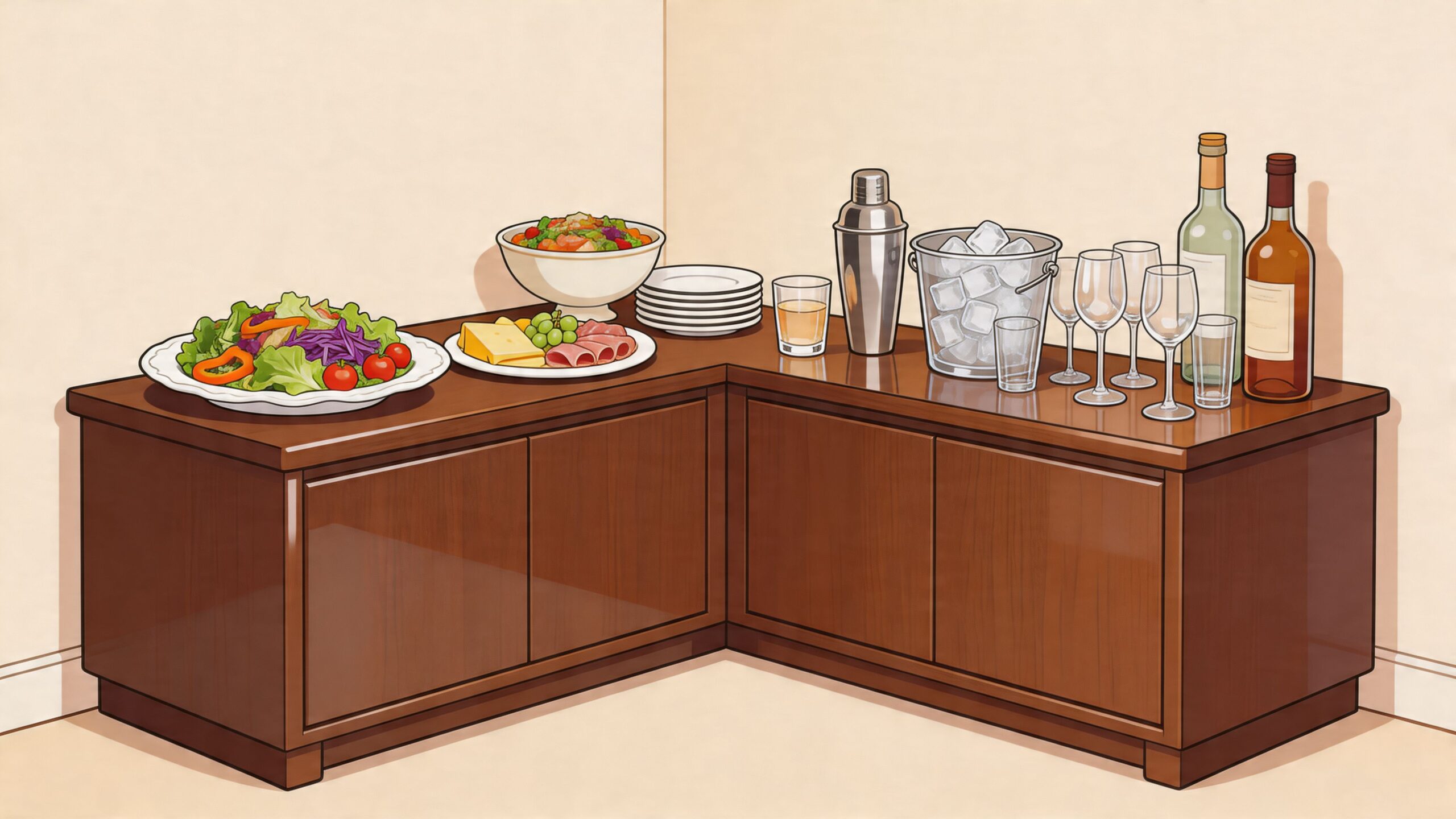
A corner cabinet has natural height and angle working in its favor, so you don’t need much to make it look finished. Start with one taller element, then add one practical layer and one personal layer.
A simple arrangement often works best:
- Height: A lamp, branch arrangement, or taller vase draws the eye upward.
- Function: A tray keeps matches, coasters, or bar tools contained.
- Personality: A framed photo, ceramic piece, or small stack of books softens the setup.
If the cabinet sits in a dining room, leave enough open surface for actual service. During gatherings, that top should be able to hold plates, a dessert spread, or drink supplies without forcing you to redecorate the whole thing first.
For more display ideas that keep shelves and surfaces from feeling cluttered, these shelf styling principles are useful.
Organize the inside by task
People often store by object type. It’s usually smarter to store by use.
Try a simple zoning approach:
| Zone | Best use |
|---|---|
| Top drawer | Flatware, serving utensils, candles |
| Upper shelf | Plates, bowls, glassware used often |
| Lower cabinet | Linens, larger platters, specialty appliances |
That arrangement shortens the reach for daily items and keeps heavier, bulkier pieces lower where they’re easier to handle.
Match the room, not just the cabinet
In a living room, a corner buffet cabinet can become a bar station, media-adjacent storage piece, or display cabinet. In a dining room, it often becomes the working center of hospitality. The styling should follow that role.
Use materials that connect the piece to the rest of the room. If nearby furniture is soft and upholstered, add a woven tray or pottery for texture. If the room has cleaner lines, use fewer objects and let the wood and hardware do more of the work.
The goal isn’t to fill every inch. It’s to let the cabinet look useful, settled, and easy to live with.
Your Ann Arbor Shopping Checklist
By the time you’re ready to shop, the best decisions are usually straightforward. You’re not looking for the piece with the most features. You’re looking for the corner buffet cabinet that fits your room, your storage habits, and your time horizon.
Bring this list with you
Use this checklist before you commit:
- Measurements confirmed: Bring wall-run notes, depth limits, and any clearance concerns.
- Purpose defined: Decide whether the cabinet will serve dining storage, display, bar duty, or a mix.
- Material chosen: Know whether you’re shopping for heirloom solid wood or a lighter-duty alternative.
- Style direction set: Bring photos of nearby dining chairs, tables, flooring, or trim.
- Customization questions ready: Ask about finish, hardware, shelf flexibility, and size adjustments.
What to look for in person
Online photos can help narrow the field. They can’t replace seeing construction up close.
When you’re in a showroom, pay attention to the things that don’t photograph well:
- The heft of the door
- The smoothness of drawer travel
- The way the finish reflects light
- The grain depth on oak, maple, or cherry
- Whether the cabinet feels settled or lightly built
A strong piece should feel calm and composed. Not flashy. Not fragile.
Think in years, not weekends
Value becomes clearer. A forever-home purchase should be judged by use, durability, and how well it keeps working as the room evolves. If a cabinet can move from formal dining room to living room, handle family gatherings, and still look right years from now, that’s the kind of value that holds.
In Ann Arbor and across Southeast Michigan, it also helps to work with people who understand older homes, custom orders, and what local climate does to furniture over time. Special financing can make a better piece easier to bring home without compromising on quality, and a Low Price Promise helps keep long-term value part of the conversation.
Frequently Asked Questions for Michigan Homes
Michigan buyers usually ask practical questions, and they should. A corner buffet cabinet isn’t just decor. It’s a working piece of furniture that needs to hold up in a real house.
Common Questions About Corner Buffets
| Question | Answer |
|---|---|
| Is solid wood worth it in Michigan humidity? | Yes, especially if the cabinet will carry meaningful weight or live in a dining room that sees seasonal humidity swings. In high-humidity climates like Michigan’s, solid hardwoods such as oak and maple outperform MDF alternatives, which can sag under loads of just 200 lbs per shelf, while solid wood can handle 500+ lbs without bowing. The same source notes a 35% surge in humidity-resistant hardwood sales in the Great Lakes region. See this corner dining storage reference. |
| Will a corner cabinet work in an older home with uneven floors? | Often, yes. The key is careful measuring, honest assessment of the corner, and proper setup. Older homes may need shimming or size adjustments so the cabinet sits level and doors hang correctly. |
| Should I choose glass doors or solid doors? | Choose glass if you want display and a lighter visual look. Choose solid doors if you want the cabinet to hide daily clutter and read more quietly in the room. |
| Can a corner buffet cabinet work outside the dining room? | Absolutely. Many people use them in living rooms for bar storage, media-adjacent organization, or display. The best use depends on shelf layout and how much surface space you want. |
In Southeast Michigan, furniture that looks good but ignores climate and architecture usually becomes a frustration.
A good cabinet should match the house, the room, and the way you live in both.
If you’d like help choosing a corner buffet cabinet that fits your room for the long haul, visit Tyner Furniture on South State Street in Ann Arbor. Since 1957, Tyner has helped Southeast Michigan homeowners furnish everything from the dining room and home office to bedrooms, entertainment spaces, and outdoor areas with a focus on heirloom quality and real-life comfort. If you want to compare finishes, explore Amish hand-crafted solid wood, look at made-to-order options from Canadel, or browse Quick Specs for special orders before you visit, their team can help. And if you’re planning a larger investment, ask about Special Financing and the Low Price Promise so you can buy with confidence.