Luxury Recliner Sofa Buying Guide

You're probably in the same spot many Southeast Michigan shoppers reach after a few evenings of scrolling. One recliner looks plush but bulky. Another looks sleek but gives you no clue how it will feel after a full movie, a Sunday nap, or a long stretch of reading with your feet up. A luxury recliner sofa can sound simple on paper, but once you start comparing leather, power features, frame construction, sizing, and room fit, the whole thing gets crowded fast.
That's why this purchase deserves a slower, more thoughtful approach. A recliner isn't just another seat. It becomes the place where your day ends, where your back either relaxes or complains, and where family life often settles in. If comfort matters to you beyond the first five minutes in a showroom, it helps to think the same way many people now think about a mattress. Good support affects how you feel hour after hour, not just how impressed you are at first touch. If back comfort is part of your larger home planning, this guide on choosing the best mattress for back pain relief makes a helpful companion read.
In Ann Arbor, I meet shoppers every week who start by asking about leather color and end by asking the smarter question. Will this still feel right in five or ten years? That shift matters. The true value of a luxury recliner sofa isn't the tag on day one. It's the cost-per-year of support, craftsmanship, and everyday enjoyment.
Table of Contents
- Your Search for the Ultimate Comfort Zone
- What Truly Defines a Luxury Recliner Sofa
- The Unseen Mechanics of Superior Comfort
- Materials and Finishes That Engage the Senses
- The Power of Bespoke Customization
- Sizing Your Sofa and Planning Your Room
- An Investment in a Local Legacy Since 1957
Your Search for the Ultimate Comfort Zone
A lot of people begin this search after a small moment at home. You sit down at the end of a long day, shift once, then twice, then grab a pillow for your neck. Maybe the old sofa still looks acceptable from across the room, but your body has already filed its complaint. That's usually when “we should replace this someday” turns into a serious hunt for a luxury recliner sofa.
The confusion starts quickly. Some models promise modern style. Others focus on power buttons, headrests, ports, or oversized cushions. A few feel soft for a minute, then oddly unsupported. Some look elegant online but read heavy in person. If you've felt torn between appearance and comfort, that's normal. Given that recliner purchases aren't an annual event, a learning curve is natural.
The everyday test matters most
The best way to judge a recliner is to think about your real routine, not a staged showroom scene. Ask yourself where your body gets tired now. Is it your lower back after an evening of streaming? Your neck when you recline but still want to watch the screen? Your legs when the seat edge presses too hard?
Those questions matter because a recliner sofa is one of the few pieces in the house that interacts with your posture all the time.
A good luxury recliner sofa should feel easy to live with on an ordinary Tuesday, not just impressive on a Saturday shopping trip.
In Southeast Michigan homes, I often see the same goal repeated in different styles. Empty nesters want a refined living room that still supports daily lounging. Young families want something that feels upscale but can handle real use. Professionals working from home want a room that can shift from laptop time to complete shut-off at night.
Why long-term value changes the conversation
When you look at a recliner as an investment in daily well-being, your priorities sharpen. The right piece can serve you for years with consistent support, easier relaxation, and less compromise. The wrong one becomes a large reminder that comfort claims and real comfort aren't the same thing.
That's why this category rewards patience. You're not just buying upholstery. You're choosing how your body will be supported in one of the most-used seats in your home.
What Truly Defines a Luxury Recliner Sofa
A luxury recliner sofa isn't defined by a glossy brochure, a designer label, or a dramatic showroom floor. It's defined by how well the piece combines engineering, fit, and construction. If one of those is missing, the sofa may still be expensive, but it won't feel luxurious for very long.
For many shoppers, the first surprise is that real luxury starts where you can't see it. The second surprise is that personal fit matters far more than many people expect. That's why broad advice like “just pick the softest one” usually fails.
If you want a good primer on broad sofa buying criteria before zeroing in on recliners, this guide on what to look for in your new sofa or chair is worth keeping open in another tab.
Luxury starts inside the sofa
Think of a luxury recliner sofa as a system, not a shell. The outer fabric or leather is only one layer. Underneath it, the mechanism must move smoothly, the seat must hold its shape, and the frame must stay steady through repeated use.
That internal quality changes what you feel in simple ways:
- Steadier support: You don't feel like the seat is collapsing under your hips.
- More controlled motion: The recline feels deliberate instead of jerky or strained.
- Better posture at rest: Your body settles into the chair rather than fighting it.
A sofa can look polished and still miss the mark if the scale is off or the support points hit your body in the wrong places.
Fit matters more than many shoppers realize
One of the most useful facts buyers often miss is that many premium recliners come in multiple sizes, offer adjustable headrests, and rely on precise reclining geometry. Some luxury models advertise custom sizing, head and neck support, and reclining ranges such as 90° to 145° according to Povison's modern recliner sofa collection. The overlooked issue is matching those dimensions to your own body for long-term comfort.
That matters because two people can sit in the same sofa and have very different reactions. A taller person may need more upper-back support. A shorter sitter may find the seat too deep and lose lower-back contact. A headrest that lands perfectly for one shopper may push another person's head forward.
A quick way to think about it is this:
| What you notice | What may be happening |
|---|---|
| Your feet don't rest naturally | Seat height may be off for your body |
| Your neck feels pushed forward | Headrest shape or position may not match your posture |
| Your lower back floats away from the back cushion | Seat depth or lumbar support may be wrong |
| Reclining feels good briefly, then awkward | Geometry may not suit your height and proportions |
Practical rule: Don't ask only, “Is it comfortable?” Ask, “Is it comfortable for my height, my posture, and how I actually use it?”
That's where the word bespoke starts to matter. In a true luxury purchase, fit should be part of the discussion from the beginning, not treated like an afterthought after you've already picked the color.
The Unseen Mechanics of Superior Comfort
A recliner sofa often makes its first impression in thirty seconds. You sit down after a long day, press the control, and notice the leather, the padding, and the general softness. The true test starts later, after an hour of reading, a full movie, or years of getting in and out of the same seat. Superior comfort comes from the parts you cannot see.
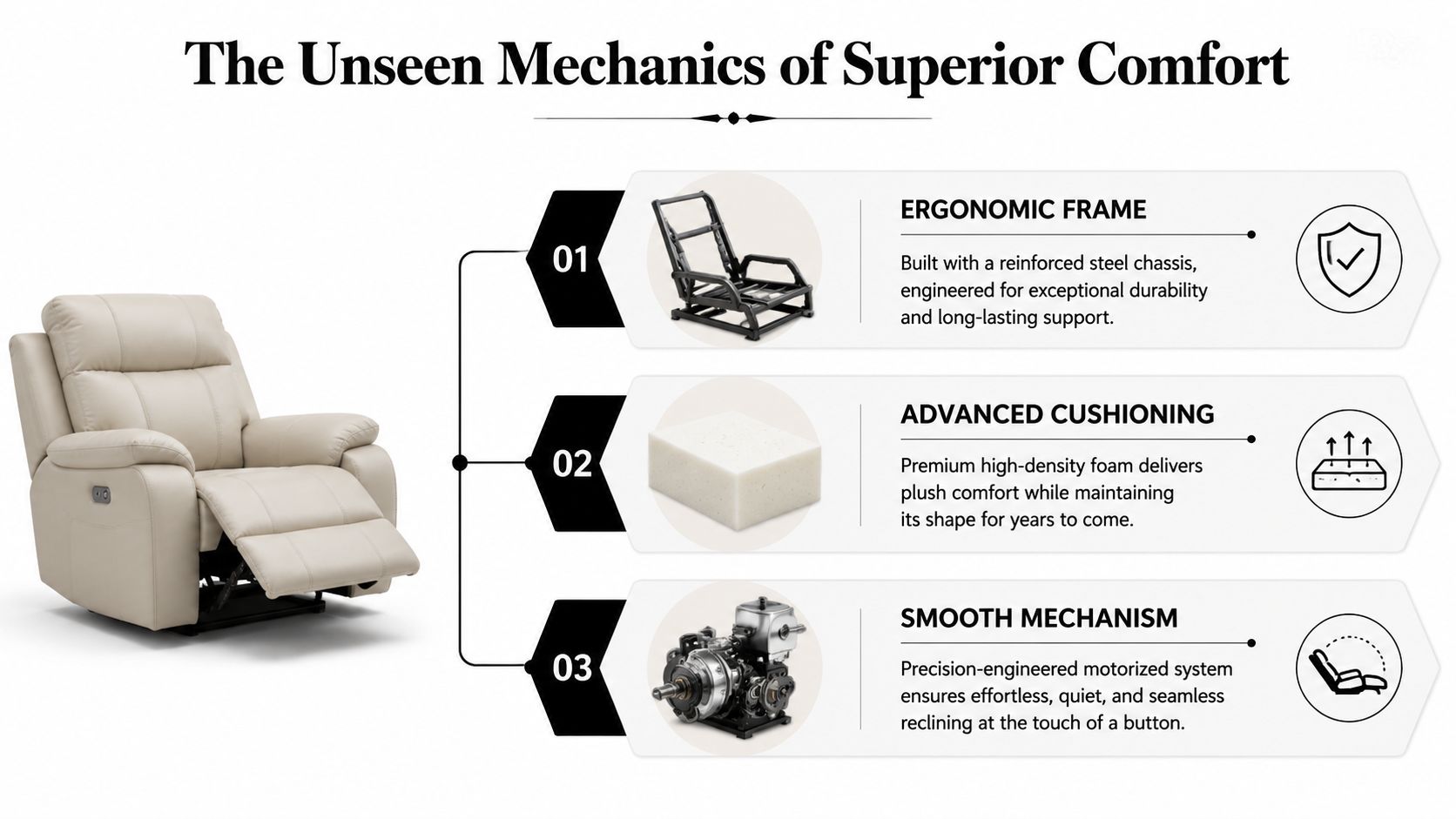
Under the upholstery, a luxury recliner sofa works like a suspension system in a well-built car. The finish catches your eye, but the frame, support layers, and motion hardware decide whether the ride stays steady. If those hidden components are poorly made, the sofa may feel pleasant in the showroom and tiring in daily life.
For a clearer look at types of power reclining seating, compare how different mechanisms and seat formats are built before you judge any single model.
What supports the body year after year
Long-term comfort depends on how the sofa carries weight, returns to shape, and keeps your spine in a natural position. Yilin Furniture's guide to luxury sofa recliner construction points to the combination shoppers should look for: solid hardwood framing, metal reinforcement in stress areas, and higher-density cushion materials that resist early collapse.
Each part has a job.
A strong frame keeps the sofa square, so the seat does not start to twist or creak after repeated reclining. Reinforcement matters even more in motion furniture because every opening and closing cycle puts stress on joints and connection points. Dense foam helps the seat hold its shape instead of developing that familiar dip where your hips sink and your lower back starts compensating.
Memory foam can add a second benefit. It helps spread pressure more evenly, especially around the pelvis and lumbar area, where poor support tends to show up first. Softness alone cannot do that. A seat that feels plush at first touch can still let you bottom out, which is one of the fastest ways a recliner stops feeling luxurious.
For shoppers in Southeast Michigan, this is also where cost-per-year becomes useful. A sofa that keeps its support for fifteen or twenty years often costs less per year than a cheaper model that feels tired after five. That is how a well-built bespoke piece earns its value over time.
The mechanics of motion
Power reclining changes more than convenience. It changes posture control.
Instead of using body weight to push the chair back, a motorized mechanism lets you adjust the backrest and footrest in smaller increments. That matters because comfort is rarely an all-or-nothing position. Many people need a slight recline to reduce pressure at the hips, a bit more leg lift to ease tension at the knees, or a different pause point that keeps the head supported without straining the neck.
During a sit test, pay attention to these four checkpoints:
Upright support
Your lower back should feel contacted, not ignored. If your pelvis rolls back and your shoulders round forward, the seat is already asking your body to work too hard.Mid-recline stability
Stop partway back. A quality mechanism should feel controlled and secure, with no wobble or sudden drop.Pressure through the seat
Notice whether the cushion supports you evenly or whether your weight settles sharply into one spot.Full-body alignment
At your preferred angle, your head, lumbar area, thighs, and heels should all feel accounted for. One unsupported zone often leads to strain somewhere else.
A good recliner behaves like a properly fitted shoe. You notice the fit because nothing distracts you.
Repairability deserves a close look too. Motors, switches, and reclining assemblies eventually need service in some homes, especially in frequently used family rooms. Ask whether parts are accessible, whether components can be replaced without rebuilding the entire sofa, and whether the design allows practical in-home service. Custom installations by custom installations by The Drapery Company show the same principle in another part of the home. Hidden systems matter most when they are built carefully and serviced sensibly.
That is the difference between a sofa that feels impressive for a weekend and one that continues to fit your body for years.
Materials and Finishes That Engage the Senses
Construction gives the sofa its backbone. Material choice gives it personality. This is the part shoppers often feel most strongly, because it's immediate. Your hand notices texture before your brain has finished the rest of the evaluation.
A well-chosen upholstery can make a luxury recliner sofa feel perfectly suited to your home, whether your space leans clean and modern, softly layered, or more traditional. But material selection shouldn't stop at “what looks nice in a swatch.”
If you want a broader glossary of coverings and construction terms, this article on upholstery materials is a useful reference.
Leather, fabric, and the feel of daily living
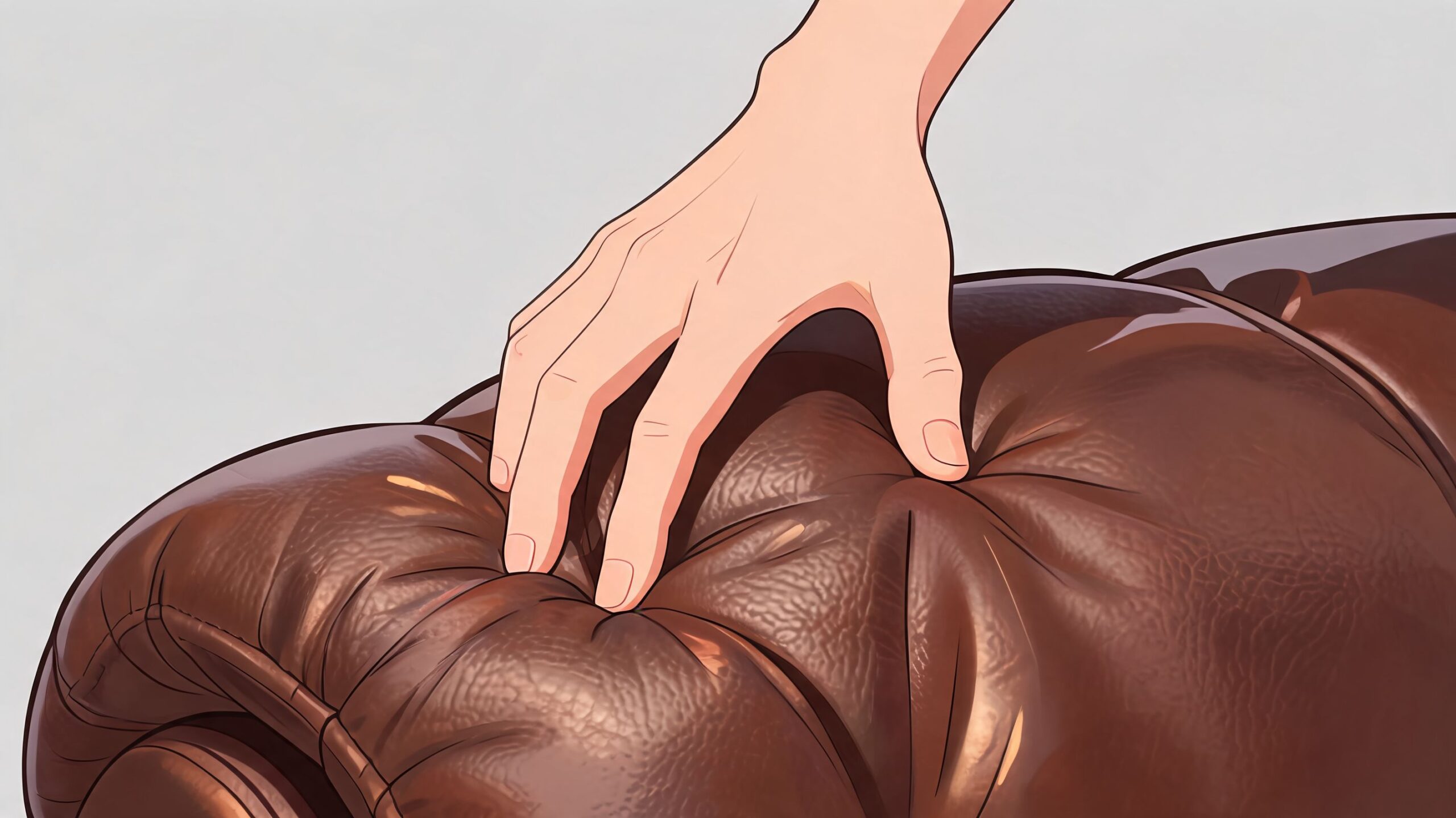
Top-grain leather usually attracts shoppers for good reason. It has a substantial hand, a smoother surface, and the kind of character that often looks better as it settles into the home. When people talk about that buttery feel, they're usually responding to how supple and grounded quality leather feels under the palm.
Bonded leather tends to enter the conversation because it can mimic the look from a distance. The difference usually shows up in the lived experience. It often lacks the same depth, touch, and aging character. If you want a piece with heirloom potential, surface quality matters.
Fabric can be every bit as appealing when chosen well. High-performance fabrics have changed the category by offering a softer, warmer touch than many people expect, along with easier day-to-day cleanup. They can be especially appealing if you want a cozy, refined look without the cooler hand feel of leather.
How to choose with your household in mind
The right upholstery depends on how the room functions.
- For frequent lounging: Soft, resilient fabrics can feel inviting for long sessions and create a more relaxed visual mood.
- For a polished living room: Leather often brings sharper definition and a more architectural silhouette.
- For homes with kids or pets: Cleanability and surface resilience matter as much as color.
If you're comparing fabric care routines, the Rubber Ducky Rug Cleaning couch guide offers a practical look at cleaning polyester upholstery, especially for households that need low-fuss maintenance.
A few in-store habits help shoppers choose better:
| What to test | What to notice |
|---|---|
| Run your hand across the seat and arm | Does the material feel pleasant against bare skin? |
| Press into the cushion and release | Does the surface recover neatly or wrinkle heavily? |
| Look at the fabric in changing light | Does it read rich and calm, or flat and artificial? |
| Sit in your usual posture | Does the upholstery make you want to settle in or slide around? |
Some materials win in the showroom and lose at home. The best choice is the one that still suits your household after spills, naps, guests, and ordinary wear.
In a South State St. showroom setting, the in-person advantage becomes clear. You can see how a warm neutral leather changes under light, or how a woven fabric softens the room without feeling fragile.
The Power of Bespoke Customization
The quickest way to compromise on a recliner is to assume the one in stock must be close enough. Sometimes it is. Often it isn't.
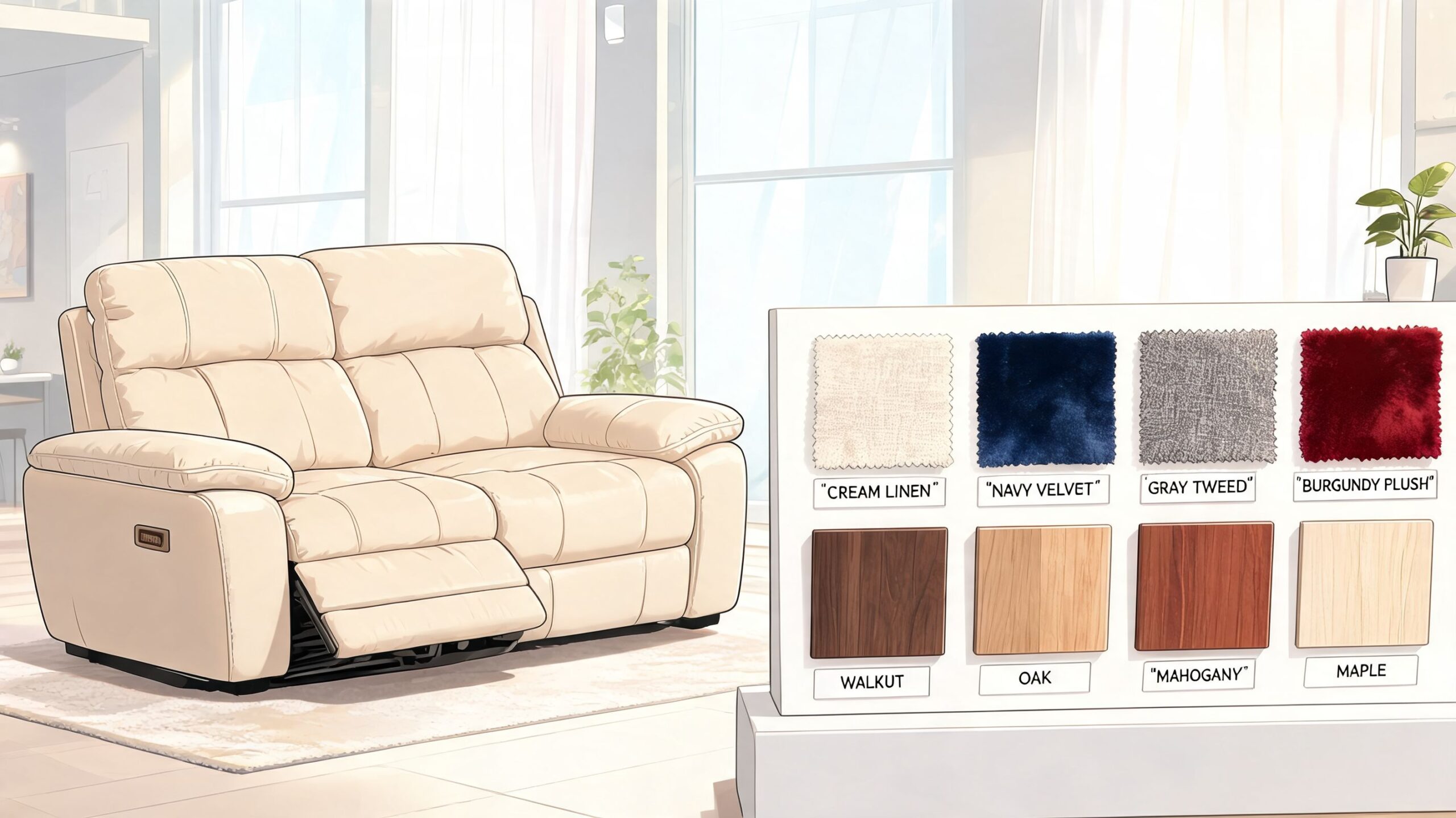
A luxury recliner sofa becomes much more compelling when you stop treating it like an off-the-rack purchase. The value of bespoke furniture isn't extravagance. It's precision. You're matching the piece to your room, your body, and your daily habits rather than asking yourself to adapt to whatever happens to be on the floor.
In-stock is only the starting point
Good customization goes beyond color selection. It can include upholstery, scale, layout, arm style, wood finish, and the ergonomic fit of the recline itself. That matters because comfort problems are often sizing problems in disguise.
Brands like Stressless stand out in the conversation for this reason. Their sizing approach recognizes a simple truth. One recliner size doesn't fit every body well. A seat that supports one person beautifully can leave another person perched, slouched, or reaching awkwardly for the head support.
The same made-to-order mindset shows up in other categories too. Canadel gives shoppers room to tailor dining pieces around finish and form, and the logic carries over here. Better homes often come together when major pieces are selected as a coordinated whole, not as isolated impulse buys. In that spirit, articles like this look at how custom installations by The Drapery Company can shape light, privacy, and proportion around the furniture instead of treating windows as an afterthought.
Customization solves fit and style problems
When shoppers choose custom well, they usually solve one of three issues:
The room problem
The standard size overwhelms the space or leaves the layout feeling awkward.The body problem
The seat depth, back height, or head support doesn't feel natural over time.The style problem
The right silhouette exists, but not in a finish or cover that belongs with the rest of the home.
One practical local option is Tyner Furniture's custom furniture process, which gives Ann Arbor shoppers a way to move beyond floor samples into made-to-order upholstery and ergonomic seating choices, including Stressless sizing and Canadel customization.
A bespoke piece often feels calmer in the home because fewer compromises are fighting for your attention every day.
Customization also supports longevity. When people choose the right size, the right support, and a finish they'll still want years from now, they're less likely to replace the piece out of frustration. That's a better path for comfort, design, and long-term value.
Sizing Your Sofa and Planning Your Room
A couple in Southeast Michigan finds a recliner sofa they love on the showroom floor. The leather feels right, the support feels right, and the scale looks reasonable under bright store lighting. Then delivery day comes, and the piece either fights every doorway on the way in or leaves the room feeling tighter than expected once it is fully reclined.
That problem has less to do with taste than geometry.
A luxury recliner sofa has two sizes that matter. One is the size you see when it is closed. The other is the working size it needs when the footrest is up, the back is reclined, and someone is using it. Shoppers who plan for both usually end up happier with the purchase years later.
Measure the path before you buy
Start with the trip into the home, not just the wall where the sofa will sit. Delivery teams need enough room for doorways, hallway turns, stair landings, and low ceiling angles. Older Ann Arbor homes and condos often have one awkward spot that decides whether a sofa arrives easily or becomes a problem.
Then measure the room itself with daily use in mind. A sofa can technically fit and still crowd the way people live.
Use a simple checklist:
- Entry route: door openings, hallway width, stair turns, ceiling clearance
- Room footprint: wall length, window placement, vents, outlets, registers
- Nearby furniture: coffee table depth, end table placement, lamp bases
- Walking space: the paths family members use every day, especially when the sofa is reclined
Many shoppers measure the wall and stop there. The path in and the room in motion deserve equal attention.
Plan for the sofa in motion
Reclining furniture works a bit like a door swing. A closed door looks compact until you open it and see the space it needs to move freely. A recliner sofa behaves the same way.
Some designs move forward as they recline and can sit closer to the wall. Others need more depth behind them to open fully. The exact clearance depends on the mechanism and the model, so the safest approach is to ask for the fully reclined depth and the recommended wall clearance for the specific sofa you are considering.
That one question prevents expensive guesswork.
If a sofa is placed too close to the wall, the result is usually obvious. It may not reach its full recline position, and daily use can feel awkward because the room was planned for the sofa at rest, not for the sofa in use.
Tape it out before you commit
Painter's tape is one of the best planning tools in the store and at home. Mark the width and depth of the sofa on the floor, then extend the tape to show the full reclined position. Walk around it. Sit in the nearby chair. Check whether someone can still pass through comfortably with the footrest up.
This quick test answers questions a spec sheet cannot. Will the coffee table sit too close? Will a side table block the recliner's path? Will the walkway to the kitchen still feel open on a busy evening?
Those details shape comfort more than showroom impressions do.
Size for bodies, not just floor plans
Room fit is only half the story. Body fit matters just as much, especially if you want the sofa to earn its keep over the next decade and beyond. A longer household member may need more seat depth and full leg support in recline. A shorter household member may be more comfortable in a shallower seat that lets the lower back stay supported without forcing the knees forward.
That is why two sofas with similar outside dimensions can feel completely different over time.
A well-sized luxury recliner sofa should suit both the room and the people using it. When those two measurements line up, cost-per-year starts to improve. You are less likely to replace the piece early because it looked right but never felt natural in daily life.
A good fit should make the room work better and make your body work less.
For many Southeast Michigan households, that is the difference between buying a sofa for this season and choosing one that still belongs in the home many years from now.
An Investment in a Local Legacy Since 1957
When all the comparisons are done, the final decision often comes down to one question. Are you buying a novelty, or are you buying a piece you'll still respect years from now?
Think in lifespan, not novelty
A point many luxury recliner guides miss is total cost of ownership and repairability. In many cases, the most luxurious recliner is the one with the strongest long-term serviceability and replacement-part support, not the one with the longest list of gadgets, as noted by Premium Sofas on reclining sofa value.
That idea matters because power features add convenience, but they also add components. A well-chosen recliner should make daily life easier without turning future maintenance into guesswork. When you judge a sofa by cost-per-year instead of sticker shock alone, durable construction and thoughtful service support start to look much more attractive.
Why local guidance still matters
That's one reason local legacy still counts. Since 1957, families in Ann Arbor and across Southeast Michigan have relied on experienced furniture guidance when the purchase matters. A recliner sofa is exactly that kind of purchase. You're balancing fit, scale, support, finish, and long-term value all at once.
It also helps to shop with a store that understands the larger home. Many households aren't only furnishing one room. They're coordinating living spaces, home office needs, bedroom pieces, and even outdoor spaces over time. A consistent design eye makes those decisions easier. Special Financing and a Low Price Promise can also lower the barrier to buying an heirloom-minded piece without forcing a rushed compromise.
A luxury recliner sofa should earn its place in your home. It should support your body, suit your room, and feel like a worthwhile investment long after the delivery truck leaves.
If you're ready to compare a luxury recliner sofa in person, visit Tyner Furniture in the Ann Arbor South State St. showroom for a proper sit test. You can also browse online Quick Specs for special orders, including made-to-order options from Stressless and Canadel, and explore furniture for everything from the home office to outdoor spaces with guidance rooted in a local legacy since 1957.