Dining Bench Leather: Quality & Style Guide


A lot of dining rooms reach the same turning point. The chairs look fine from across the room, but everyday life keeps exposing their limits. Kids slide in and out. Guests linger after dessert. One seat always feels cramped, another wobbles, and the room never quite handles a full table with ease.
That’s usually when a leather dining bench starts making sense. Not as a trend piece, but as a practical answer to how people live. A well-made bench saves space, seats people flexibly, and brings a quieter kind of luxury to the room. The touch matters too. Good leather has a warmth and depth that fabric can’t quite fake, especially when paired with the weight and grain of real wood.
The hard part is sorting through the market. Online, benches can look similar in photos while being very different in upholstery, frame quality, comfort, and long-term value. If you’re furnishing a forever home in Ann Arbor or anywhere in Southeast Michigan, that difference matters. A bench you use every day should earn its keep over years, not just survive until the next redesign.
Since 1957, local furniture shoppers have learned that the best dining pieces aren’t chosen by price tag alone. They’re chosen by feel, construction, fit, and how well they age. That’s the lens worth using with dining bench leather.
Table of Contents
- More Than Just a Seat An Heirloom in the Making
- Decoding Leather Quality From Top-Grain to Bespoke Finishes
- The Unseen Strength Why Amish Hand-Crafted Construction Matters
- Finding the Perfect Fit Sizing and Ergonomic Comfort
- Styling Your Leather Bench From Classic to Contemporary
- Protecting Your Investment Leather Care and Maintenance
- Your Bench Made Your Way in Ann Arbor
More Than Just a Seat An Heirloom in the Making
Saturday morning usually tells the truth about a dining room. One person is finishing coffee, a child is working on a school project, someone else drops groceries on the table, and by evening the same space needs to handle dinner for six. A leather bench earns its keep in that kind of room. It gives you flexible seating, tucks in cleanly, and stands up to regular use without asking the household to be careful every minute.
The best benches do more than solve a seating problem. They become part of the rhythm of the house. Over time, the value shows up in a practical way. A well-built bench that serves your family for decades often costs less per year than a cheaper piece you replace after a few hard seasons.
Why a bench earns its place
A strong dining bench leather choice brings several advantages together:
- Flexible seating: A bench handles changing headcounts better than fixed chair setups.
- Visual calm: One upholstered line keeps the room looking settled, especially in smaller dining areas.
- Daily practicality: Leather is easier to live with than many fabrics in a space where crumbs, spills, and constant traffic are normal.
- Character over time: Good leather develops wear patterns that many homeowners come to appreciate rather than hide.
Practical rule: If a dining piece has to work hard every week, buy for long-term materials first and appearance second. The appearance usually follows.
I have seen families keep the same leather bench through remodels, new tables, and even a move to a different house. That kind of staying power usually comes from two decisions made at the start. Choose honest materials, and choose construction that can still do its job years from now.
That is why the frame matters as much as the upholstery. Leather can age beautifully, but only if it is wrapped over a structure worth keeping. A bench built with the same standards you expect from American-made solid wood furniture gives you a better chance of owning one piece for the long haul instead of buying the same seat twice.
Decoding Leather Quality From Top-Grain to Bespoke Finishes
A family sits down for tacos on Tuesday, homework on Wednesday, and a birthday dinner on Saturday. The bench sees all of it. In that kind of real use, the word “leather” on a tag does not tell you nearly enough.
Leather quality comes down to what part of the hide you are getting, how it was finished, and how accurately it is being described. I have walked plenty of shoppers through this in the store, and the same lesson keeps proving itself. A well-chosen leather bench usually costs more at the start, but it earns that money back in years of daily use, better aging, and fewer regrets.
What the leather label really tells you
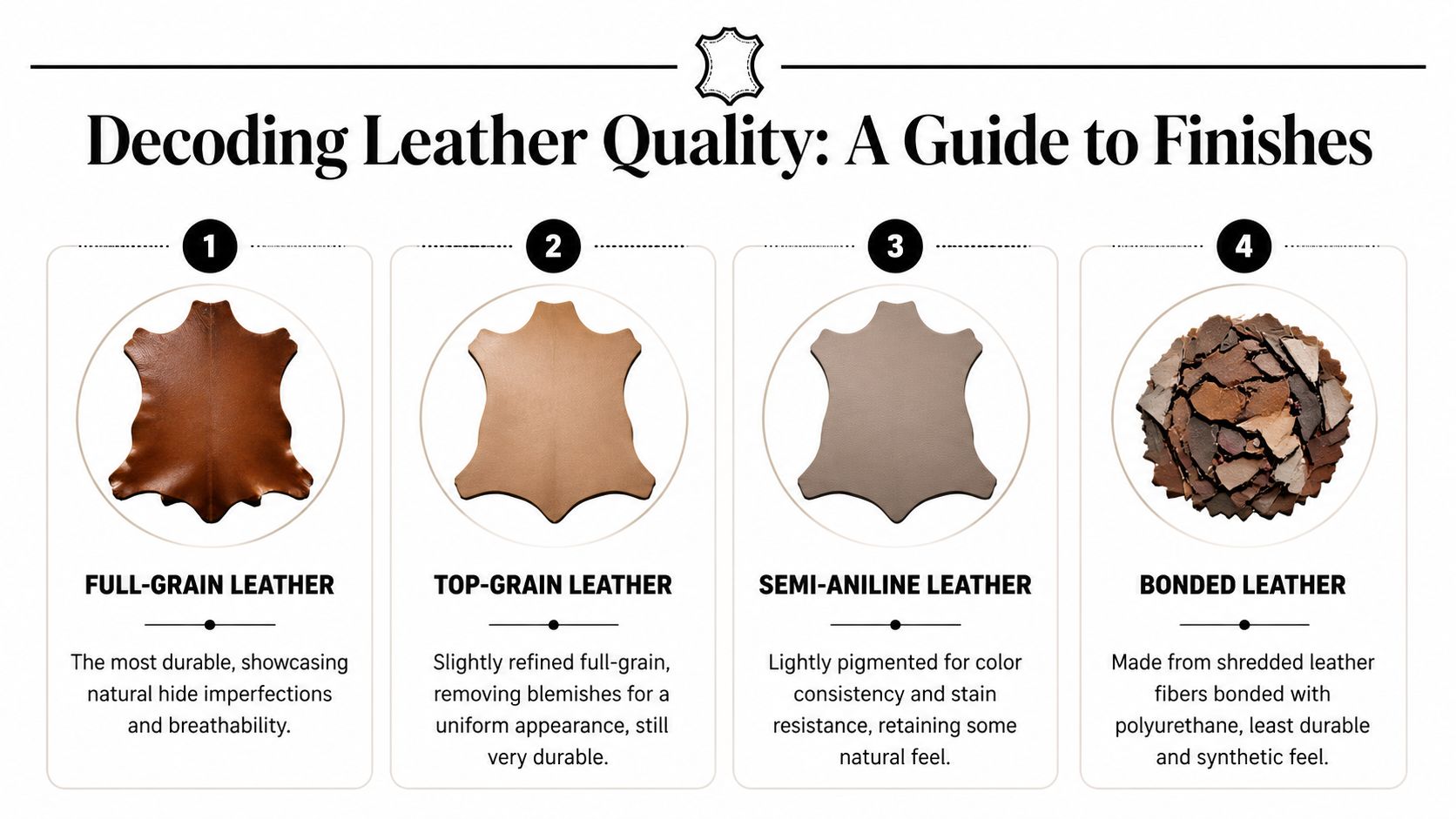
Full-grain leather keeps the original surface of the hide intact. You will often see natural markings, pore patterns, and color variation. Those details are part of the appeal. Full-grain can age beautifully, but it also asks buyers to appreciate a more natural, less uniform look.
Top-grain leather has been lightly refined to create a cleaner, more consistent surface. For many dining rooms, this is the practical sweet spot. It still has the substance and character people want from real leather, while being easier to live with in a home that sees frequent meals, guests, and everyday wear. According to Ethan Allen’s product information for the Cassian bench, top-grain leather exceeds 50,000 Martindale abrasion cycles, while bonded leather typically falls in the 10,000 to 20,000 range, and top-grain can last 15 to 20 years with proper care.
Semi-aniline leather sits in the middle for many buyers. It keeps more of the natural feel than heavily corrected leather, but adds a light protective finish that makes dining use more forgiving. If you want softness without giving up all stain resistance, this category deserves a close look.
Bonded leather is usually the weak link. It uses leather fibers mixed with synthetic binders, so it may look acceptable at first but rarely wears like higher-grade leather. In busy homes, that difference shows up sooner than many buyers expect.
The soft, substantial feel people notice in a well-made bench usually starts with better leather, not a photo-friendly finish.
For many households, the choice comes down to investing in a bench that settles into the home over time versus one that may need replacement sooner. That is why cost-per-year is a better buying tool than sticker price alone, especially on a custom piece meant to stay with the table for the long haul.
If you want a broader primer before narrowing your options, this guide to upholstery materials for everyday furniture use explains the practical differences clearly.
Leather Type Comparison
| Leather Type | Appearance | Expected Lifespan | Feel & Comfort | Best For |
|---|---|---|---|---|
| Full-grain leather | Natural markings and visible character | Long-lasting with the right care | Rich, breathable, develops patina | Buyers who want maximum authenticity |
| Top-grain leather | More uniform than full-grain | Long service life with proper care | Smooth, substantial, comfortable for daily use | Busy dining rooms and long-term value |
| Semi-aniline leather | Refined natural look with more consistency | Varies by finish and care | Soft hand with added practicality | Homes balancing softness and stain awareness |
| Bonded leather | Uniform, often more synthetic-looking over time | Shorter-term compared with top-grain | Can feel less supple | Budget-focused spaces or lighter use |
The Unseen Strength Why Amish Hand-Crafted Construction Matters
Upholstery gets the attention, but the frame decides whether a bench is still solid years from now. If the base flexes, loosens, or dries out unevenly, even excellent leather can’t save the piece. That’s why experienced furniture buyers look past the seat first and ask what’s underneath.
A strong bench should feel settled when you sit down. Not hollow. Not springy in the wrong way. Not like it’s asking the hardware to do too much. Solid wood construction changes that experience immediately.
What holds a bench together
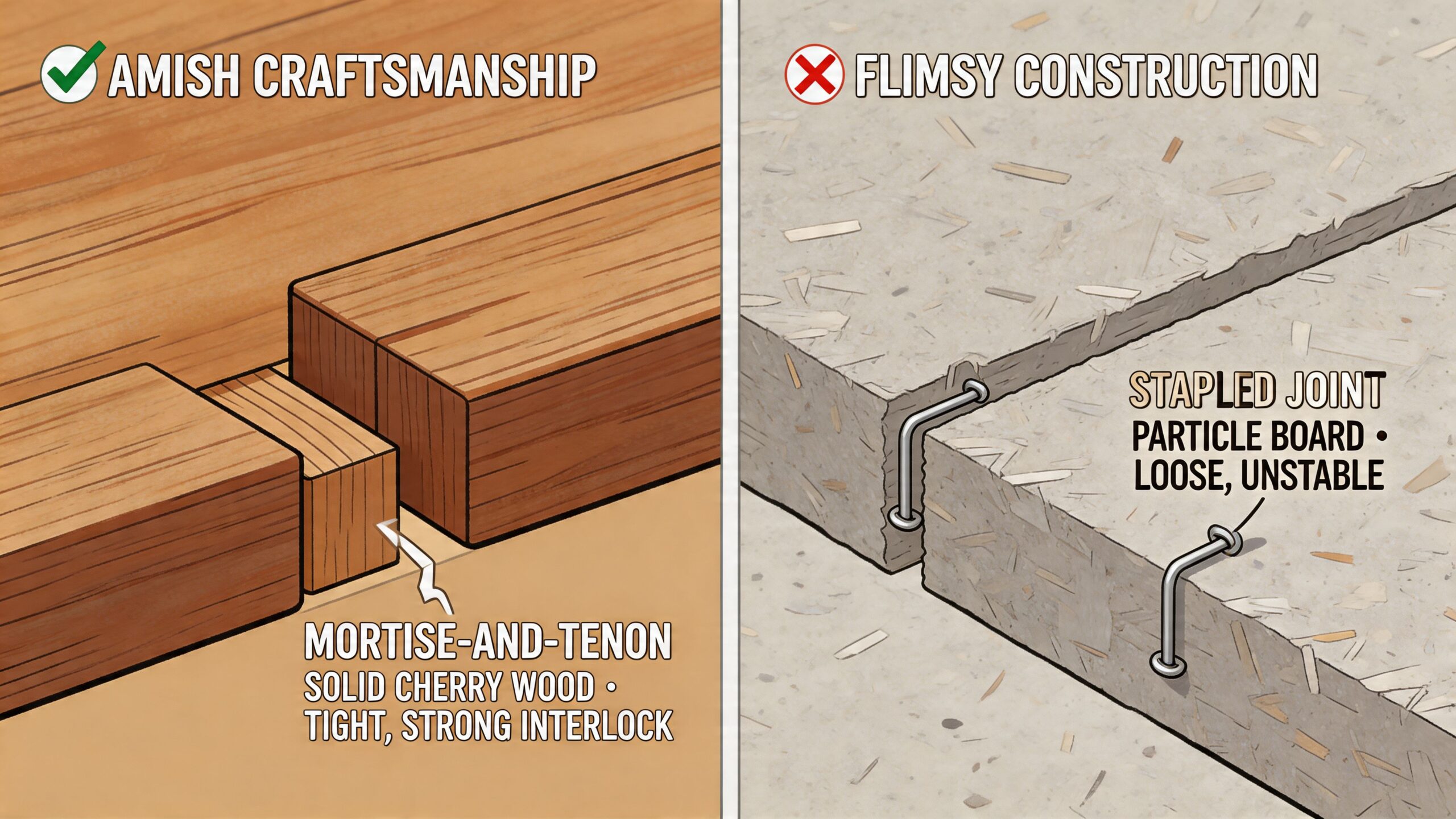
Mass-produced benches often hide their shortcuts well in online listings. Veneers photograph nicely. Thin components can be disguised by bulky upholstery. A bench may even feel fine at first. Then daily use starts exposing weak points.
Amish hand-crafted construction usually takes the opposite path. The strength is built in from the start through real joinery, thoughtful wood selection, and proportion that respects the material.
Here’s what to look for:
- Joinery that carries load: Mortise-and-tenon construction has a long reputation because it locks parts together in a way staples and light brackets don’t.
- Solid hardwood framing: Cherry, oak, and maple bring different grain patterns and color tones, but all offer a sense of integrity you can feel when the bench is moved or used.
- Balanced proportions: Good builders don’t rely on oversized upholstery to hide a weak skeleton.
A bench made this way doesn’t just last longer. It usually stays quieter, straighter, and more comfortable because the frame remains stable under regular use.
Why weight and wood species matter
People sometimes mistake heavier furniture for better furniture, and that isn’t always true. But in dining benches, appropriate weight often tells you there’s real material where it counts. The weight of solid cherry wood, for example, feels grounded in a way lightweight composite pieces rarely do.
The wood species also affects the room visually. Oak reads more open and architectural. Maple feels clean and refined. Cherry adds depth and warmth that pairs beautifully with brown or saddle-tone leather.
A leather bench should feel like one complete object. If the upholstery says “premium” but the base says “temporary,” the piece is mismatched from day one.
For readers comparing custom dining builds, this gallery of Amish table and chairs shows the kind of construction details worth paying attention to.
Finding the Perfect Fit Sizing and Ergonomic Comfort
Fit is where many dining benches succeed or fail.
A family can sit through a quick Tuesday dinner on almost anything. A two-hour holiday meal is different. If the bench is too tall, too deep, too short for the table, or too soft in the center, people start shifting, leaning, and looking for a better seat. That is usually the moment shoppers realize price and value are not the same thing.
A well-made custom bench earns its keep over decades because it is built for the table, the room, and the people who use it. That lowers the cost per year in a very real way. You are less likely to replace it, reupholster it early, or live with a piece that never felt quite right.
The measurements that affect comfort
For most dining setups, seat height in the 17 to 19 inch range works well because it helps diners keep their feet grounded and their posture more natural at the table. The right height also depends on the table apron, top thickness, and the cushion’s actual sit height once weight is on it. In our showroom, I tell customers to measure from the floor to the underside of the table first, then work backward from there.
Depth matters just as much. A bench that is too shallow feels nervous and unfinished. Too deep, and shorter diners lose back support and tend to slump during a meal. For most homes, the best dining bench depth supports an upright sitting position instead of a lounge posture.
Cushion construction deserves a close look too. High-resiliency foam usually keeps its shape better than lower-density fills, and that difference shows up after years of daily use, not just on the sales floor.
When sizing a bench to a table, focus on these practical checks:
- Leave breathing room at both ends: The bench should look intentional, not crammed between the table legs.
- Measure knee clearance carefully: Thick aprons and decorative bases often take away more usable space than expected.
- Account for traffic flow: In a tighter dining room, a bench that tucks in cleanly can make the whole space easier to live with.
- Match the bench to real seat count: A bench that technically fits three often seats two comfortably for everyday meals.
Style also affects fit. A heavy farmhouse table, a slim modern base, and a pedestal design all change how a bench sits in the room and how people get in and out. If you are comparing layouts, these dining room styles for different kinds of homes can help you picture what works before you order.
A simple showroom checklist
Bring these questions with you when you shop:
- How many people will use this bench most days? Buy for daily comfort first. Holiday overflow comes second.
- Can I sit down and stand up without pulling the bench out awkwardly? That matters more than shoppers expect, especially on wood floors.
- Does the seat keep me upright enough to eat comfortably? Dining support and lounging comfort are not the same thing.
- How quickly does the cushion recover after use? Slow recovery often points to materials that will show wear sooner.
- Does the scale suit the table base and room size? Good fit should feel easy, not forced.
Sit on the bench for several minutes before making a decision. That gives you time to judge both the initial feel and the support underneath, which is what you will live with year after year.
Styling Your Leather Bench From Classic to Contemporary
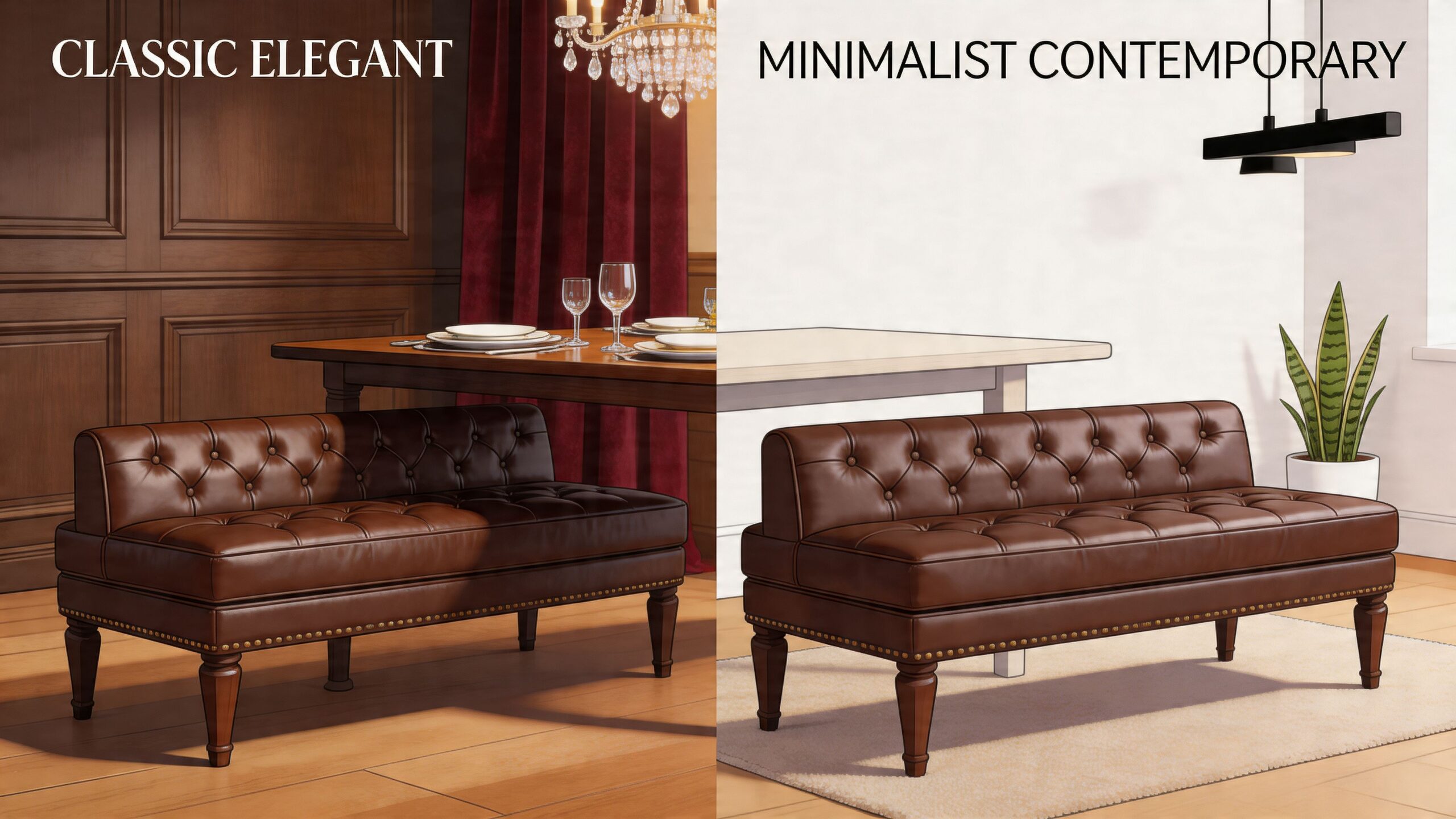
One of the best things about dining bench leather is how easily it crosses style lines. The same bench can feel rustic, modern, or transitional depending on the table, lighting, and surrounding materials. That flexibility is a big reason it works so well in homes that evolve over time.
Look one rustic warmth
Pair a brown leather bench with a solid oak or cherry table, visible grain, and a few time-softened finishes. This look works especially well in older Ann Arbor homes where original trim, wood floors, or farmhouse details already bring character to the room.
The bench doesn’t need much embellishment here. Let the leather provide the richness. A simple textile runner, ceramic serving pieces, and warm ambient lighting usually do enough.
Look two modern clarity
Now place that same bench beside a cleaner-lined table with a slimmer profile. Add matte black hardware or metal accents, and the room changes tone immediately. The leather reads less traditional and more architectural.
A bench with a clean-lined silhouette shines. Smooth upholstery, a refined base, and a quieter color palette make the room feel edited rather than ornate. If you want ideas for mixing dining forms, this guide to dining room styles offers useful visual direction.
Look three transitional balance
Transitional spaces often suit leather best because they blend warmth and restraint. Picture a maple or walnut-toned table, upholstered host chairs at the ends, and a leather bench on one side. The room feels inviting, but not themed.
A few easy styling moves help:
- Add texture carefully: A throw or cushion can soften the bench, but don’t hide the leather’s natural depth.
- Repeat tones elsewhere: Echo the leather color in artwork frames, cabinet hardware, or lighting to make the room feel intentional.
- Mix chair and bench seating: This gives the room variety and helps break up visual symmetry.
The bench’s advantage is that it doesn’t lock you into one exact design language. As paint, rugs, and lighting change, the piece can keep up.
Protecting Your Investment Leather Care and Maintenance
Leather has a reputation for being high-maintenance that it doesn’t entirely deserve. Most dining benches don’t need complicated treatment. They need steady, sensible care. Small habits matter more than dramatic rescue efforts.
If you think of a leather bench as an heirloom piece instead of a disposable one, the maintenance starts to feel less like work and more like basic stewardship.
The everyday habits that help
A practical care routine looks like this:
- Wipe spills promptly: Dining leather does best when liquids and food residue don’t get time to sit.
- Use a soft cloth: Gentle cleaning protects the finish better than aggressive scrubbing.
- Keep the surface free of grit: Tiny particles can act like sandpaper with repeated friction.
- Mind sunlight and heat: Strong direct sun and nearby heat sources can be hard on upholstery over time.
- Follow the maker’s care guidance: Finishes vary, and good care starts with the specific leather in your home.
For broader guidance on preserving furniture finishes and materials throughout the house, this maintenance resource is a helpful reference.
Leather care is usually about restraint. Clean gently, condition appropriately when recommended, and don’t overcorrect every little mark.
What not to do
Some of the most common damage comes from well-intended overcleaning.
- Don’t soak the leather: Excess moisture can create problems rather than solve them.
- Don’t use harsh household cleaners: If a product isn’t intended for the finish, keep it away.
- Don’t place the bench where it bakes daily: A bright window seat may look attractive but can be punishing long term.
- Don’t panic over natural variation: Better leather often shows character. Not every change is damage.
A dining bench leather seat should become more lived-in, not worn out. There’s a difference, and good maintenance preserves it.
Your Bench Made Your Way in Ann Arbor
A family buys a dining bench because the online price looks good. Then it arrives two inches too tall for the table, the seat depth feels awkward through a full meal, and the finish fights every wood tone in the room. We see that problem often. A bench earns its keep over years of dinners, holidays, homework, and daily use, so the better question is not just what it costs today. It is what you get from it over the next fifteen or twenty years.
That is where custom work proves its value. Dining rooms rarely follow standard dimensions, and households do not all use them the same way. Some need a compact bench to keep traffic moving. Some need extra length for regular hosting. Others need a specific leather color and wood finish so the bench belongs with the table, cabinetry, and floors from day one. A hand-crafted piece from a local store solves those details with far less compromise than a boxed import built around freight dimensions.

Why custom changes the result
A custom leather bench gives you control over the parts that determine whether the piece still feels right five years from now.
That often includes:
- Wood species and finish: Cherry brings warmth, oak adds grain character, and maple keeps the look cleaner and lighter.
- Seat length and proportion: A bench should relate properly to the table size and leave comfortable entry space at each end.
- Leather selection: Some leathers show more natural marking and soften with age. Others hold a more uniform, polished appearance.
- Overall configuration: A made-to-order bench can work as part of a larger furnishing plan with custom dining from Canadel or ergonomic seating from Stressless elsewhere in the home.
Designers understand this well, and homeowners benefit from the same logic. The advantages of custom furniture become clear once you start matching a bench to real use, real dimensions, and the rest of the house.
What to test in person
An in-person sit test still matters.
Run your hand across the leather and feel whether it has body and consistency. Sit at dining height, with your feet flat and your back upright, the way you would during an actual meal. Pay attention to whether the bench feels steady on the floor and whether the seat edge is comfortable after a few minutes. Study the stitching and the transitions where leather meets wood. Then step back and view the finish under normal light, because showroom color cards and online photos never tell the whole story.
Made-to-order programs also open up better answers than what happens to be in stock that week. Sometimes the right bench is one adjustment away in length, finish, or upholstery. That is especially true if you are furnishing several rooms and want the dining bench to connect with the wider home instead of standing apart from it.
If you’re ready to compare dining bench leather in person, visit Tyner Furniture on South State St. in Ann Arbor for a proper sit test and hands-on look at custom options. Since 1957, Tyner has helped Southeast Michigan shoppers balance craftsmanship, comfort, and long-term value, with made-to-order possibilities through Canadel and Stressless, Amish hand-crafted solid wood selections, special financing options, and a Low Price Promise. If you’d rather start from home, browse the online Quick Specs for special orders, then stop in when you’re ready to feel the difference for yourself.