Outdoor Recliner Lazy Boy: A Buyer’s Guide for Michigan

A lot of Southeast Michigan outdoor living decisions happen the same way. One warm evening finally arrives, the grill cools off, the air softens, and someone looks at the patio and realizes the seating still isn’t doing the space justice. The table works for dinner, but it doesn’t invite you to stay. A basic lounge chair looks fine until you spend an hour in it and feel it in your lower back.
That’s usually when an outdoor recliner lazy boy search starts.
It’s a smart search, but it can also get muddy fast. Outdoor furniture gets marketed with broad words like “all-weather,” “deep seating,” and “durable,” yet those labels don’t tell you how a recliner will hold up through Southeast Michigan humidity, long sun exposure, and the off-season reality of storage, covers, and freeze-thaw stress. They also don’t tell you whether the chair fits your body.
A good outdoor recliner isn’t just a seasonal extra. It’s a comfort investment, much like the right indoor recliner, home office chair, or dining set you expect to live with for years. That’s how we think about furniture at home. It should earn its place, feel right, and keep doing its job after the novelty wears off.
Table of Contents
- Your Perfect Michigan Summer Evening Starts Here
- Beyond the Porch Swing What Defines a Modern Outdoor Recliner
- Built for Michigan Seasons Materials and Weatherproofing
- The Ergonomics of Outdoor Comfort Sizing and Support
- Indoor vs Outdoor Recliners A Practical Comparison
- Finding Your Perfect Fit at Tyner Furniture
- Your Outdoor Recliner Questions Answered
Your Perfect Michigan Summer Evening Starts Here
Michigan gives you a narrow window for outdoor living, which is exactly why the right chair matters so much. When the sun stays out late and the mosquitoes haven’t taken over yet, a recliner turns a deck, porch, or patio into the place everyone wants to end the day. You lean back, put your feet up, and the space starts working the way you hoped it would when you first planned it.
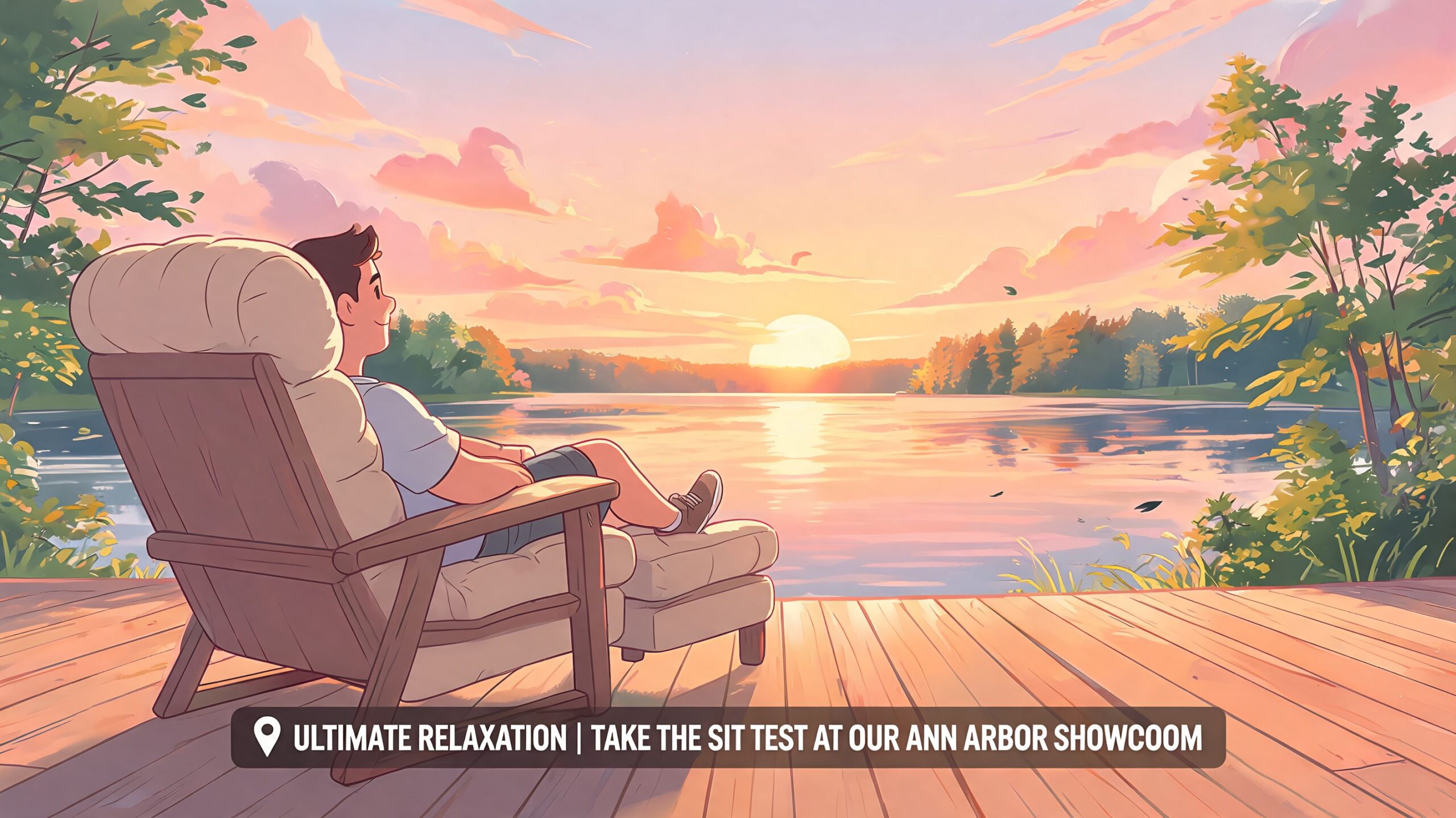
A lot of homeowners in Ann Arbor and across Southeast Michigan don’t need more patio furniture. They need one piece that changes how they use the space. A proper recliner often does that better than another dining chair or another bench ever will. It creates a landing spot for morning coffee, afternoon reading, and that last hour outside when the temperature finally drops.
The chair sets the pace of the space
An outdoor recliner works best when it solves a real use case:
- Quiet evenings: You want support for your back and neck, not a low sling chair that looks stylish but asks your body to do too much.
- Hosting without hovering: Guests stay longer when there’s one obviously comfortable seat in the mix.
- Staycation living: If you’re refreshing your backyard as a true extension of the home, this kind of seating often becomes the anchor. Our ideas on building a real staycation setup at home can help you think through the whole space.
A patio becomes valuable when you use it on ordinary weekdays, not just holiday weekends.
There’s also a tactile side to this that’s easy to overlook online. Outdoor comfort isn’t only about a reclining mechanism. It’s the feel of the arm, the give of the cushion, the way the chair supports you when you shift positions, and even the small comforts nearby. If you like layering in warmth for cooler evenings, resources like sustainable luxury throws for corporate gifting can spark ideas for adding softness without making the space feel overdone.
Why this purchase feels harder than it should
People usually know what they want the chair to do. They don’t always know how to judge whether a specific model can do it for more than one season.
That’s where the substantive buying work begins. Materials matter. Fit matters. Climate matters. And in a market full of broad “outdoor safe” claims, those details separate a short-term patio buy from something with lasting value.
Beyond the Porch Swing What Defines a Modern Outdoor Recliner
The modern recliner didn’t begin as a living room staple. The La-Z-Boy recliner originated as a wood-slat porch chair in 1928 in Monroe, Michigan, and it was upholstered and moved indoors in 1929 after a retailer said it was being seen as a summer-only item, which turned it into a year-round household product, as noted in this La-Z-Boy company history.
That origin matters because it explains something buyers still wrestle with today. Reclining comfort started outdoors, then moved inside once people saw how much more useful it became with the right materials. Modern outdoor recliners bring that comfort back outside, but only when the construction is purpose-built for exposure.
A real outdoor recliner isn’t just a patio chair that leans back
You can spot the difference pretty quickly once you know what to look for. A true outdoor recliner is built as a system. The frame, cushioning, hardware, and upholstery all have to tolerate sun, moisture, and temperature swings while still feeling stable and comfortable.
A basic reclining patio chair often cuts corners in one of two places:
- Comfort geometry: It reclines, but the sit isn’t supportive enough for an hour of reading or conversation.
- Outdoor readiness: It looks appropriate for a deck, yet the materials don’t age well in real backyard conditions.
What defines the category
A modern outdoor recliner usually earns its keep through a combination of features, not one headline spec.
- Dedicated outdoor materials: Frames and woven surfaces need to handle moisture without acting like a sponge or a rust trap.
- Supportive seat architecture: The chair should hold your body in a natural position whether you’re upright or partially reclined.
- A mechanism designed for repeated use: Outdoor furniture gets used differently than a formal accent chair. People shift, lean, and get in and out with drinks, towels, and blankets in hand.
- A visual role in the space: The best pieces don’t just function well. They help a patio feel complete. If you’re refining the surrounding layout, this guide to designing a patio with stronger visual flow is useful.
Practical rule: If a chair is sold on appearance alone, assume you still need to verify comfort, drainage, frame material, and cushion construction.
There’s also a value point here that often gets missed. Outdoor reclining seating sits in a narrow band between casual patio furniture and full indoor-style comfort. That’s why the good versions tend to stand out. They’re not trying to be disposable. They’re trying to bring familiar, lived-in relaxation outdoors without asking the materials to do a job they weren’t built for.
Built for Michigan Seasons Materials and Weatherproofing
Outdoor recliner performance starts with materials, but in Southeast Michigan, a key question is how those materials behave after repeated humidity, rain, sun, and off-season exposure. “All-weather” sounds reassuring. It’s also incomplete. A recliner can survive a sunny showroom story and still struggle once it lives through a backyard season.
Frame materials that make sense outdoors
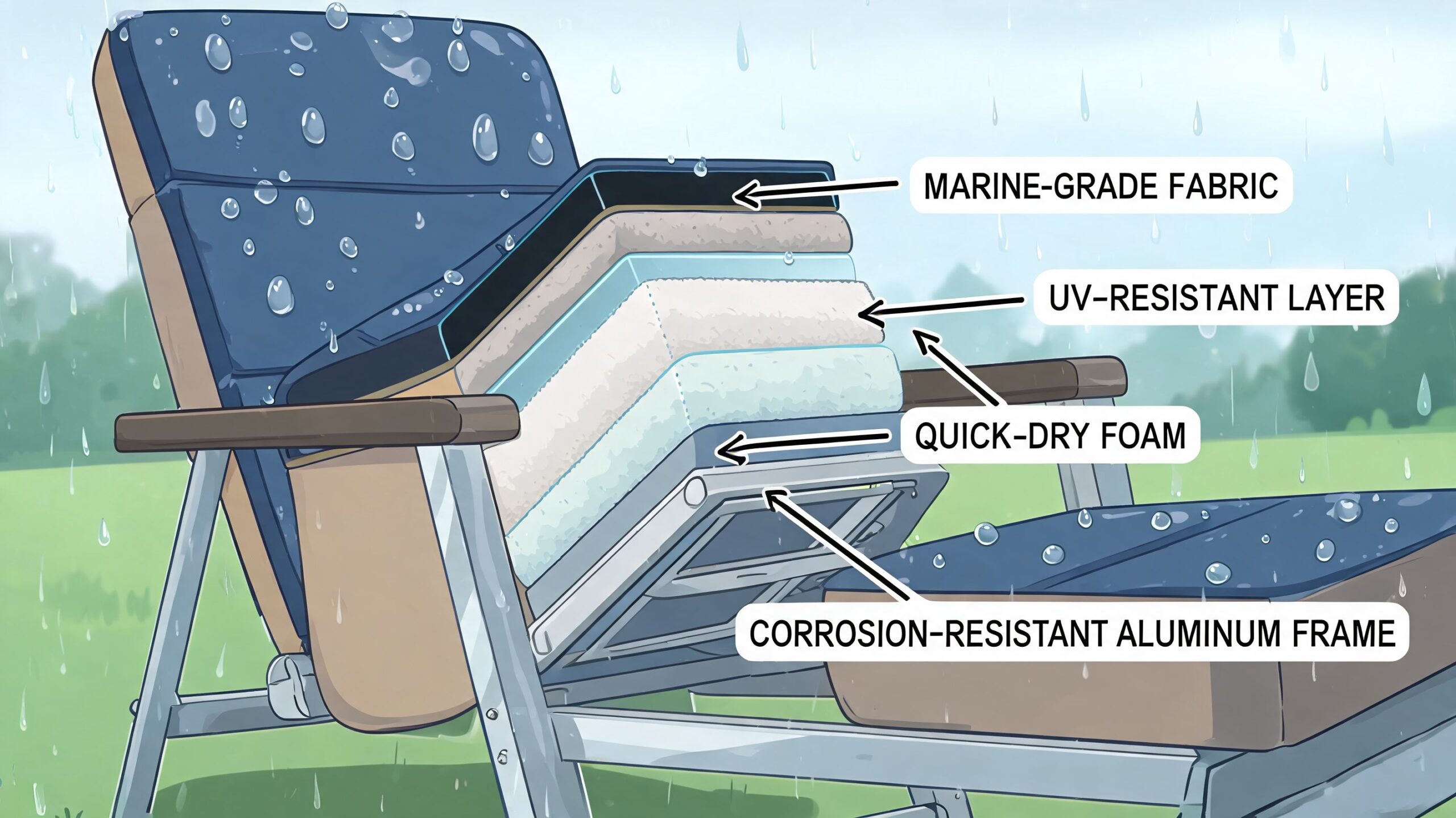
For a true outdoor recliner lazy boy style purchase, frame choice is one of the first filters. Aluminum is popular for good reason. It resists corrosion well, and it doesn’t carry the same moisture concerns as many indoor-oriented materials. Wicker can also perform well outdoors when it’s weather-resistant synthetic wicker rather than natural rattan.
What usually doesn’t age gracefully outdoors is anything that depends on staying consistently dry. That includes parts, finishes, and cushion structures that trap moisture or invite mildew.
What tends to work better in Michigan
- Aluminum frames: A practical pick for humid conditions and routine outdoor exposure.
- Weather-resistant wicker: Good for a softer visual profile, especially when woven over a suitable frame.
- Cushions designed for outdoor use: They need to dry well and resist fading, not just feel plush on day one.
What buyers should question
- Natural-fiber looks with vague construction details: If the listing doesn’t tell you what the weave is, keep asking.
- Heavy, indoor-like cushion builds: Comfort is appealing, but trapped moisture becomes a long-term headache.
- Untreated hardware or unclear mechanism specs: Reclining parts have to keep moving cleanly after weather changes.
What 1200-hour UV protection actually means
Premium outdoor recliner cushions can include 1,200-hour UV protection, and for a typical Michigan outdoor season that can translate to multiple years of use before noticeable fading occurs, according to this outdoor recliner product specification.
That doesn’t mean a chair becomes maintenance-free. It means the fabric has a measurable level of resistance to one of the biggest appearance problems in outdoor furniture, which is sun-driven fading and material breakdown.
The climate problem generic marketing skips
Southeast Michigan adds stress in ways product tags rarely explain. Moisture sits differently here than it does in a dry climate. Spring can be damp, summer can be humid, and winter storage mistakes show up fast when furniture comes back out.
That’s why I tell shoppers to think in ownership phases, not just purchase day:
Peak season use
Does the recliner stay comfortable after repeated sun, rain, and temperature changes?Storm and humidity management
Can the materials dry out properly, or do they hold dampness longer than they should?Off-season care
How will you cover, store, or protect it when the usable outdoor season ends?
The piece doesn’t have to be fragile to be high-end. It does have to be cared for like something worth keeping.
For buyers planning ahead for winter, practical resources like these winter outdoor furniture protection tips can help you think through covers, cleaning, and storage habits before cold weather arrives. If you’re comparing categories and fabrics more broadly, our look at outdoor upholstered furniture for Michigan conditions is another useful reference.
Cost per year matters more than sticker shock
The right way to judge outdoor value isn’t “What does this cost today?” It’s “How many Michigan seasons can this give me without becoming a maintenance chore or an eyesore?” A recliner that keeps its shape, color, and mechanism over time usually costs less emotionally and financially than replacing a mediocre one after frustration sets in.
That’s the difference between patio furniture you tolerate and outdoor furniture you’re glad you bought.
The Ergonomics of Outdoor Comfort Sizing and Support
Most outdoor seating gets judged by cushion softness first. That’s understandable, but it’s not how comfort holds up over time. Softness gets attention in the first five minutes. Ergonomics decides whether you still like the chair after a full evening outside.
A quality outdoor recliner example like the La-Z-Boy Sawyer lists a 16.5-inch seat height and 26-inch seat depth, dimensions that are designed to support proper posture and align with ergonomic principles for reducing musculoskeletal strain during extended sitting, as shown in these Sawyer outdoor recliner dimensions.
Why seat height and depth matter
Seat height changes how easily you get in and out of the chair and whether your legs rest naturally. If the seat is too low, your knees rise and your lower back can start doing more work than it should. If the seat is too high, your posture can feel perched rather than supported.
Seat depth affects something different. Too shallow, and the chair can feel insubstantial. Too deep, and you may end up slouching or losing useful back support unless your body size matches the geometry.
Quick fit checks that help
- Feet placement: Your feet should feel grounded when upright, not dangling or tucked awkwardly.
- Lower back contact: You shouldn’t have to scoot, hunch, or brace yourself to feel support.
- Arm comfort: Arms should rest naturally, especially if you read or use a tablet outdoors.
- Recline transition: The move from upright to reclined should feel balanced rather than abrupt.
Outdoor seating has fewer adjustment options
Indoor ergonomic seating has trained many shoppers to expect more personalization. That’s especially true with Stressless, where size-based fit and body-specific support are central to the experience. Outdoor recliners usually don’t offer that same bespoke adjustability, so the buyer has to evaluate the fixed geometry more carefully.
That means an outdoor sit test matters more than people think.
A chair can be well made and still be wrong for you. Fit is personal, even when the product category is standardized.
Use indoor standards to judge outdoor comfort
One of the best ways to shop outdoor recliners is to borrow the mindset people already use for premium indoor seating. Look at proportions. Notice where pressure builds. Pay attention to neck support, arm position, and how the chair feels after you’ve been in it for a while, not just when you first sit down.
A practical method is to bring your own habits into the test:
- Sit upright as if you’re having coffee.
- Lean back like you would during a conversation.
- Stay in the chair long enough to notice whether your lower back settles or complains.
- Shift positions the way you naturally do at home.
If you’re unsure whether a recliner’s footprint and geometry make sense in your space, our guide on how to measure furniture before buying helps with room planning and circulation.
The hidden comfort test
The hidden test is duration. Many patio chairs feel acceptable for ten minutes. Far fewer support a long phone call, a chapter of a book, or an evening on the deck without making you constantly reposition.
That’s why I’d rather see a buyer choose one outdoor recliner with sound ergonomics than a whole patio set full of seats nobody seeks out. The comfortable chair always wins in real life.
Indoor vs Outdoor Recliners A Practical Comparison
One of the most common questions is whether an old indoor recliner can live on a covered porch. I understand the temptation. If the chair already exists and the porch has a roof, it can seem close enough.
In practice, indoor and outdoor recliners are built for different jobs.
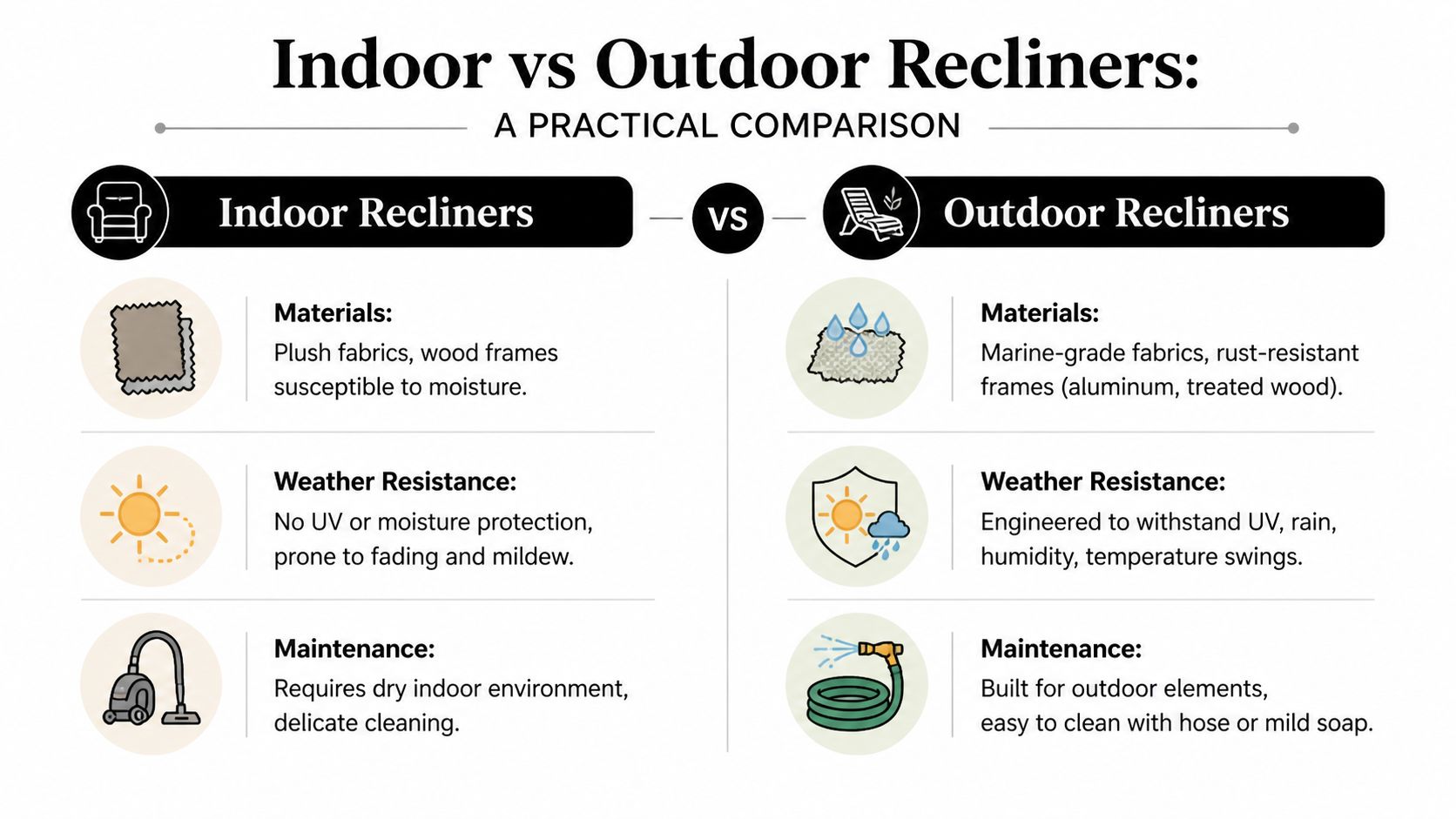
A key gap in outdoor furniture is that it usually lacks the highly personalized ergonomic adjustments found in indoor models like Stressless. Buyers have to judge the fixed geometry of outdoor pieces more carefully to find a fit that suits their body and comfort needs, a contrast discussed on La-Z-Boy’s recliner content.
Indoor Recliner vs Outdoor Recliner Breakdown
| Feature | Typical Indoor Recliner | Heirloom-Quality Outdoor Recliner |
|---|---|---|
| Frame focus | Built for climate-controlled rooms | Built for exposure, humidity, and seasonal use |
| Upholstery | Comfort-first fabrics or leather | Outdoor-rated fabrics chosen for weather tolerance |
| Cushion behavior | May retain moisture and dry slowly | Designed for outdoor conditions and practical drying |
| Hardware demands | Protected from routine moisture | Expected to face humidity and changing temperatures |
| Cleaning reality | More delicate care | Easier wipe-down and seasonal maintenance |
| Fit advantage | Often more adjustable and tailored | Usually less adjustable, so geometry matters more at purchase |
Why covered porches still count as outdoors
A roof helps, but it doesn’t create indoor conditions. Air moisture still moves through the space. Pollen settles. Temperature swings remain. Cushions can absorb humidity even when they never get rained on directly.
That’s where indoor pieces start losing ground. Fabrics can age poorly, foams can hold dampness, and mechanisms can resent conditions they were never asked to endure.
When each category makes sense
An indoor recliner still wins for deep personalization, especially if your priority is precise lumbar feel, leather options, or made-to-order comfort features. An outdoor recliner wins when the chair must live outside and survive accordingly.
For readers comparing reclining categories more broadly, our recliner buying guide can help frame the comfort differences in plain terms.
If the chair’s permanent address is the patio, buy for the patio.
That decision usually saves money, cleanup, and disappointment later.
Finding Your Perfect Fit at Tyner Furniture
Online shopping can narrow the field, but it rarely answers the question that matters most. Does the chair fit your body, your patio, and the way you use the space from May through October?
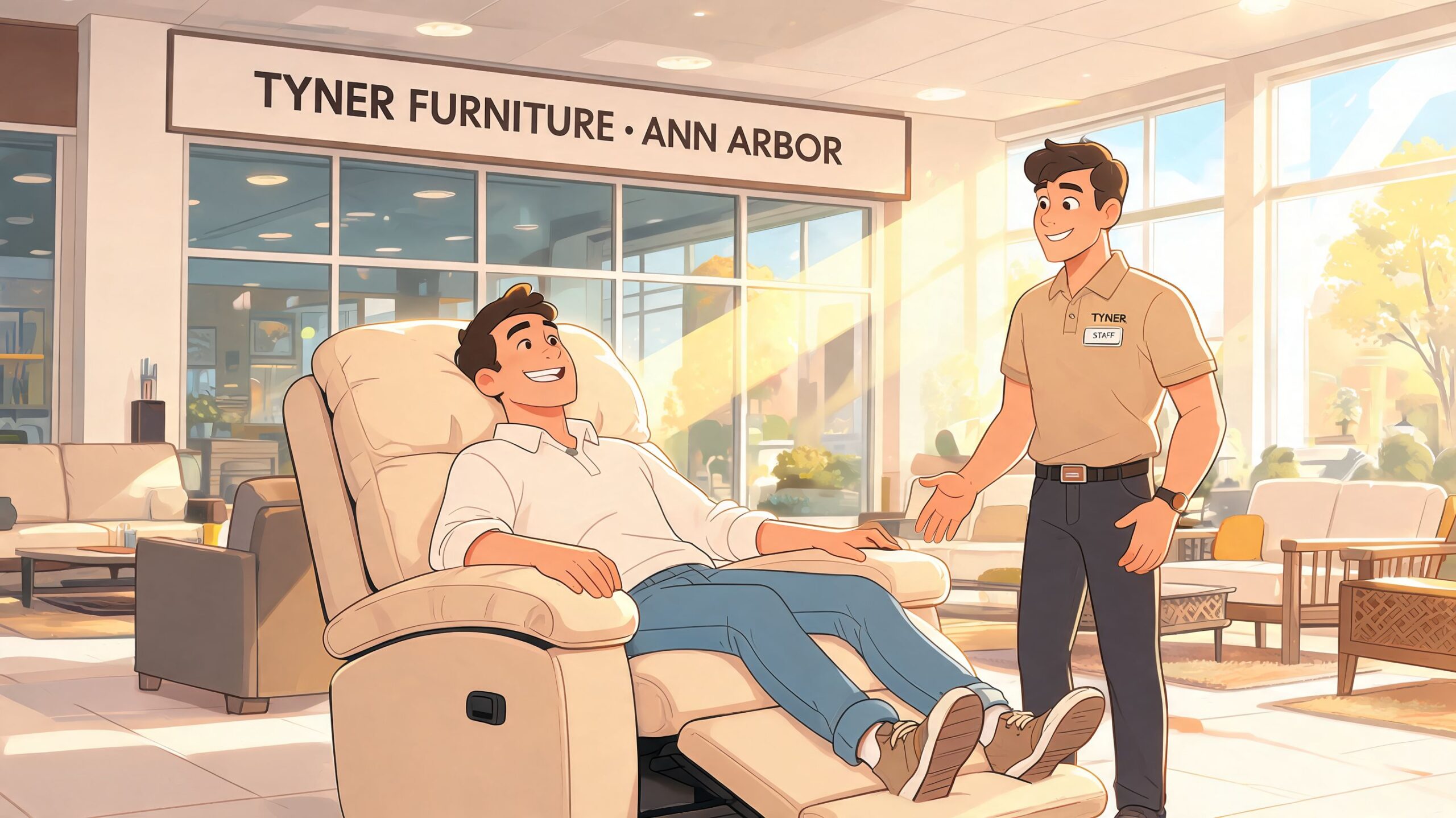
That answer usually becomes clear in person. A product page can list dimensions, but it cannot show whether the headrest lands too low, whether the footrest angle leaves pressure behind your knees, or whether the seat pitch makes getting out of the chair harder than it should be. Outdoor recliners also give you fewer adjustment options than many indoor models, so getting the geometry right at purchase matters more.
For Southeast Michigan homeowners, I would treat the sit test as part of the buying process, not an extra errand. The chair may spend years on a covered porch, a deck, or a three season room that still deals with humidity, pollen, and big temperature swings. A recliner that feels acceptable for five minutes can become a chair nobody chooses by mid-July.
What a showroom visit helps you catch
A good showroom test reveals problems and strengths that are easy to miss online:
- Seat height and exit effort: The right chair lets you sit down and stand up without that low, strained feeling.
- Back angle and shoulder contact: Some recliners support the lower back well but miss taller users through the shoulders and upper spine.
- Arm height: Arms that sit too high can crowd the shoulders. Too low, and the posture never quite settles.
- Footrest position: A footrest can look generous in photos and still leave your legs unsupported where it counts.
- Scale in the room: A comfortable recliner still has to fit the space without swallowing a smaller patio conversation area.
At Tyner Furniture on South State Street in Ann Arbor, that hands-on comparison is part of the advantage. The store has served local shoppers since 1957, and that kind of experience shows up in practical guidance. The conversation is usually less about trendy features and more about how a piece will wear, how it will fit, and whether it makes sense for your home.
Bring the same discipline you use indoors
Buyers often put more thought into an indoor recliner than an outdoor one because indoor seating offers more customization. That difference is real. Indoors, you can often fine-tune size, cushion feel, lumbar support, and upholstery in ways outdoor categories usually do not match.
Outdoor shopping still benefits from the same discipline. Check proportion. Check support. Check finish. Check whether the materials and construction justify the price over the long haul. That is the difference between a seasonal impulse purchase and a chair you still trust after several Michigan summers.
Some shoppers already know Tyner through categories where fit matters just as much, such as Canadel dining or Stressless seating. The lesson carries over. Even when customization is more limited, careful selection usually produces better long-term comfort than buying by photo alone.
Value includes service life
Price matters, but replacement cost matters too. A less expensive recliner that feels mediocre, dries slowly, or starts showing wear after a couple of seasons can cost more in the long run than a better-built piece bought once.
For some households, timing is part of the decision. Special Financing and a Low Price Promise can help keep the purchase realistic without pushing you toward a short-term substitute. That matters with outdoor furniture, where a bad buy tends to show itself quickly in comfort, cleanup, and durability.
Your Outdoor Recliner Questions Answered
How should I care for an outdoor recliner in winter?
Clean it before storage, let every surface dry fully, and use a storage plan that reduces prolonged moisture exposure. Even durable outdoor materials benefit from being protected from a full Michigan off-season. Covers help, but trapped dampness under a cover can create its own problems if airflow is poor.
Can outdoor furniture qualify for financing?
Often, yes. Financing can be a practical way to buy the piece you want instead of settling for a short-term substitute. If you’re furnishing several zones at once, that flexibility can matter even more.
What should I look for in the warranty?
Look for clarity. You want to know what parts are covered, how material wear is handled, and whether the warranty language reflects normal outdoor use rather than ideal conditions. The stronger warranties usually come from manufacturers that are confident in their material choices and construction.
Is an outdoor recliner worth it if I already have patio seating?
If your current seating is fine for meals but not for lingering, then yes, it can be the missing piece. One supportive recliner often changes how often you use the space.
If you’re narrowing down an outdoor recliner lazy boy option for your patio, visit Tyner Furniture in Ann Arbor for a sit test or browse the online Quick Specs for special orders. It’s the easiest way to compare comfort, scale, and long-term value before you bring a piece home.