Fabric Swivel Chair The Ultimate Buying Guide


You’re usually not shopping for a fabric swivel chair because you need “a chair.” You’re trying to solve a daily problem. Maybe the corner by the window needs a reading seat that can turn toward the conversation area. Maybe your home office needs something softer than a task chair but still supportive enough for an afternoon of real work. Maybe your living room has one dead spot that needs movement, comfort, and visual softness all at once.
That’s why this category matters more than people expect. A good fabric swivel chair earns its keep every day. It gives you flexibility without the cold feel of metal or the formality of a fixed accent chair. It can face the fireplace, the television, the bookcase, or the people in the room, all without dragging legs across the floor. If you buy well, it becomes one of those pieces everyone in the house considers their favorite.
In Southeast Michigan, where homes range from older Ann Arbor bungalows to newer open-plan spaces, that kind of adaptable seating has lasting value. Since 1957, local shoppers have come to Tyner looking not just for style, but for furniture that feels right years after the delivery truck leaves. That long view matters. A fabric swivel chair is a comfort purchase, but it’s also an investment purchase.
Table of Contents
- Finding the Perfect Swivel Chair an Investment in Comfort
- Decoding Fabric Choices for Your Lifestyle
- The Anatomy of a Lasting Swivel Chair
- Ergonomics and the Art of the Swivel Mechanism
- Sizing and Placing Your Chair in Michigan Homes
- The Tyner Customization Advantage
- Making Your Heirloom Investment Accessible
- Your Swivel Chair Checklist and Local FAQs
Finding the Perfect Swivel Chair an Investment in Comfort
The right chair usually reveals itself in a very ordinary moment. You sit down with coffee, turn slightly to answer someone in the kitchen, pivot back toward the light, and realize you’re more comfortable because the chair moved with you instead of making you adjust to it. That simple motion is the reason swivel seating has stayed relevant for so long.
The idea isn’t new. The first known swivel chair was invented by Thomas Jefferson in 1775, when he modified a Windsor chair with an iron spindle so it could rotate 360 degrees. He reportedly used that chair while drafting the Declaration of Independence, a reminder that ergonomic movement has long been tied to focus and productivity, as noted in this history of the swivel chair.
Good furniture solves small problems so smoothly that you stop noticing the problem was ever there.
That’s a useful way to think about a fabric swivel chair today. In a reading nook, it lets you turn toward the window in the morning and the lamp in the evening. In a family room, it keeps seating social without forcing a rigid layout. In a home office, it softens the room while still supporting real use.
Why this piece often outperforms trend furniture
A lot of accent seating looks good in photos and disappoints in daily life. The seat is too shallow, the back is too stiff, the fabric shows wear too quickly, or the scale is wrong once it lands in a real room. A well-made fabric swivel chair avoids that trap because it combines three jobs in one piece:
- Comfort job: It should feel inviting for a short sit and a long one.
- Layout job: It should work from more than one angle in the room.
- Longevity job: It should still look composed after years of regular use.
That’s where an investment mindset helps. A chair that costs less upfront but loses shape, shows wear, or feels awkward after a season isn’t the value it first appeared to be. A chair that keeps its comfort and structure becomes less about trend and more about daily return.
What experienced shoppers usually learn
Fabric color and silhouette are often the initial considerations. Those matter, of course. But the better purchase usually comes from asking different questions first. How does the chair sit? What’s inside it? Will the upholstery fit your household? Can it adapt if your room changes later?
In a long-standing local business, you see the same lesson over and over. Shoppers who are happiest years later are the ones who bought for fit, construction, and lifestyle first, then style second. The style still matters. It just works better when it’s sitting on a sound foundation.
Decoding Fabric Choices for Your Lifestyle
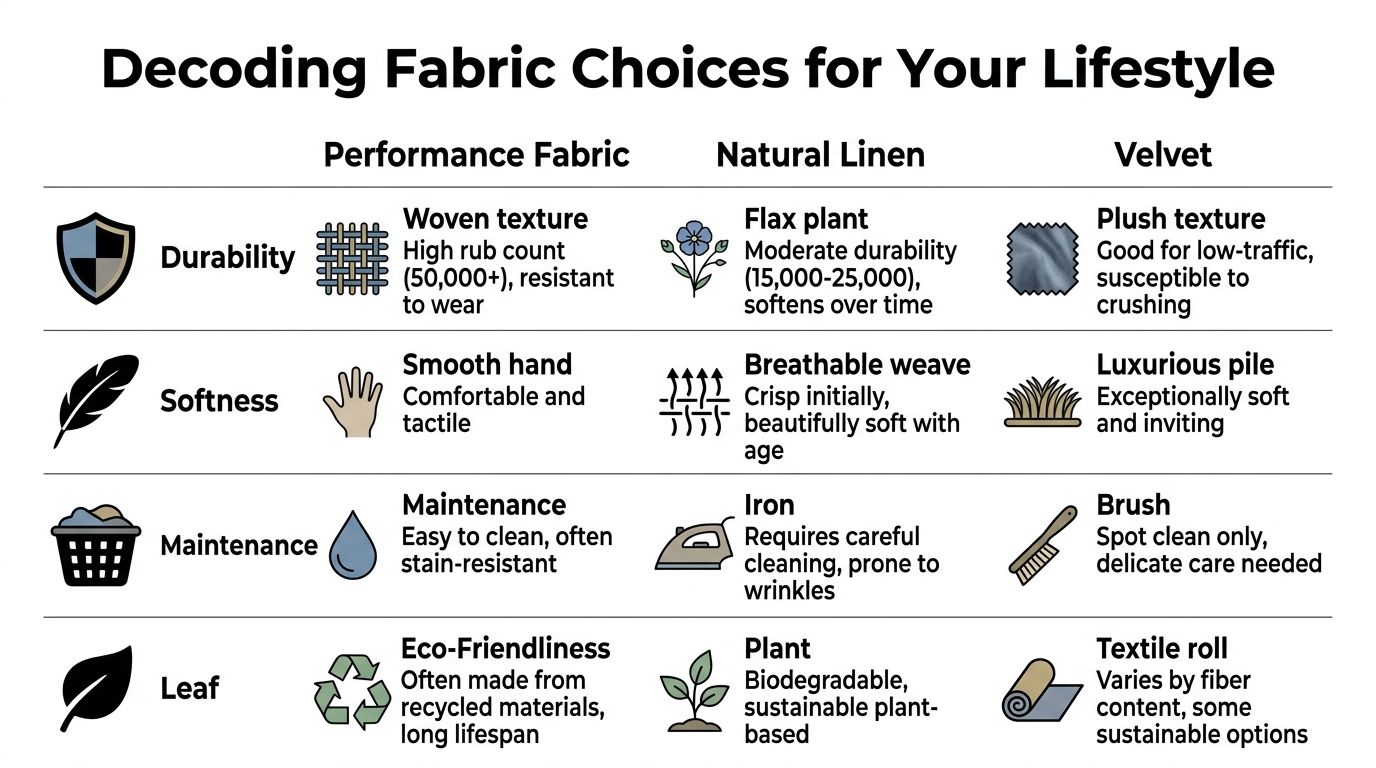
Fabric is where many shoppers either protect their investment or accidentally shorten it. The wrong upholstery can make a good chair feel like high maintenance. The right one can keep a fabric swivel chair looking composed through coffee spills, weekend guests, pets circling before they settle, and the wear that comes from using a chair the way a chair should be used.
What works in real households
Performance fabrics have changed the category. Modern performance fabrics can resist liquid penetration, reducing staining probability by 60 to 80 percent compared to untreated upholstery, according to the product details for the Series Performance Velvet Fabric Swivel Chair. In practical terms, that buys you time. Spills are easier to catch before they settle in, and routine maintenance tends to be less stressful.
That same source notes that removable cushions help with spot treatment and upkeep. For a busy household, that matters more than many shoppers realize. A chair that can be cleaned quickly is a chair that stays in service, instead of becoming the piece everyone avoids using.
Natural fabrics bring a different kind of appeal. Linen, cotton, and wool often have beautiful texture and breathability. They can feel relaxed, structured, airy, or subtly upscale depending on the weave. But they also ask more of the owner. They’re often better for lower-drama spaces, or for households willing to accept a little lived-in character as part of the charm.
Velvet sits in the middle of an interesting trade-off. It’s inviting, rich, and excellent for adding depth to a room. In the right fabric quality, it can look refined rather than precious. But pile fabrics can show directional shading and wear patterns more visibly, so placement and use matter.
Practical rule: Match the fabric to the busiest person, pet, or habit in the house, not to the tidiest version of your life.
For readers who want a broader upholstery primer, this upholstery materials guide is a useful place to compare feel, upkeep, and suitability before you narrow down swatches.
How to judge fabric beyond color
A swatch can be misleading because your eye goes straight to tone and pattern. Try evaluating upholstery in this order instead:
| Fabric type | Best use | Watch-outs | Investment takeaway |
|---|---|---|---|
| Performance fabric | Family rooms, high-use reading chairs, homes with pets or frequent spills | Some weaves feel more technical than natural | Often strongest cost-per-year value |
| Natural linen or cotton | Quieter rooms, layered interiors, lighter-use seating | Wrinkling, more visible wear, more careful cleaning | Beautiful when you want texture and accept maintenance |
| Velvet | Accent seating, cozy corners, formal-soft rooms | Crushing, shading, care expectations | Strong visual payoff if traffic is moderate |
A few smart questions help narrow the field fast:
- How often will someone sit here? Daily use changes the answer.
- Will the chair sit near a sunny window? Some fabrics age more gracefully in bright light than others.
- Do you want a chair that hides life, or one that shows character? Neither answer is wrong.
- Can you commit to the maintenance the fabric asks for? Be honest here.
For households with pets and heavy traffic, durability details matter, and buyers often ask about rub counts even when product pages stay vague. That’s one reason many experienced shoppers request exact upholstery specs before ordering.
Pro tip box
- Ask for the wear rating: If a fabric swivel chair is going into a main living area, request the fabric’s durability information rather than assuming “soft” means “durable.”
- Touch the weave, don’t just view it: Tight weaves often wear differently than looser, more relaxed textures.
- Check cushion design: A removable or reversible cushion can make maintenance much simpler over time.
The Anatomy of a Lasting Swivel Chair
A fabric swivel chair can look generous and feel soft on day one while hiding weak construction underneath. That’s the trap with disposable seating. It sells the first impression. It doesn’t always survive the fifth year.
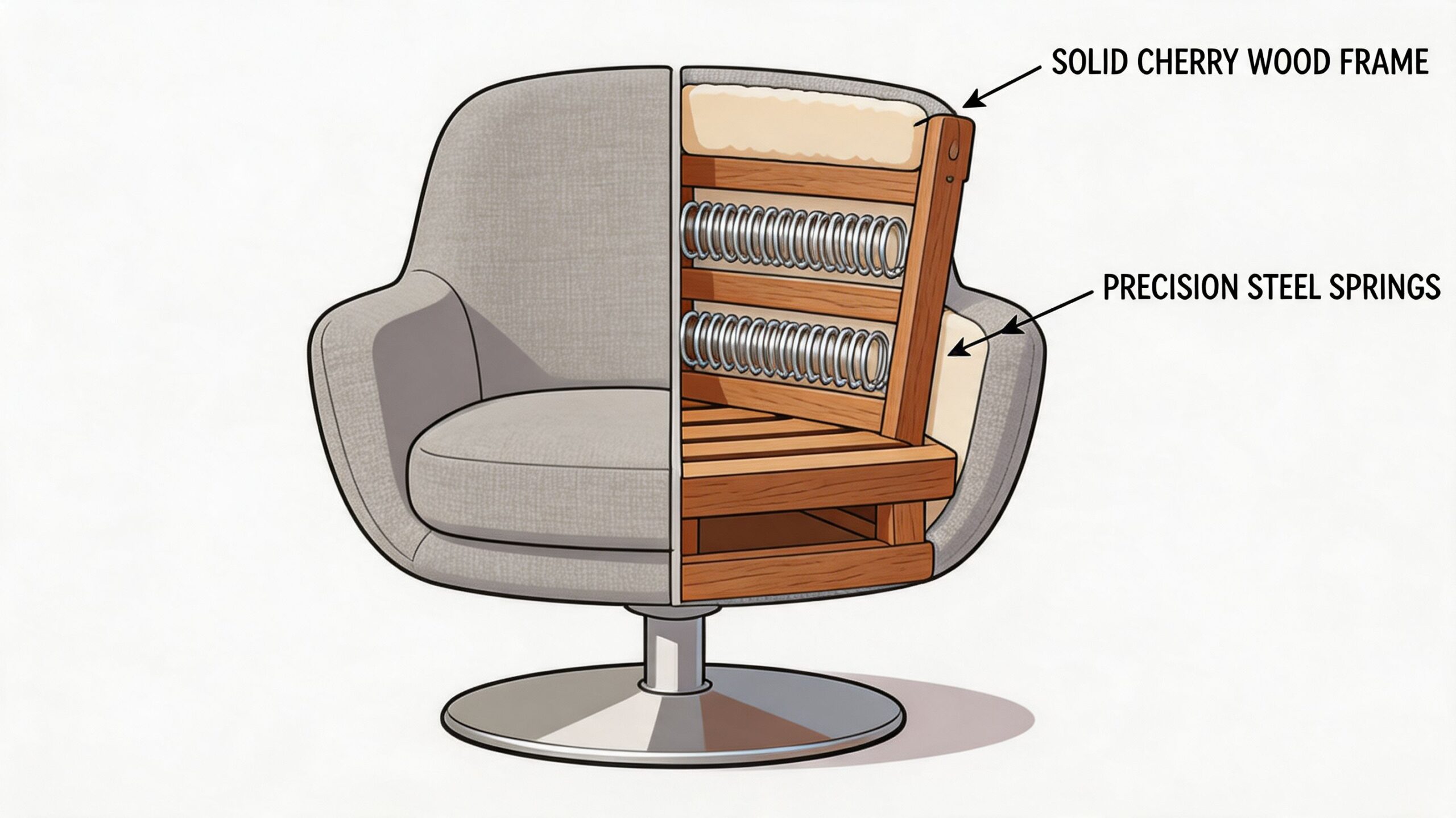
The better chairs tell their story underneath the upholstery. Frame integrity, support system, seat construction, and the quality of the swivel base determine whether comfort holds steady or gradually collapses into sagging, squeaking, and a seat that never quite looks level again.
What’s doing the heavy lifting
Think of the frame as the house and the upholstery as the paint color. If the frame is poor, nothing layered over it can fully compensate. In better furniture, you want solid wood construction, clean assembly, and support elements that distribute weight instead of concentrating stress in one small area.
One useful example comes from Flexsteel. Its premium chair construction uses a Blue Steel Spring™ system within a 5-layer wood frame, and that engineering distributes weight more effectively than standard single-spring designs, reducing spring fatigue that often leads to sagging, according to the product information for the Murph Fabric Swivel Chair. That’s the kind of specification worth noticing because it points to how a chair will behave after repeated use, not just how it feels in the showroom.
Here’s what buyers should pay attention to under the surface:
- Frame quality: A strong wood frame resists looseness, wobble, and distortion over time.
- Spring support: Better spring systems spread load and help the seat recover instead of slumping.
- Foam and cushion design: Dense, resilient cushioning keeps shape better than overly soft fill that compresses early.
- Base mechanism: The swivel should turn smoothly without grinding, hesitation, or a flimsy feel.
How quality shows up after the honeymoon phase
The first warning sign of a weak chair is rarely dramatic. It’s subtle. One side dips slightly. The seat doesn’t bounce back. The back starts to feel less supportive. Over time, those little signs become the whole experience.
If you’ve ever dealt with an older chair that feels tired, this guide to sagging chair support gives a helpful overview of what seat failure looks like and why support matters. It’s a good reference for learning what you’re trying to avoid before you buy.
The real test of craftsmanship isn’t how a chair looks under bright showroom lights. It’s how it behaves after years of ordinary evenings.
For shoppers who also care about material integrity elsewhere in the home, this same principle is why solid wood and hand-crafted joinery matter so much in dining and bedroom furniture. A chair may be upholstered, but the underlying lesson is the same. Lasting furniture depends on structure first.
A quick in-person check helps. Lift the front slightly and feel the weight. Sit down and shift naturally from side to side. Turn in the chair a few times. Good construction usually feels quiet, planted, and composed. Weak construction often announces itself through lightness, noise, or a vague sense that the seat is working harder than it should.
Ergonomics and the Art of the Swivel Mechanism
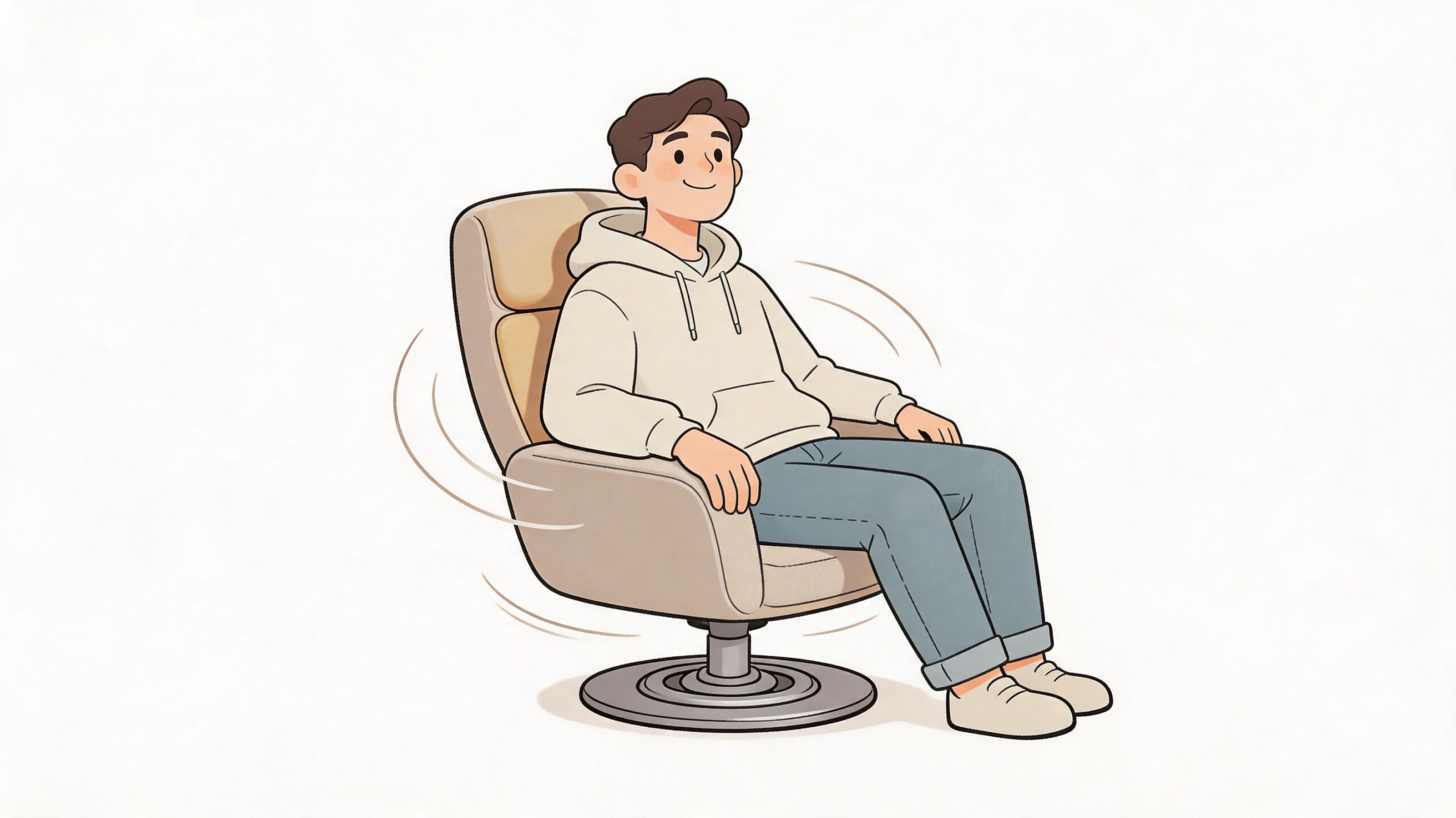
A fabric swivel chair should do more than turn. It should support the way your body sits. Some people read curled into a corner. Some sit upright for conversation. Some use a swivel chair in a home office and need posture support without the look of a conventional desk chair. The mechanism matters, but fit matters more.
How to do a real sit test
Most showroom sit tests are too short and too polite. People perch for ten seconds, nod, and move on. That doesn’t tell you much. A useful sit test asks more of the chair.
Start with these checks:
- Sit all the way back. Your lower back should feel supported, not stranded.
- Notice seat depth. If the seat is too deep, your back won’t stay in contact with the chair. Too shallow, and you’ll feel pushed forward.
- Let your shoulders relax. You shouldn’t have to hold yourself in position.
- Use the swivel naturally. Turn toward an imaginary conversation area, then toward a table or window. The movement should feel smooth and purposeful.
- Stay there for a few minutes. A chair that only feels good for a moment often reveals pressure points quickly.
For shoppers who want to think more carefully about spinal alignment and daily seated habits, this article on how to improve posture while sitting pairs well with an in-store sit test.
Which swivel behavior fits your room
Not every swivel works the same way. A standard full swivel gives you freedom and flexibility. That’s excellent in multipurpose spaces where the chair may face several directions in one evening. A memory-return mechanism can be useful when you want the chair to come back to its original position after use, which helps a room look tidier.
The better choice depends on the room’s job:
- Conversation rooms: A full swivel keeps seating social and fluid.
- Reading corners: A smooth, quiet turn lets you follow light and activity without scraping furniture around.
- Home offices: You may want more upright support and easy movement between desk, shelf, and screen.
- Formal living rooms: A return swivel often keeps the layout looking intentional.
Don’t judge ergonomic comfort by softness alone. The chair that feels plush for thirty seconds can be the chair you avoid after dinner.
Fit becomes even more important with specialized seating. Stressless, for example, is known for ergonomic seating with custom sizing options, which can be helpful for shoppers who need a more custom-fit seat rather than a one-size-fits-all approach. That’s especially relevant in Ann Arbor homes where one chair may serve many purposes in a compact room.
Sizing and Placing Your Chair in Michigan Homes
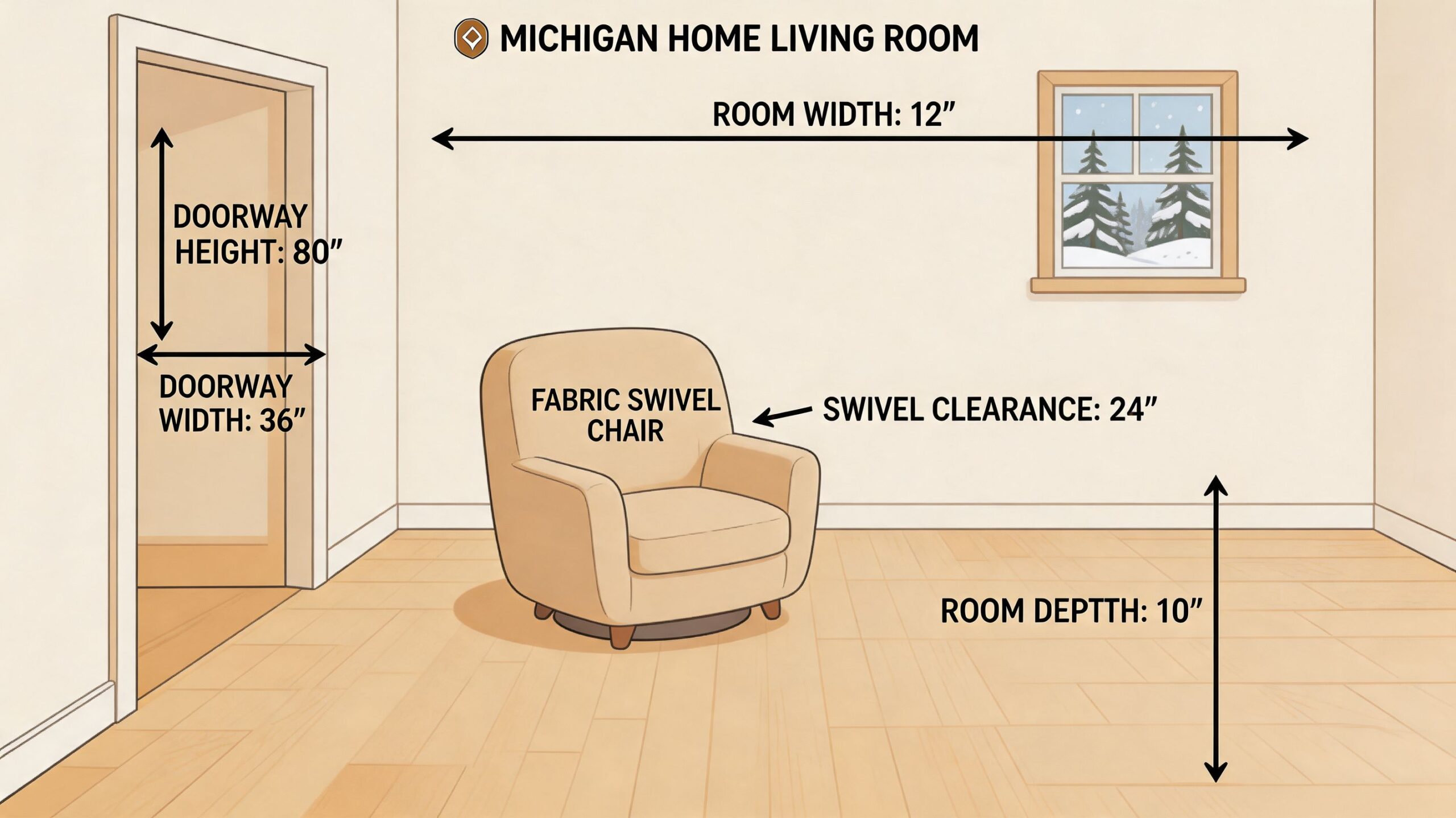
A beautiful chair can still be the wrong purchase if it overwhelms the room or can’t make it through the front door. This happens more often than people think, especially in older Southeast Michigan homes where entryways, stair turns, and room transitions can be tighter than the floor plan suggests.
Measure the path, not just the room
Start with the obvious dimensions, then keep going. Room width and wall space matter, but so do doorways, hallways, stairwells, elevator clearances, and the turning radius required to get the chair where it needs to go.
A practical outside reference is The Sofa Cover Crafter's chair guide, which gives a useful framework for thinking through chair dimensions and fit before delivery day. It’s worth reviewing if you’re trying to picture how proportions translate from a spec sheet to a real room.
Use this checklist before ordering:
- Entry path: Measure the narrowest doorway and any tight turns.
- Chair footprint: Confirm width, depth, and the visual bulk of the back.
- Swivel clearance: Leave enough space so the chair can rotate freely near tables or sofas.
- Sight lines: Make sure the back height won’t block windows or make the room feel chopped up.
If you’re planning a whole-room update, local shoppers often benefit from browsing home interior planning ideas to see how seating, tables, lighting, and storage work together.
Placement ideas that feel natural
In an Ann Arbor bungalow, a fabric swivel chair often works best where square footage is limited but flexibility is valuable. A corner near built-ins, a spot angled between the sofa and fireplace, or a bedroom sitting area can all benefit from a chair that turns rather than anchors the room rigidly.
In newer open-plan homes across Southeast Michigan, swivel seating helps define zones without closing them off. Two chairs can face the sofa for conversation, then pivot toward the kitchen or media wall as needed. In a home office, one upholstered swivel chair can soften the room enough that it still feels like part of the house after work ends.
Placement usually succeeds when the chair has a clear purpose. If it’s meant for reading, give it light and a table. If it’s meant for conversation, angle it toward people first and screens second. If it’s meant to bridge spaces, let the swivel do that work.
The Tyner Customization Advantage
A swivel chair earns its keep faster when it fits the room and the household from day one. A piece that is close but not quite right often becomes the chair nobody chooses first. Customization fixes that problem before the order is placed.
The value is not just aesthetic. It is financial over time. If a chair frame is built to last and the fabric is selected for the way your household lives, the cost per year usually looks much better than a cheaper chair that needs replacing after a few seasons of hard use. That is the difference between buying one good chair and cycling through fast furniture.
Why made-to-order changes the result
A custom fabric swivel chair gives you control over the parts that determine whether the chair still feels right five or ten years from now. Fabric choice affects wear, cleaning, and comfort. Scale affects whether the chair becomes a favorite seat or an awkward one. Color and texture decide whether the piece settles into the room or keeps looking like a compromise.
For shoppers who want to see how that process works, getting started with a custom order explains how fabric selection, finish options, and order timelines come together in practical terms.
I have seen the same pattern for years. Clients who spend a little more time choosing the right cushion feel, arm shape, and upholstery tend to keep the chair much longer. Clients who buy strictly off the tag price are often back in the market sooner than they expected.
Tyner Furniture is one local example. Shoppers can compare fabric swivel chair options such as the Alana, Eli, and U Choose models, then decide whether an in-stock version serves the room well or whether a custom order will pay off better over the life of the piece.
A well-chosen custom chair usually costs more upfront. It also gives you a better chance of owning one chair you still respect years from now, instead of replacing a cheaper one once the fabric pills, the seat flattens, or the style stops working in the room.
Making Your Heirloom Investment Accessible
A well-built chair asks for more commitment upfront. That’s true. But the smarter question isn’t just “What does it cost today?” It’s “What am I paying for each year this chair serves me well?”
Think in cost per year
That’s the heart of the investment mindset. A chair that keeps its comfort, shape, and appearance over the long run usually gives better value than one that needs replacing, re-covering, or constant apologizing for. Furniture doesn’t need to be trendy to feel satisfying. It needs to keep doing its job.
Craftsmanship and material quality are paramount. Strong support systems, durable upholstery choices, and thoughtful sizing reduce the odds that you’ll be back in the market too soon. The same principle is easy to see in hand-crafted solid wood furniture. Good joinery and honest materials don’t just look better. They hold their ground.
How to buy without stretching your budget poorly
Large purchases are easier to manage when the buying process is transparent. Many shoppers in Ann Arbor and across Southeast Michigan look for two things at the same time: long-term quality and breathing room in the budget. Special Financing can help spread a major purchase into manageable payments, which makes it easier to buy the right piece instead of the nearest short-term substitute.
Low Price Promise policies matter for the same reason. They help reassure shoppers that local service, thoughtful guidance, and a design-focused showroom don’t require overpaying to get them. That’s valuable when you’re furnishing more than one area of the home, especially since many households are thinking beyond a single chair and planning for living rooms, home offices, bedrooms, dining rooms, and even outdoor spaces over time.
A good buying decision usually balances three things:
- Present comfort: Can you bring the piece home without straining your monthly budget?
- Future durability: Will the chair still be worth owning after years of use?
- Design longevity: Will it still fit your home if the room evolves?
When those line up, the purchase feels calm rather than impulsive. That’s usually a sign you’re buying well.
Your Swivel Chair Checklist and Local FAQs
A fabric swivel chair can look right on the sales floor and still disappoint at home. The better test is simple. Ask whether the chair will still feel supportive, look appropriate, and justify its cost ten or fifteen years from now. That is how smart buyers in Southeast Michigan separate a lasting purchase from fast furniture that needs replacing far too soon.
A low sticker price can hide a high cost per year. A well-built swivel chair with a durable frame, replaceable cushions, and a fabric that suits your household often costs less over time than buying a cheaper chair twice.
The shortlist before you buy
Bring this checklist with you and use it in the store, not later from memory:
- Fabric fit: Match the upholstery to the way you live. Pets, kids, sunlight, denim transfer, and spill risk all matter more than a showroom swatch under perfect lighting.
- Seat support: Ask what is under the cushion and how the seat is suspended. Long-term comfort comes from the structure you cannot see at first glance.
- Swivel action: Turn the chair more than once. It should rotate smoothly, return predictably if it is a return swivel, and stay quiet under weight.
- Body fit: Sit all the way back. Your feet should rest comfortably, your back should feel supported, and your shoulders should not hunch to get comfortable.
- Room clearance: Measure the footprint and allow enough space for the chair to rotate without clipping a table, fireplace hearth, or nearby sofa arm.
- Visual staying power: Choose whether the chair should anchor the room or carry more pattern and personality. The safer long-term choice is often a strong silhouette in a fabric you can live with for years.
- Product details: Read the specs carefully before you commit. This guide on how to read furniture product descriptions and buy with confidence can help you compare dimensions, cushion construction, and upholstery notes with a clearer eye.
Care matters too. For practical upkeep after delivery, these expert furniture cleaning tips are a useful reference. Good maintenance protects the fabric and helps a quality chair keep earning its place year after year.
Local questions we hear all the time
Can I test different fabrics at the Ann Arbor showroom?
Yes. That is one of the best reasons to shop in person. Color is only part of the decision. Hand, texture, weave, and how warm or crisp a fabric feels all affect whether you will enjoy the chair every day.
What should I bring for a sit test?
Bring room measurements, a few phone photos, and the rough size of your sofa, cocktail table, or desk nearby. If you are matching existing textiles or wood tones, bring those too. Good decisions get easier when the comparisons are right in front of you.
Do swivel chairs work in smaller homes?
Often, yes. In a tighter living room, bedroom corner, or condo layout, a swivel chair can do more work than a fixed chair because it shifts with the room instead of forcing the whole room to work around it.
Can a swivel chair work in a home office and still feel residential?
Yes. Many people want movement while reading, working, or taking calls, but they do not want the room to feel like a corporate office. A fabric swivel chair can solve that if the seat height, arm shape, and back support are chosen well.
What if I’m furnishing more than one space?
Start with the room that gets used hardest. Then choose pieces that relate in scale and tone instead of trying to make every room match exactly. That usually leads to a home that feels collected and stays flexible.
At Tyner Furniture on South State Street in Ann Arbor, the most useful conversations usually start with measurements, photos, and honest habits. A chair that survives daily use, cleans up well, and still looks right after trends change is the better investment. That is the standard worth shopping for.