Best Leather Sofa for Dogs: A Buyer’s Guide for Pet Homes

The sofa takes the hit first. A dog comes in from a wet walk, circles twice, and lands on the middle cushion with all four paws, and by evening there's a paw print on the seat and a drift of undercoat along the arm. For most dog-owning homes the right answer is a protected, pigmented top-grain leather, full-grain is the longest-lived choice for owners who will keep up with conditioning, and bonded leather is the one to walk away from.
Why Dogs Change the Way You Buy a Leather Sofa
That's not a minority problem. The American Pet Products Association reported that 51% of U.S. households, roughly 68 million, owned a dog in 2024, and its 2025 research put the figure at 53%, about 71 million households. The sofa is a shared household surface, not an adults-only furnishing. Dogs track in grit, shed, move moisture from paws and jowls onto the hide, and press the same cushion day after day.
Some of them destroy what they sit on. In 2024, 17% of surveyed U.S. Houzz pet owners reported replacing furniture because of pet damage, according to Houzz's Pets & the Home Study.
Here's the honest tension. Leather's smooth surface releases loose hair and wipes clean faster than most textured fabrics, which is exactly why it wins for shedding households. It is also not scratch-proof. Untrimmed nails and a dog that digs before it lies down can mark the finish, and no finish changes that.
Run a palm across a protected top-grain hide and it feels cool, slightly waxy, buttery under the hand. That surface is the thing being tested, not the word on the hang tag. For more on building a household that tolerates daily pet contact, see this guide to durable furniture for pets.
Leather Grades Compared for Dog Households
Your dog hits the same cushion every night: nails first, then a damp chest, then a slow circle before sleep. Buy the grade for that sequence, and plan to maintain it.
Protected, pigmented top-grain leather suits most dog-owning homes. Full-grain is the longest-lasting hide, and it is the right call when you will condition it and treat small marks as repairs. Aniline belongs with a calm dog in a low-accident house. Bonded leather has no business under a dog.
| Leather type | Typical lifespan | Dog-related wear | Best fit |
|---|---|---|---|
| Protected pigmented top-grain | 15-30 years | Shed hair lifts off; drool and muddy paws wipe; claws can still mark the surface | Most dog-owning homes |
| Full-grain | 20-40+ years | Thick hide takes a circling dog and stays repairable if you condition it | Owners who will maintain the finish |
| Aniline | Shorter service under heavy paw traffic | Scratches and liquid marks show early | Calmer dogs and low-accident homes |
| Split leather | 5-15 years | Claws can crack or peel the surface | Secondary or light-use seating |
| Bonded leather | 2-7 years | Claws find the edge and the surface can crack, peel, or delaminate | Not recommended for dogs |
Match Each Grade to the Dog You Have
Hair on the cushion and a wipe after walks point to protected top-grain. A household that wants one sofa through the dog's whole life, and will condition the hide twice a year, should pay for full-grain. Divide that price by the longer service life and you are buying years of use, with a repair plan, rather than a cheap hide you replace early.
Aniline fits a quiet room and a settled older dog that sleeps more than it launches. Split leather is reasonable for a basement sectional or a sunroom sofa on light duty. Bonded leather is a coated surface on a fiber core. A dog that digs before it lies down lifts that coating at the first weak edge, and there is nothing useful to repair once it peels.
What the Spec Sheet Should Name
"Genuine leather" can appear on a bonded piece or a full-grain piece. Ask for the grade in writing, then ask whether the finish is protected. Those two answers are what make a price comparison real.
This comparison of top-grain leather versus bonded leather shows how far apart the constructions sit, and why one can be conditioned for years while the other fails at the surface.
Pro-Tip on grade: Get the grade and the finish type on the written spec before you compare prices. Condition full-grain on a schedule. Do not budget repairs for bonded leather once the coating lifts.
Finish, Seams and Cushions That Hold Up
A protected, pigmented finish lays a more uniform coating over the hide. That coating improves resistance to staining, keeps liquids sitting on the surface longer, and makes routine wiping safer for the leather underneath. It does not make a sofa claw-proof, and any salesperson who says otherwise is selling.
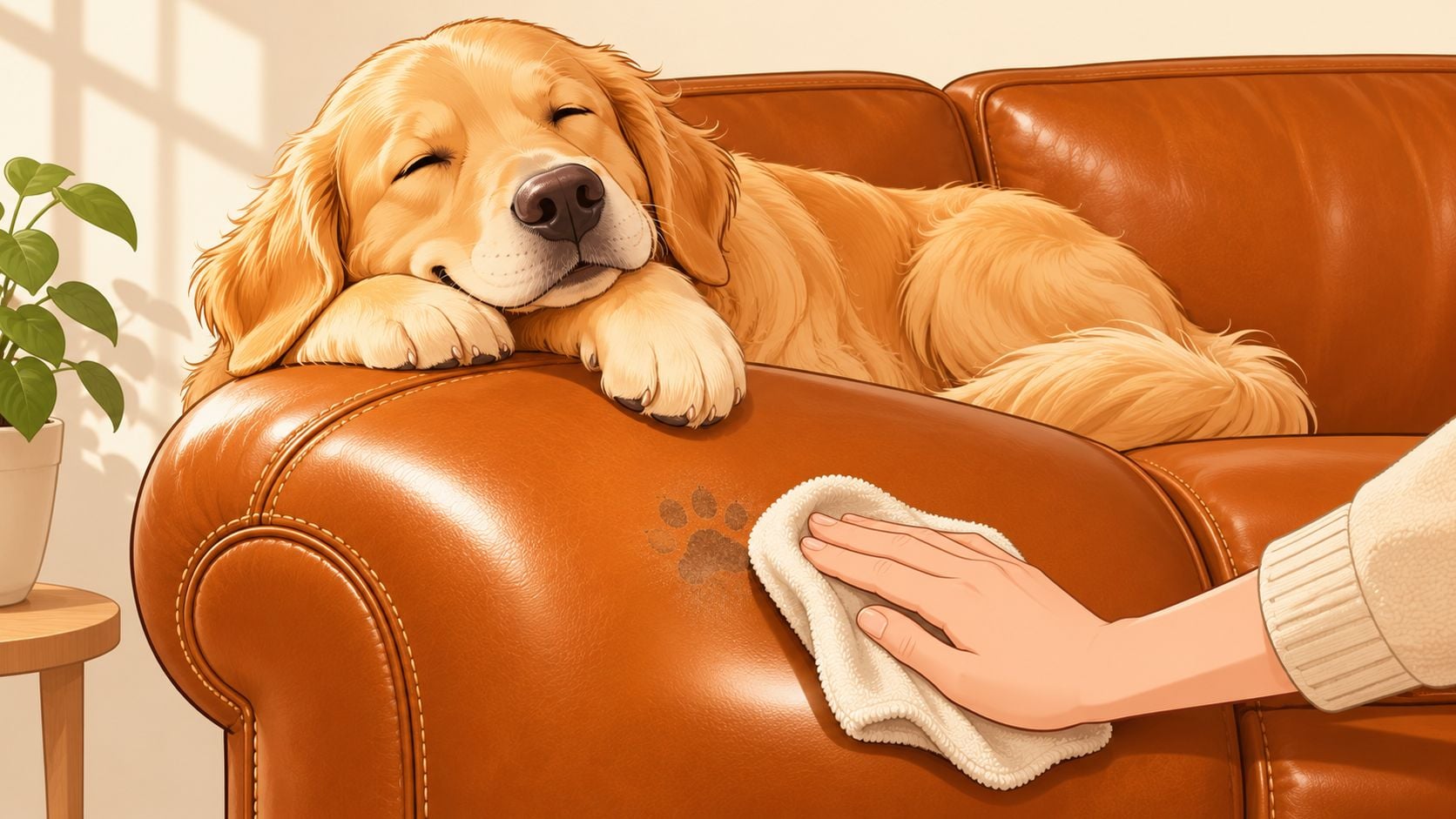
Claw damage is mechanical. A long nail concentrates force into a tiny point when a dog jumps up, pivots to settle, or digs at the cushion before lying down. A single pass usually scuffs the top finish. Repeated passes in the same spot can gouge through to the hide, and that damage is no longer a surface problem. Moisture follows the same logic: drool, wet paws, and spilled water pool at seams and wick into stitching, which is why seam construction matters as much as the hide.
What to Inspect on the Showroom Floor
- Finish type: Confirm the hide is protected and pigmented, not an untreated aniline, and check the care code that comes with it.
- Seam reinforcement: Look at the seams where a dog launches and lands, usually the front edge of the seat and the inside of the arms. Double-stitched or reinforced seams hold; single stitching on thin leather doesn't.
- Welt cord exposure: Exposed welt cord is a claw catch. Minimal or recessed cord removes the hook that snags a nail and pulls a seam open.
- Cushion fit and geometry: Tightly fitted cushions with simple shapes and accessible seams don't trap hair, grit, and crumbs in crevices. Plush channeling looks rich and collects debris.
- Frame and suspension: Push down hard on a corner and listen. A sofa can resist every spill and still fail in year four because the frame or the suspension webbing was never built for a household.
- Cushion core: Foam that collapses leaves a dog standing in a hollow, which puts more pressure on fewer seams.
A sofa can be chemically tough and structurally weak at the same time. Judge both.
Pro-Tip for the showroom floor: Test any leather product on an inconspicuous area before using it on the seat, and read the care label before you leave the store rather than after the first accident.
Most Tyner Furniture pieces can be customized to a customer's personal style and comfort, which is the practical advantage of made-to-order buying here. Seat depth, cushion firmness, overall scale, and finish can be aligned with the room and with how a specific dog uses a couch. That same customization approach carries across the Stressless and Canadel programs. Buyers weighing a softer hand against protection can read this breakdown of aniline vs semi-aniline leather before choosing a finish.
Match the Sofa to Your Dog's Habits
A generic durability ranking won't help a household whose dog digs a nest every night or one whose senior lab can't clear a high seat. The correct sofa comes from the dog's behavior. Build the matrix on five things: claws, shedding, moisture, chewing, and mobility.
| Dog profile | Main risk | Sofa spec to look for |
|---|---|---|
| Puppies and diggers | Claw marks on the surface | Protected finish and tightly closed seams |
| Heavy shedders | Hair caught in textured fabric | Smooth, dark or mid-tone leather |
| Droolers and muddy dogs | Moisture and dirt at seams | Easy-clean protected finish that blots quickly |
| Chewers | Torn welts and damaged cushion edges | Reinforced seams and a sturdy cushion core |
| Senior or large dogs | Difficult jumping and weak support | Seat height matched to the dog and supportive cushions |
| Accident-prone dogs | Urine or vomit soaking in | Protected finish and a fast blot-and-dry routine |
Build the Profile From Behavior, Not Breed
Breed labels mislead. Watch the actual animal for a week and write down three things: where it lies, when it digs, and where it drools. A dog that circles and scratches at the cushion before settling is a digger regardless of size, and it needs a protected finish plus closed seams. A dog that flops down once and stays put is easier on a hide than its weight suggests.
Shedding is the other variable. Hair shows on dark leather in a light-haired house and on pale leather in a dark-haired one, so mid-tone browns and greys earn their keep by hiding the day-to-day drift. A smooth surface still releases hair faster than a weave does.
Mobility deserves more attention than it usually gets. A tall seat forces a senior dog to launch, and launching is where nails dig in hardest. Check the seat height against the dog's natural stride.
Why Premium Untreated Leather Isn't Automatically Better
There's an assumption that the most natural, least processed hide is the best hide. For a museum, maybe. For a house with a dog, a protective pigmented finish on top-grain routinely outperforms a delicate untreated aniline, even though the aniline develops a more beautiful patina over time.
Independent upholstery guidance makes the same point from the material side, noting that claw resistance and surface texture are the considerations that matter to pet owners and that pigmented top-grain leather is suitable because protective finishes resist stains and hair accumulation. Patina is a reward for careful owners. Durability under paws is a reward for everyone.
A protective finish on a good hide will outlast a precious finish on a perfect hide, in any house with a dog in it.
Let the profile pick your specs. What that choice costs over a decade is a separate calculation.
Cost Per Year and Why Leather Grade Pays Off
Two sofas sit on the floor. One is half the price. Buy the cheap one three times and you still have a worse seat, because the annual number, not the tag, is the bill.
Divide the price by the years the sofa stays in service. A sofa that costs twice as much and lasts three times as long drops the yearly cost by about a third. You pay more once, then the figure shrinks every year that hide stays in the room.
Run it in dollars. A $1,500 sofa that gives you 8 years costs about $188 a year. A $3,000 sofa that gives you 24 years costs $125 a year. Same house, lower yearly spend, and a better seat the whole time.
Getting this wrong is expensive. In 2024, 48% of dog and cat owners surveyed by Redecor said they had discarded furniture because of their pet, while 42% avoided buying a desired item because they feared the pet would ruin it, according to Forbes' coverage of the study. A discarded sofa means the household pays twice and enjoys neither purchase.
Purchases over 30 years equal 30 divided by years in service, rounded up. The annual-cost column uses one $2,400 sticker on every row, so you can see what lifespan alone does to the yearly bill before you change the price.
| Upholstery type | Purchases over 30 years | Annual cost on a $2,400 sofa |
|---|---|---|
| Full-grain leather | 1-2 | $60-$120 |
| Top-grain leather | 1-2 | $80-$160 |
| Split leather | 2-6 | $160-$480 |
| Bonded leather | 5-15 | $343-$1,200 |
| Fabric upholstery | 3-6 | $240-$480 |
What the Sticker Price Leaves Out
Add the running costs before you call either sofa cheaper. Cleaner, filler, color for touch-ups, a professional repair, throw blankets, and the hours spent chasing marks all belong in the total. A low tag that needs a repair every other year is not the low-cost choice.
Leather upkeep is a wipe on a regular schedule and conditioning a few times a year. Fabric usually wants weekly vacuuming, spot treatment, and a deeper clean now and then. A sofa against a south-facing window fades faster, and fading shortens whatever service life you wrote next to the price.
Tyner Furniture offers special financing with approved credit, so a longer-lived grade can be a monthly figure instead of one large outlay. For the sizing, suspension, and cushion choices that decide whether those years get used, work through this sofa buying guide for your living room.
Write the expected years beside each price, divide, and compare those two annual numbers. If nobody can give you a service life, treat that silence as part of the price.
Cleaning Spills and Repairing Claw Marks
Blot, don't rub, and move fast. Aggressive scrubbing breaks down the surface finish, and an owner trying hard to remove a mark can turn a small stain into a permanent dull patch. Household solvents, alcohol wipes, bleach, ammonia, and vinegar do the same damage from the chemical side.
Cleaning chemistry decides a lot of outcomes. The IICRC upholstery-cleaning standard recommends starting leather cleaning with a pH-neutral solution, approximately pH 6 to 8, because uncontrolled alkalinity or acidity can harm the finish and the leather itself. Keep one approved cleaner in the house and skip the cupboard full of experiments.
| Situation | First action | Avoid |
|---|---|---|
| Fresh drool or wet paw prints | Blot, then wipe with a pH-neutral leather cleaner | Household sprays, alcohol wipes and soaking |
| Urine or vomit | Blot immediately, clean with a leather-safe cleaner and dry promptly | Scrubbing, vinegar and ammonia |
| Claw scratch in the top finish | Clean, apply light filler or color, blend and add a protective topcoat | Deep scrubbing that lifts the finish |
| Loose hair in seams | Vacuum with a low-suction brush attachment | Stiff brushes and abrasive tools |
| Mud on the surface | Let it dry briefly, brush off and wipe with a damp cloth | Wet scrubbing and heavy water |
The Weekly Routine That Prevents Most Damage
Ten minutes a week does more than any product on the shelf.
- Nails: Check them weekly, trim, and file the edges smooth. A filed nail slides across a hide instead of catching it.
- Barriers: Drape a washable throw over the spot the dog uses, not the spot the design magazine photographs.
- Seams: Run a low-suction brush attachment along the crevices, where grit collects and grinds during every landing.
- Immediate removal: Handle mud and drool when they happen, not at the weekend.
Conditioning frequency depends on the finish, the season, and how dry the house is, so follow the manufacturer's schedule rather than a fixed habit. This guide to how often to condition leather walks through the seasonal variables. The full prevention playbook sits in this piece on how to protect leather furniture.
What a Claw Mark Actually Costs
Most marks are superficial. Leather-restoration guidance reports that most cat and dog claw marks affect the leather's top finish layer rather than cutting through the hide itself, and sets out a clear sequence: clean the area with a leather-safe cleaner, apply light filler or color work where needed, blend the finish, and seal it with a protective topcoat.
That's a service, not a replacement. Set aside a modest annual repair budget and ask what in-home support comes with the purchase.
Pro-Tip for the cleaning caddy: Keep the manufacturer's care code, a pH-neutral cleaner, a soft cloth, and a low-suction brush together beside the sofa, so the response never depends on finding supplies mid-mess.
For context on how much upkeep pet households carry, a 2025 survey reported that 52% of UK pet owners named pet hair as their biggest cleaning challenge, while the same report said owners replace damaged household items an average of twice a year, according to coverage of the survey. Leather reduces that friction. It doesn't erase it, and it never makes a sofa claw-proof or accident-proof.
Choosing Your Dog-Friendly Sofa in Ann Arbor
Apply the grade, finish, seam, cushion, and frame checks in person, match the dog's profile from the habits table, and compare cost per year rather than sticker price. That's the whole method, and it takes about an hour in a showroom.
Tyner Furniture has served Southeast Michigan since 1957, and the shop covers Living Room, Bedroom, Dining Room, Entertainment, Home Office, Mattresses, and Outdoor product categories. The same care logic that governs a leather sofa carries into a leather recliner in the den or a performance fabric sectional in a walkout basement, so the standards stay consistent room to room.
In-stock is just the beginning. Tyner Furniture offers a Custom Order option, and made-to-order finishes, fabrics, and configurations let a buyer tune both the leather and the build to a dog's habits and a room's interior design. Stressless and Canadel pieces can be personalized the same way. Special financing and the Low Price Promise make a higher-grade piece a practical value rather than a splurge.
The Sit Test
Bring the dog's favorite blanket. Sit down, then sit for longer than feels polite. Check seat depth against the dog's sprawl, arm height against its jump, and cushion firmness against its weight. Run a hand over the leather and note the temperature and drag. A hide that feels tacky or thin under the palm will show wear sooner.
Before visiting, narrow the field with the shop's online filters. You can sort by features like Power Reclining or Massage, by color, and by the Customizable flag, so the shortlist is already shaped around your dog's needs when you walk in. After the first year, in-home service calls at Tyner Furniture carry a $69.00 minimum, which is worth knowing when planning long-term care.
Tyner Furniture has spent more than six decades helping Southeast Michigan households choose pieces built to stay in the family, and that experience is exactly what a dog owner needs when leather grades start blurring together. The Ann Arbor showroom stocks leather sofas, recliners, sectionals, and made-to-order options from Stressless and Canadel, with special financing and a Low Price Promise to make a durable piece reachable. Visit Tyner Furniture to plan a sit test, or filter the shop online and start comparing lifespans instead of price tags.