Modular Sofa vs Sectional: Which Fits Your Room

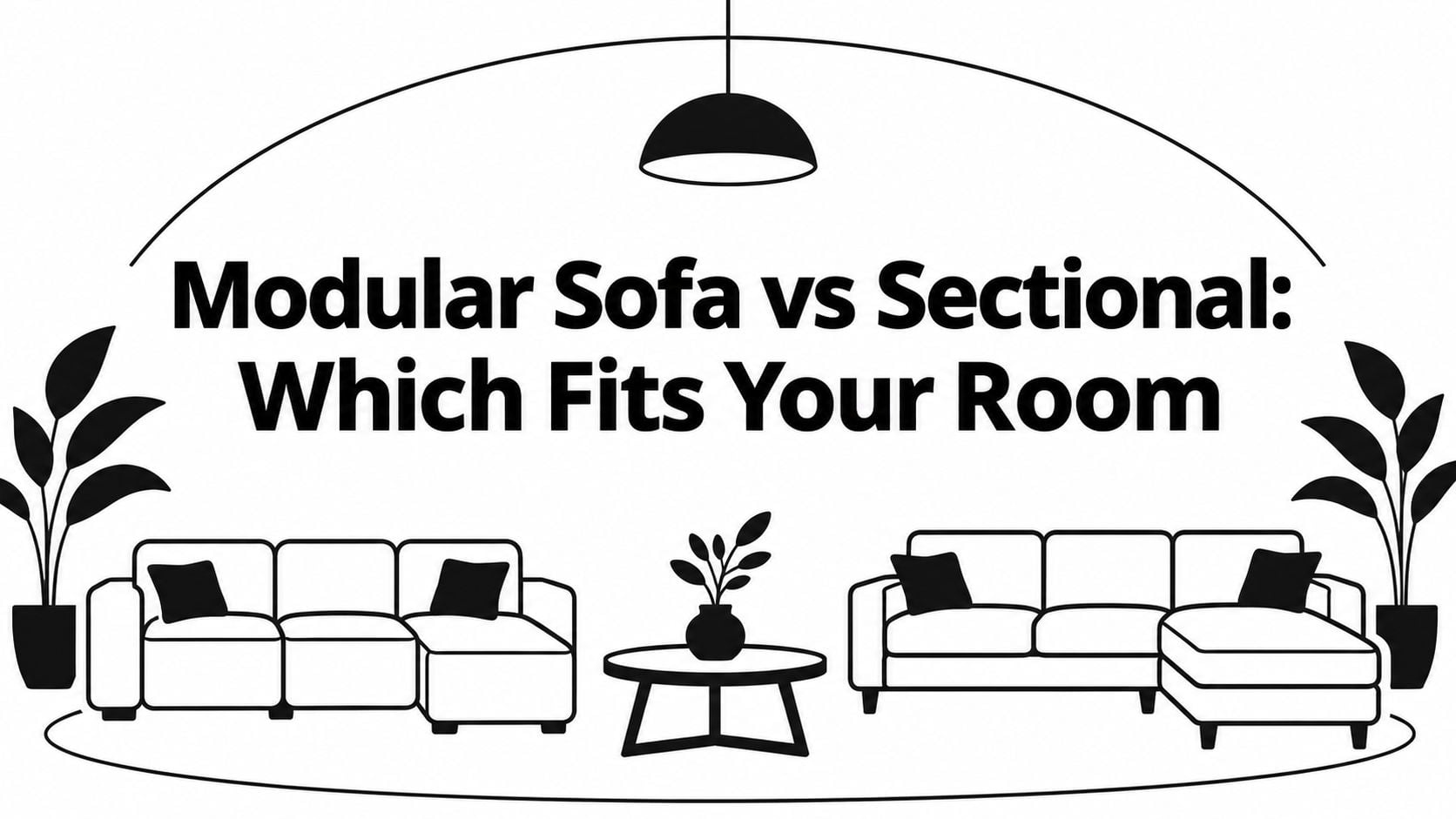
The empty corner looks generous until the sofa measurements go down on the floor. Suddenly, the chaise blocks the hallway, the preferred seat faces away from the fireplace, and a possible move raises another question: should the household buy a shape that stays put or pieces that can change?
The modular sofa vs sectional decision comes down to more than flexibility. The better investment fits the room, reaches it without a delivery problem, supports everyday comfort, and comes with a believable plan for repairs.
Modular Sofa vs Sectional at a Glance
A traditional sectional is a connected arrangement, usually an L or U, selected around a particular room plan. A modular sofa uses independent units that can be separated, rearranged, added to, or removed as needs change.
Modular sofa vs sectional by key criterion
| Criterion | Modular sofa | Sectional |
|---|---|---|
| Build | Independent units that separate and reconfigure | Connected, set arrangement, usually L or U |
| Layout changes | Add, remove, or rearrange compatible pieces as the room changes | Built around one intended room layout |
| Moving and assembly | Smaller units, but multiple trips, connector assembly, and alignment | Larger sections require careful clearance and handling checks |
| Repair | Replace an individual cushion or connector if compatible parts remain available | Repair options follow the upholstery construction and available service |
| Best fit | A household with a practical reason to change its seating arrangement | A settled room with a layout worth keeping |
The terminology overlaps. An L-shaped modular sofa can be both modular and sectional: sectional describes the overall arrangement, while modular describes how its pieces relate. A product name alone won't establish how freely the seating can change.
That distinction matters when a household remodels, relocates, or turns a television room into a shared gathering space. It matters less when the sofa will occupy the same corner and serve the same purpose throughout its ownership.
What the Comparison Table Can't Establish
Not every separate piece works as attractive standalone seating. An armless middle module may expose an unfinished connection area, and a corner seat may need neighboring pieces to provide comfortable support. The useful question is which complete arrangements the manufacturer supports, because that answer defines what "reconfigurable" delivers years from now.
A fixed sectional can arrive in three boxes and still lock into one layout once assembled. Its sections separate for the delivery truck, then stay in their intended arrangement for the life of the piece. Modular units, meanwhile, carry their own trade-offs on moving day: each one is lighter than a full sectional, but the connectors need aligning and the whole arrangement needs squaring up after every move.
Flexibility claims deserve the same scrutiny in the repair column. Swapping a single damaged cushion or connector sounds economical, yet the saving depends on the manufacturer still stocking compatible parts when the damage happens. A modular line that gets discontinued can leave a household replacing the entire arrangement over one worn seat.
Tyner Furniture's living room selection includes sofas, reclining furniture, sectionals, loveseats, chairs, recliners, lift chairs, and sleeper sofas. Comparing those alternatives in person can reveal that a sofa and separate chair solve the room better than either sectional format.
Pro-Tip: Start with the need, not the label. A household that needs a stable shape should shop for that shape; a household that expects meaningful layout changes should test the actual supported configurations.
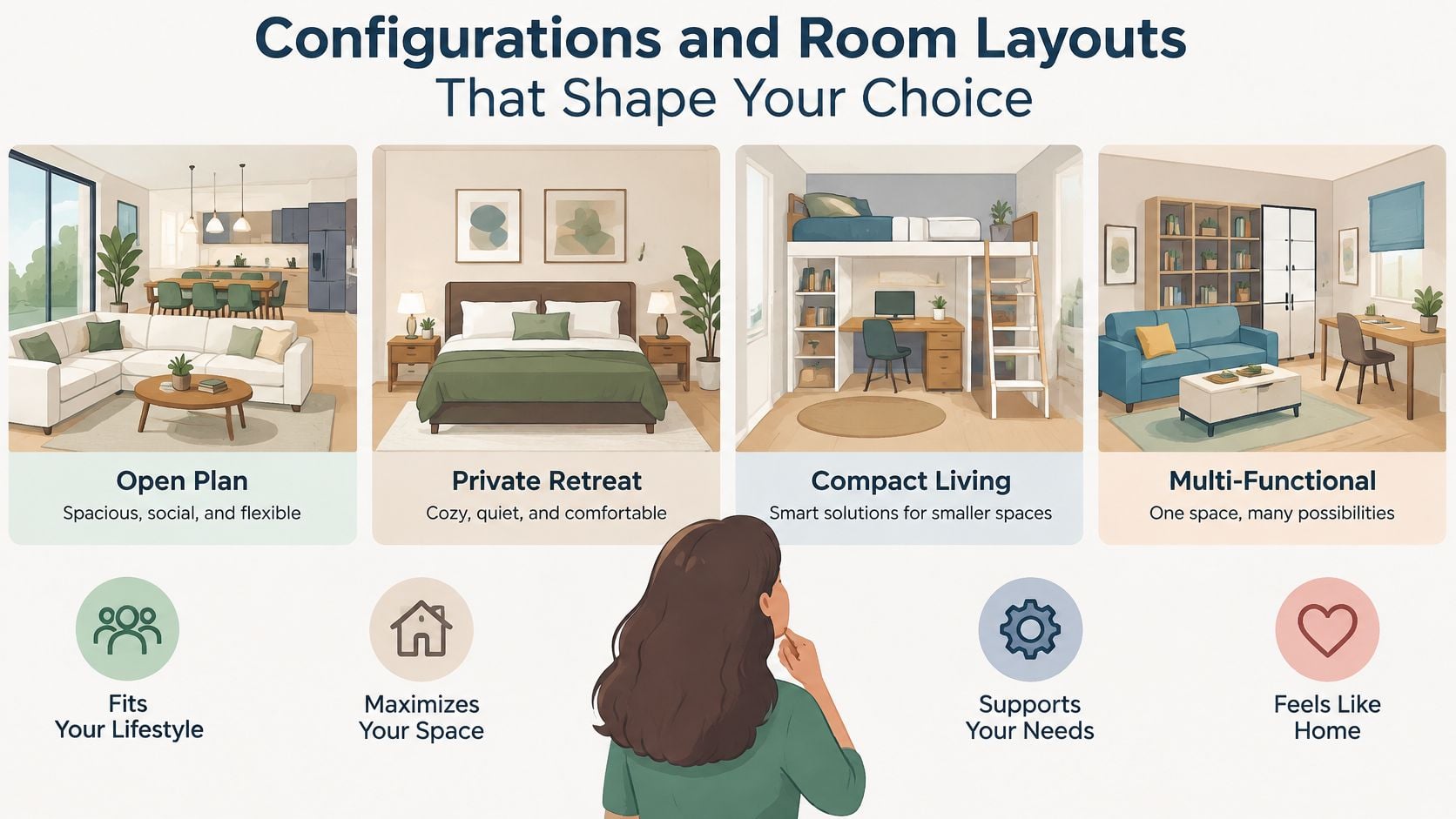
Configurations and Room Layouts That Shape Your Choice
Sectionals aren't reserved for oversized family rooms. In its 2024 U.S. upholstery survey of 1,016 adults who had recently purchased upholstered furniture or planned to purchase it, Furniture Today Strategic Insights found the following interest, purchasing, configuration, and spending benchmarks.
2024 U.S. upholstery survey: sectional benchmarks
| Metric | Value |
|---|---|
| Considering a sectional in the coming year | More than one-third |
| Bought a sectional in the past year | 17% |
| Three-piece configuration among recent buyers | 36% |
| Two-piece configuration among recent buyers | 28% |
| Four-piece configuration among recent buyers | 18% |
| Spent $1,000 to $2,999 | 50% |
| Spent $5,000 to $10,000 or more | 15% |
The established starting point is a moderately sized arrangement, not necessarily the largest display on the showroom floor. Configuration deserves attention before fabric color because it determines whether people can move comfortably through the room.
Put the Footprint on the Floor
An L-shaped arrangement can anchor a corner while preserving an open side. A U-shaped arrangement can gather seating around a media wall, but its returns can also interrupt circulation. A straight modular run beneath a window may suit a narrow room, provided the back doesn't interfere with the window's operation.
Each modular unit has its own supporting structure, but that doesn't make every transformation possible. A corner module won't automatically become a loveseat; compatible neighboring seats, arms, and finished surfaces determine whether that new arrangement works. Adding a chaise later also requires compatible components to remain available.
A useful measuring checklist includes:
- Wall length: Record usable space between trim, vents, doors, and built-ins, not just the wall's total length.
- Walking routes: Tape the proposed footprint onto the floor and walk the everyday routes while carrying a laundry basket.
- Room features: Mark the window, fireplace, television, outlets, and any doors that swing into the seating area.
- Usable seating: Compare inside seat dimensions, since wide arms can consume substantial floor space without adding sitting room.
For open plans, strategies for arranging furniture in an open-concept living space can help distinguish the seating zone from the routes around it.
The showroom's interior design service covers spatial planning, custom finish and fabric selection, lighting, and bespoke furniture curation, and the team works with builders. That support allows an interior design plan to be tested before ordering.
Choose a three-piece modular arrangement when its alternative layouts solve identifiable needs. Choose a fixed L when the taped footprint works and no useful alternative arrangement is likely.
Moving Day Realities in Older Southeast Michigan Homes
Smaller pieces can reduce doorway problems, but they don't eliminate moving work. Older Southeast Michigan houses and apartments can combine narrow doors, enclosed staircases, low overhead clearance, and compact elevators in the same delivery route.
According to Interior Insider's modular and traditional sectional comparison, traditional sectional pieces can weigh more than 150 pounds, while modular systems can require 30–60 minutes of assembly. Those are reasons to check the actual product specifications, not promises about a particular delivery.
Clearance Is Only Half the Job
Consider a hypothetical upstairs apartment with a right-angle stair turn. A long sectional component may need to tilt through the landing, with ceiling height limiting the maneuver. A modular arrangement may travel upstairs in separate loads but still require lifting, connector reassembly, and careful alignment.
The smaller components might also be heavy. A powered reclining module can be awkward to handle even when its outer dimensions look manageable. Counting components without checking their weight gives an incomplete picture.
A doorway-and-labor audit should cover:
- The narrowest opening: Measure clear space with the door fully open, accounting for handles and trim.
- Every stair turn: Record landing depth, ceiling clearance, railings, and any projecting fixtures.
- Elevator access: Check both the doorway and the usable interior depth.
- Individual component weight: Obtain specifications for the actual modules being ordered.
- Handling burden: Count loads, identify a safe staging area, and confirm who reconnects the pieces.
- Final placement: Establish whether the delivery service includes the intended arrangement and any required reconfiguration.
The details of white-glove delivery service belong in purchase planning, not in a last-minute conversation after the truck arrives. Confirm the scope for the particular order and building.
If existing furniture prevents a clear delivery route, Container Self Store's resource on decluttering space for bulky household items offers a useful starting point for planning furniture storage during a move or room change.
Modular can reduce clearance risk while increasing piece count and setup risk. Neither renters nor homeowners should choose a format solely on the assumption that moving it will be simple.
Delivery planning tip: Bring a paper sketch showing room dimensions and the complete route from the entrance to the sofa's final position. Include photographs of difficult turns so the delivery conversation stays concrete.
Upholstery Ratings That Matter for Daily Use
A busy family room puts upholstery through a different kind of work than a quiet guest seat. Start with the fabric specification, then match it to the way the sofa is used. Rub-test results give you one useful signal, explained in American Leather's explanation of upholstery rub tests, but they sit beside construction, care requirements and seating comfort.
Abrasion benchmarks for high-traffic upholstery
| Use level | Test method | Unit | Suggested minimum |
|---|---|---|---|
| High-traffic family room | Wyzenbeek | Double rubs | 30,000 |
| High-traffic family room | Martindale | Cycles | Approximately 35,000 |
North American manufacturers commonly report Wyzenbeek double rubs, while many global suppliers use Martindale cycles. The methods do not convert cleanly, so compare fabrics within the same test method instead of ranking them by whichever figure looks larger.
For light residential use, ask for the manufacturer's intended-use recommendation. A rarely used sitting room and the household's main lounging spot place very different demands on a cover.
What an Abrasion Rating Doesn't Prove
An abrasion result is a lab endpoint. It does not establish seam strength, resistance to pilling, colorfastness, cushion compression or frame performance. A high-rated fabric can still disappoint when seams pull, cushion foam flattens or the frame shifts at the joint.
Hands add information that a spec sheet cannot. Press the seat for 30 seconds, then watch how quickly it rebounds. Rub a small hidden area with a clean fingertip to check for roughness, loose fibers or color transfer. Those checks help you judge comfort and surface character, while written specifications cover construction and care.
Request these details before committing:
- Test method and result: Keep the method attached to the abrasion number.
- Fabric composition: Include the cleaning instructions and any treatment-specific restrictions.
- Seam construction: Examine high-stress areas around cushion corners and arm fronts.
- Cushion foam density: Obtain the specification rather than relying on descriptions such as plush or supportive.
- Connector warranty: Establish coverage for hardware, alignment issues and replacement.
- Replacement-component policy: Confirm which covers, cushions and structural parts are separately serviceable.
The guide to choosing fabric for sofa upholstery helps frame the fabric decision around actual household use. Pet owners can also find pet-friendly blanket fabrics when selecting a washable protective layer, while still following the sofa manufacturer's care instructions.
Modular seating adds interfaces that deserve inspection: strong connectors, accurately aligned frames and effective anti-slip contact. During a sit test, someone should sit near the joint and rise again while another person watches for separation or rocking.
A documented textile and serviceable construction matter more than an impressive configuration diagram. Flexibility isn't a substitute for sound craftsmanship.
Repairs, Replacement Parts and Long-Term Cost
A well-built fixed sectional can present less lifetime risk than a lower-priced modular sofa with unavailable proprietary parts. Repairability depends on whether the manufacturer sells individual modules and fabric, and whether those parts can still be ordered years after the original purchase.
A repair-behavior study published in Circular Economy and Sustainability identifies product design, accessible components, and transparent repair information as factors shaping perceived repairability. For a sofa buyer, a detachable part helps only when a replacement can be obtained and installed. A wedge connector that requires a discontinued tool, or a cover that was never sold separately, turns a modular selling point into dead weight.
Test the Parts Promise
The useful question reaches beyond the warranty document: what happens if a module is damaged or its fabric is discontinued several years after purchase? A replacement seat in a different textile may be structurally compatible without producing an acceptable visual result.
Before ordering, establish:
- Written warranty length: Separate coverage for frames, cushions, upholstery, mechanisms, and connectors.
- Replacement pricing: Identify which modules or components can be purchased individually and how prices are determined.
- Fabric continuity: Establish the options if the original fabric disappears, including recovering a larger group of pieces.
- Connector access: Confirm whether hardware can be replaced without opening sealed upholstery.
- Local repair options: Determine whether the construction permits practical upholstery or cushion work.
Service terms shape the long-term math as much as the parts list. Tyner Furniture requires customers to return easily transported components, such as unattached cushions or pillows and removable drawers, to the service department for service. After one year, an in-home service call carries a minimum charge of $69.00. Add that service-call minimum to the ownership budget alongside delivery and future maintenance.
Fabric renewal deserves the same early attention. A shopper who expects a sofa to last should review what custom upholstery services can do for a sound frame before committing to a textile. A piece earns heirloom status through its repair path: serviceable cushions, replaceable covers, and construction a local upholsterer can work on.
Compare Cost-per-Year, Not Just the Ticket
Cost-per-year = purchase price ÷ realistic years of service. Treat the formula as a comparison tool that exposes the assumptions behind a purchase.
In a hypothetical example, a $3,000 fixed sectional kept for 10 years costs $300 per year. A $2,000 modular sofa replaced after 4 years costs $500 per year. The shopper should replace those figures with actual quotes and a realistic expected service life, then consider repair, moving, and delivery costs separately.
The lower initial price doesn't always produce the better value, and a higher price means little without construction details and dependable support behind it. Run the numbers with the parts policy in hand. A purchase grounded in supported repairs and continued usefulness will outlast one built on modular terminology alone.
Choosing by Room, Lifestyle and Budget
Which format fits which situation
| Situation | Better fit | Why |
|---|---|---|
| Frequent moves or a small apartment | Modular sofa | Units can be reconfigured and relocated, though setup effort rises |
| Forever home with a fixed room plan | Sectional | Stable shape with less need for repeated connector handling |
| Pets, children, and heavy daily use | Either, with a documented performance fabric | Fabric, frame, and seams matter more than format |
| Frequent guests and changing layouts | Modular sofa | Compatible units can be added, separated, or rearranged |
| Tight stairs or a small elevator in an older home | Measure first; either could fit | Modular may clear openings but adds pieces and handling |
A fixed sectional is the stronger fit when the room plan won't change and the preferred arrangement already works. A modular sofa earns its additional complexity when the household has a genuine use for alternative layouts.

In-Stock Is Just the Beginning
The Custom Order option allows fabric, finish, and configuration choices, and most pieces can be adapted to personal style and comfort. A shopper doesn't have to accept an unsuitable depth or an awkward footprint because the floor sample looks appealing.
Canadel and Stressless demonstrate that customization extends beyond a single sofa category. Across these lines, finish, fabric or upholstery, and configuration choices are product-specific: Canadel supports bespoke dining combinations, while Stressless offers personalized ergonomic seating choices. The available options should be matched to the particular piece rather than assumed across every model.
For a coordinated home, the selection extends through living room, bedroom, dining, entertainment, Home Office, mattresses, youth furniture, home decor, accessories, and Outdoor Spaces. In bedroom and dining furniture, the Amish hand-crafted solid wood selection offers a useful comparison with mass-produced alternatives: examine material integrity and joinery, including dovetails and mortise-and-tenon construction, rather than judging only the surface finish.
Match the Investment to the Household
A family with animals and children benefits from evaluating cleanability, cushion access, and routine maintenance together. The guide to kid-friendly and pet-friendly furniture helps turn those priorities into practical selection criteria.
Shopping guides can also help identify a design style in a few questions. That leaves the household free to concentrate showroom time on fit and comfort rather than trying to name a style from scratch.
Made-to-order craftsmanship is valuable when it solves a real problem: the right upholstery, a usable arrangement, or better ergonomic support. It shouldn't become a reason to pay for options that won't be used.
The final rule is straightforward: choose modular when room changes, delivery constraints, or future layouts justify the extra connection points. Otherwise, a carefully specified sectional can be a dependable long-term investment.
Book a Sit Test at Our Ann Arbor Showroom
Put the tape measure against the sofa before the cushion does. A sit test should use the same room limits the piece must live with: the wall length, the walking path, the doorway, and any tight turn on the way in. Then sit the way the household sits. Feet supported, back against the cushion, arm at the right height, and enough seat depth without forcing the body forward.
At our Ann Arbor showroom, that comparison is more useful than scrolling photos, because a modular sofa and a sectional can look similar while feeling very different in use. Check whether the seating position stays comfortable after changing posture, whether the back feels supportive, and whether pillows are doing real work or masking a poor fit.
Bring the floor sketch, doorway measurements, and photos of difficult access points. Add two practical notes: who wants upright support and who wants room to lounge. If parts and serviceability matter, bring the warranty and parts-policy questions too. For easily transported components, such as unattached cushions, pillows, or removable drawers, customers must return those items to the service department for service.
Custom fabric, finish, and configuration options can make the final piece fit the room and the household more closely. Tyner Furniture also offers a Custom Order option for shoppers who want to start from needs rather than available floor pieces. Special Financing, subject to credit approval, can spread cost over monthly payments, while the Low Price Promise supports competitive value. Compare those payments with total cost and likely daily use.
Visit Tyner Furniture at the Ann Arbor showroom for a sit test, and bring the room sketch, measurements, and parts-policy questions that will decide the fit.