
Best Quality Leather Sofas: A Complete Buyer’s Guide


A leather sofa can look perfect under showroom lighting and still leave a buyer with difficult questions. The color may be rich, the silhouette beautifully styled, and the cushions inviting, but what lies beneath the surface determines whether the piece becomes an heirloom or needs replacing sooner than expected. Shoppers in Ann Arbor and across Southeast Michigan often find themselves comparing full-grain and top-grain leather, different spring systems, cushion fills, frame materials, and custom options all at once.
The most reliable approach is to judge the sofa as a complete system. Leather grade matters, but so do the frame, joinery, suspension, cushions, stitching, dimensions, and care requirements. A well-made sofa should suit the household's daily habits, feel comfortable during a real sit test, and offer a sensible cost-per-year value rather than just presenting an attractive initial price.
Finding Your Perfect Leather Sofa
A couple furnishing a new Ann Arbor home might begin with a simple goal, a durable brown leather sofa for the living room. At the showroom, they may discover several pieces with similar shapes and very different specifications. One has full-grain leather, another uses top-grain leather, and a third uses a vague “genuine leather” description. The cushions feel different, the seat depths vary, and the frames have different construction details.
That confusion is normal. A sofa is both a design decision and a long-term comfort decision, so appearance alone can't answer whether a piece is suitable for family use. A practical buying framework starts by separating the visible surface from the structure that supports it.
The guide to choosing the best sofa for a household can help shoppers begin with room size, seating habits, and comfort preferences. A family that hosts often may need firmer cushions and resilient suspension, while a quieter household may prioritize a softer, deeper seat. Neither choice is automatically superior. The right combination depends on who will use the sofa and how.
A first-pass quality checklist
Before focusing on color or styling, a shopper should ask:
- Leather specification: Is the upholstery clearly identified as full-grain or top-grain leather?
- Frame construction: What hardwoods and joinery methods support the sofa?
- Suspension: Does the seat use eight-way hand-tied springs, sinuous springs, or another specified system?
- Cushions: Are the cushions built with high-resilience foam, a down blend, or a layered combination?
- Repair potential: Can cushions, covers, or other components be serviced or replaced?
- Fit: Do the seat height, depth, arm position, and back support suit the people using it?
Practical rule: A beautiful hide can't compensate for a weak frame or uncomfortable cushion system.
The market context helps explain why this evaluation matters. The global leather furniture market was measured at $10.97 billion in 2023 and is projected to reach $15.48 billion by 2031, at a 4.4% CAGR, according to market data on leather furniture. Sofas represented 38.2% of product-type share in one 2025 market breakdown from the same source, showing how central sofas are to the category.
Leather grade comparison
| Leather grade | Durability range | Best for |
|---|---|---|
| Full-grain leather | About 25 to 50+ years, depending on use and care | Heirloom seating and high-wear rooms |
| Top-grain leather | About 15 to 25 years, depending on use and care | Premium everyday living rooms |
The ranges above come from industry buying guidance summarized by Wirecutter's leather sofa advice. They aren't guarantees, because construction, household use, sunlight, cleaning, and maintenance all influence service life. Still, they give buyers a useful way to think beyond the showroom moment.
Understanding Leather Grades and Quality
A sofa can look impressive under showroom lights yet age poorly if its leather grade does not match the room. Leather grade describes how much of the hide's natural outer structure remains intact. That structure contains dense fibers that support strength, so the hide is only one part of the complete sofa system. Frame, suspension, cushions, and upholstery must work together.
Full-grain leather keeps the outermost layer of the hide. Natural markings remain visible, and the surface can develop a patina over time. Full-grain's longer service life comes from its intact fiber network, which better resists the surface cracking that corrected leathers often show first. This character suits families who want a sofa to become more individual with age rather than remain perfectly uniform. See this leather sofa buying guidance for practical buying considerations.
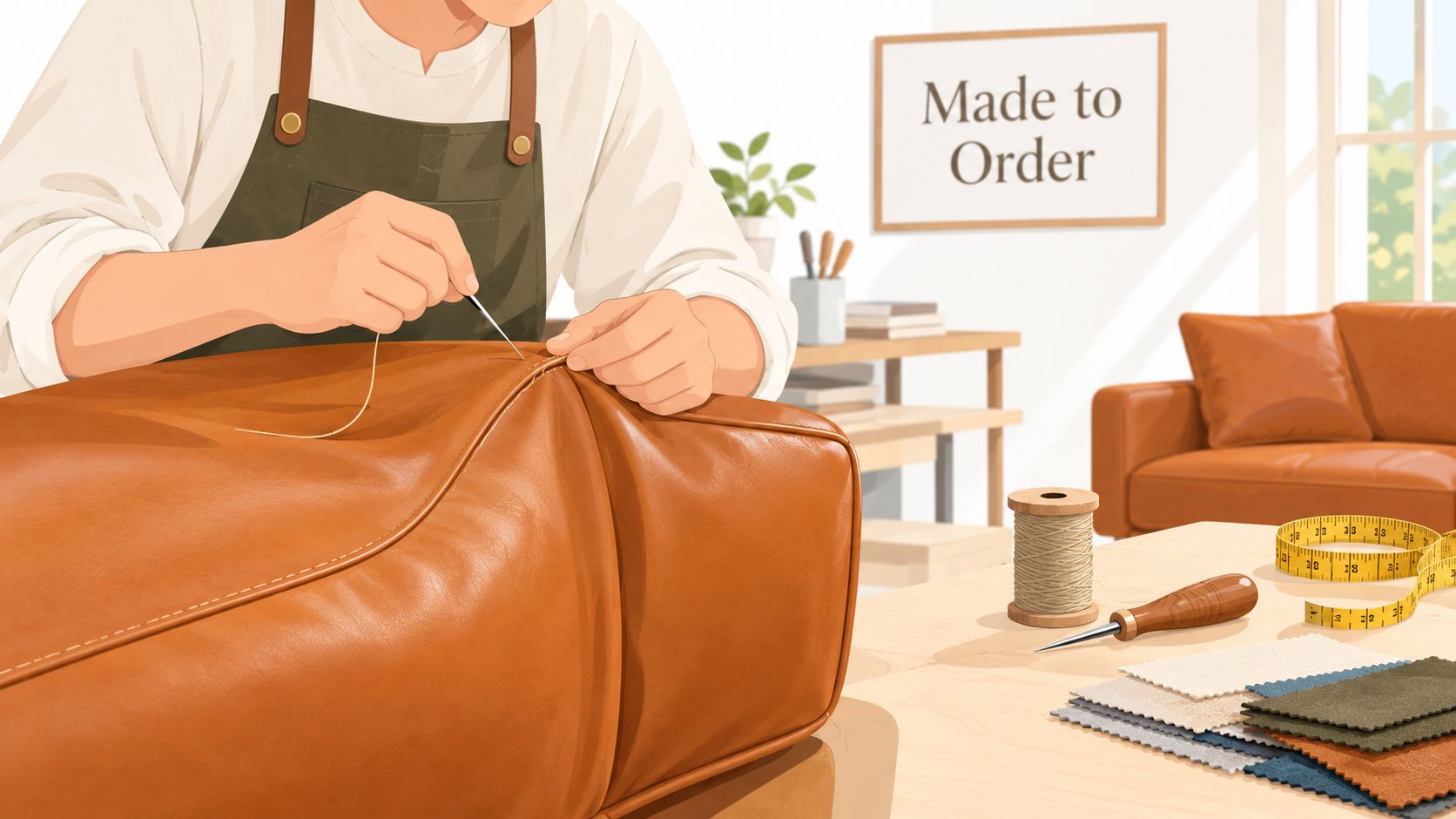
Top-grain leather also comes from the upper portion of the hide, but manufacturers lightly sand or correct the surface for a smoother, more consistent appearance. It can provide strong everyday performance while giving a living room a polished, coordinated look. Its finish may hide more natural variation than full-grain leather, so ask how the surface was treated and how that treatment is expected to age.
Why the surface matters
Full-grain and top-grain leather differ in both feel and appearance. Full-grain may show natural variation, while top-grain often feels smoother and looks more consistent. In a showroom, run your hand across the leather, press the seat, and observe how the upholstery responds. Texture, softness, and recovery can reveal more than a label alone.
Broad labels require careful interpretation. “Genuine leather” may identify real leather without specifying the grade or explaining how much of the hide was corrected. Bonded leather uses leather fibers with a backing, so it should not be judged as equivalent to full-grain or top-grain upholstery. This comparison of top-grain and bonded leather explains the material distinction.
A clear specification is more useful than a broad marketing phrase.
Matching grade to household use
Full-grain can work well in a busy family room where the sofa receives daily use and natural character is welcome. Top-grain may suit a formal living room, apartment, or household that prefers visual consistency while retaining strong performance.
The right question is whether the grade, finish, and expected aging pattern fit the room. Ask a furniture professional how the leather will respond to sunlight, spills, pets, and regular seating. Then evaluate that answer alongside the frame, suspension, and cushion construction. A beautiful hide cannot compensate for a sofa system that feels uncomfortable or lacks lasting support.
Evaluating Frame Construction and Joinery
The frame carries the load that leather can't. A sofa may have a supple hide and careful stitching, but a weak frame can lead to movement, noise, sagging, or misaligned parts. Buyers should treat the frame as the sofa's structural skeleton.
Solid hardwoods such as oak, maple, and cherry are commonly associated with durable furniture construction. The wood species matters, but the way the pieces connect matters just as much. Staples or nails alone don't communicate the same long-term structural confidence as reinforced joints designed to distribute stress.
What to inspect in the showroom
A sit test should include more than a quick drop onto the center cushion. The following checks reveal useful information:
- Lift one edge: A quality sofa often has a reassuring sense of substance. Excessive lightness isn't proof of poor construction, but it can prompt further questions.
- Press the arms: The arms should feel stable rather than shifting under firm pressure.
- Test the seat edge: Sit near the front and move naturally. The frame shouldn't creak, twist, or feel unstable.
- Check the corners: Ask how the joints are reinforced and whether the frame uses solid hardwood components.
- Inspect the stitching: Straight, tight, even stitching reflects careful upholstery work and supports a finished appearance.
Traditional joinery also improves repairability. Mortise-and-tenon construction connects one piece of wood to another through a fitted joint rather than relying only on surface fasteners. A guide to mortise-and-tenon construction shows why this method remains associated with durable hand-crafted furniture.
Why construction standards matter
Furniture leather selection standards include performance considerations such as tear-load requirements. Those criteria help explain why upholstery quality involves more than softness or appearance. The American Home Furnishings Alliance standards resources provide context for the performance expectations used in furniture selection.
Upholstery thread and needle choices also affect seam performance. For readers who want a more technical explanation of how stitching materials contribute to durable upholstery work, B-Sew Inn's durable upholstery tips offer useful background.
In bedroom or dining furniture, the same principle applies. Tyner's Amish hand-crafted solid wood pieces should be judged against mass-produced alternatives by examining material integrity and joinery, not just surface color. The weight of solid cherry wood, the precision of a dovetail drawer, and the feel of a properly fitted joint all communicate a different construction philosophy.
Assessing Suspension and Cushion Systems
A leather sofa's comfort comes from the layers beneath the hide. Two sofas can use similarly attractive leather and feel completely different because their suspension and cushions respond differently to body weight.
Eight-way hand-tied springs are widely regarded as a high standard in upholstered seating. Each spring is tied at multiple points, helping distribute movement across the seat and create responsive support. This construction can feel balanced and resilient, particularly for buyers who want a traditional, carefully crafted sofa.
Sinuous springs use continuous, shaped wires arranged across the frame. Well-designed sinuous systems can provide supportive everyday seating and allow a sofa to have a more sleek profile. The right choice depends on the overall build, the quality of the wire and attachments, and the comfort preference of the household.
Cushion fills create different experiences
Down blends offer a relaxed, luxurious feel. They can create the soft, welcoming sensation many people associate with a lounge sofa, but they need regular fluffing and may compress with use. High-resilience foam provides more consistent support and generally holds its shape more predictably.
A layered cushion can combine a foam core with a down or down-alternative wrap. That arrangement gives the body a stable foundation while adding surface softness. It often suits households that want comfort without a cushion that loses its structured appearance quickly.
| Seating component | Main feel | Maintenance consideration |
|---|---|---|
| Eight-way hand-tied springs | Responsive, distributed support | Ask about the complete spring and frame specification |
| Sinuous springs | Supportive and streamlined | Evaluate the wire system and attachment quality |
| Down blend | Plush and relaxed | Requires regular fluffing |
| High-resilience foam | Consistent and supportive | Maintains a more uniform seat shape |
| Foam with a soft wrap | Structured with surface comfort | Balances support and softness |
The guide to eight-way hand-tied sofas provides further context for shoppers comparing traditional spring construction with other suspension choices.
Let the body make the decision
A sofa should support the household's actual posture. A shorter person may find a deep seat awkward, while a taller person may appreciate the extra room. A firm cushion can help someone rise more easily, while a softer cushion may better suit relaxed reading or movie nights.
A proper sit test should last long enough to reveal pressure points. Feet should rest comfortably, the lower back should receive support, and the seat shouldn't force the body into a slouch. Ergonomic comfort isn't a luxury detail. It determines whether the sofa gets used every day.
Customization and Craftsmanship Options
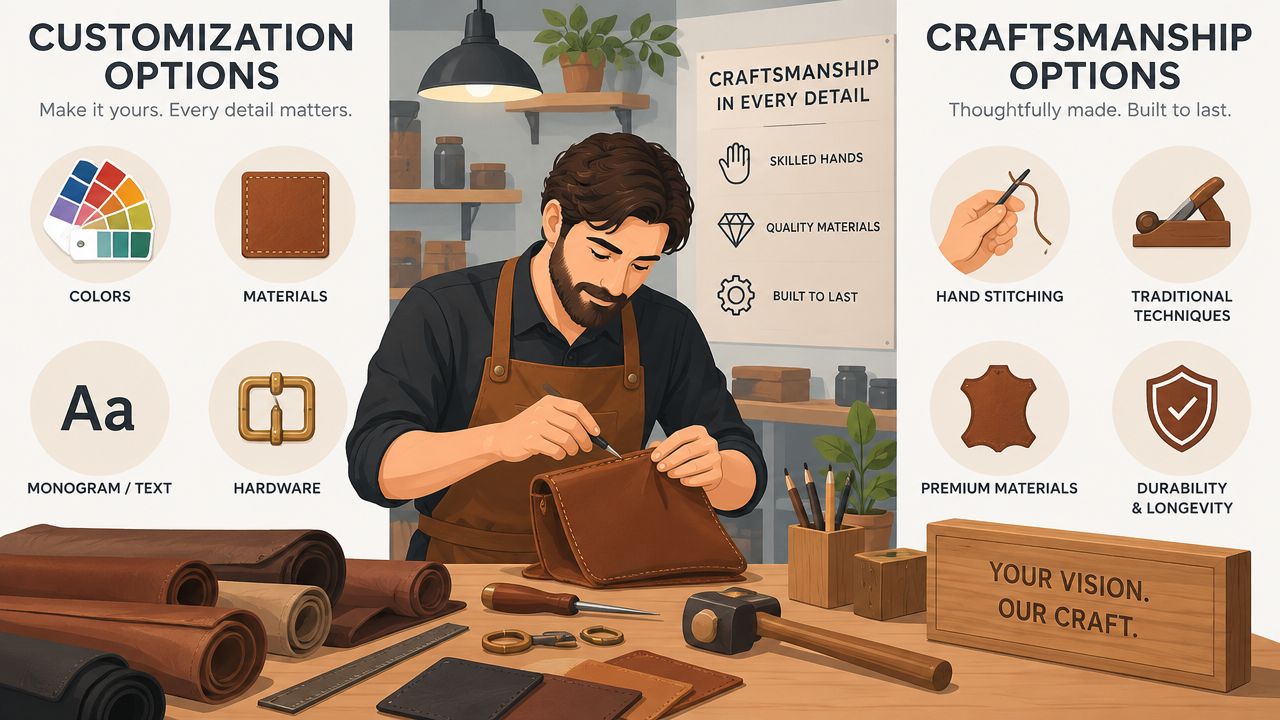
In-stock is just the beginning for buyers seeking a sofa that fits a particular room. A made-to-order program can change the scale, configuration, upholstery, leg finish, cushion feel, or arm profile so the final piece works with the household rather than forcing the room to adapt.
A sectional may need a left-arm chaise instead of a right-arm chaise. A narrow living room may need a shallower depth. A client may want a warm cognac leather, contrasting stitching, or a specific wood finish that connects the sofa with existing case goods. These choices turn a standard purchase into a more bespoke interior design decision.
Customization should support daily life
The strongest customization decisions solve practical problems:
- Room proportions: Dimensions should preserve walking paths and leave the room visually balanced.
- Seating posture: Depth and cushion firmness should match how the household reads, entertains, rests, or watches television.
- Material coordination: Leather color and texture should work with flooring, lighting, rugs, and wood tones.
- Configuration flexibility: Modular or sectional choices should support both conversation and relaxed lounging.
- Future service: Buyers should ask which components can be maintained, replaced, or adjusted later.
Tyner Furniture offers custom-upholstered sofas with choices that can include dimensions, cushions, legs, mechanisms, and coordinated materials, as described through its custom upholstered sofa options. The value of this approach lies in fit and function, not in adding choices for their own sake.
Craftsmanship extends beyond leather
A leather sofa can become part of a larger heirloom plan. Amish hand-crafted solid wood furniture uses traditional techniques such as dovetail and mortise-and-tenon joinery, with hardwoods including cherry, oak, and maple. In dining rooms and bedrooms, that material integrity creates a clear contrast with mass-produced pieces built around thinner surfaces or less repairable construction.
Customization also reaches beyond leather seating. Canadel offers thousands of dining combinations, including choices for finishes, leg styles, table edges, and distress levels. Stressless seating brings an ergonomic focus through Small, Medium, and Large sizing, helping households select a recliner that supports individual proportions.
The result is a coordinated home rather than a collection of isolated purchases. A made-to-order leather sofa, a solid wood dining table, and ergonomic seating can share finishes, scale, and comfort priorities. That is how craftsmanship becomes a functional legacy instead of a decorative label.
Cost Per Year and Long-Term Value
A $4,000 sofa serving 30 years costs about $133 per year. A $1,500 sofa replaced every 8 years costs about $188 per year, before delivery and disposal. The lower purchase price may look attractive at checkout, yet the longer-serving sofa can place less strain on a household budget over time.
That calculation is only a starting point. A sofa's value depends on the complete system: frame, suspension, cushions, and leather working together. Strong leather cannot compensate for a weak frame, just as a durable frame cannot make an uncomfortable cushion system a good long-term choice. Buyers should also consider whether key components can be repaired, replaced, or adjusted as needs change.
A simple value calculation
Use this formula to compare sofas with different purchase prices and expected service lives:
Purchase price ÷ expected years of service = approximate annual cost
Then examine what the annual cost provides. A well-specified sofa may deliver better support, more suitable dimensions, and materials that hold up under the household's actual use. Delivery, disposal, maintenance, and the cost of replacing an ill-fitting piece belong in the comparison as well.
A published furniture guide discusses how frame and cushion construction affect the long-term value of leather seating in its discussion of long-term leather sofa value. That component-level view helps prevent a common mistake: judging quality by the leather surface alone.
Making premium quality manageable
Financing can spread a purchase across manageable payments without changing the underlying quality decision. Furniture financing may include promotional offers such as 60 months with no interest and equal monthly payments, or other limited periods such as 36 months or 18 months on qualifying purchases, subject to credit approval, as outlined in furniture financing information. Terms vary, so read the offer carefully and confirm eligibility before committing.
Tyner Furniture's Special Financing and Low Price Promise are designed to help households plan for higher-quality furniture while keeping the focus on overall value. The same approach can guide purchases throughout the home, including Amish solid wood bedroom furniture, dining pieces, home office furnishings, entertainment areas, and outdoor spaces.
Long-term value comes from coordinated decisions. Custom dimensions can suit the room, the support system can match how the household sits, and the leather can fit the expected level of use. Amish craftsmanship can strengthen that plan when repairable construction and lasting materials matter.
The best quality leather sofas justify their investment when the entire build supports extended use. A premium hide on a weak frame is poor value. A sofa with durable materials, comfortable support, and a suitable configuration can serve an Ann Arbor household effectively for years.
Maintaining Your Leather Sofa for Decades
Even the best leather needs thoughtful care. Dust, body oils, spills, direct sunlight, and seasonal changes can gradually affect the surface, so simple routines help preserve the sofa's softness and appearance.
Start with gentle surface care. Dust the leather with a soft, dry cloth so particles don't settle into the grain. Follow the manufacturer's guidance for conditioning, because different finishes can require different products and application schedules. A household should never assume that a product suitable for one leather finish is safe for another.
A practical care routine
- Dust regularly: Use a soft, dry cloth to remove surface particles without scratching the finish.
- Treat spills promptly: Blot liquid gently instead of rubbing it into the leather.
- Dry naturally: Keep the affected area away from direct heat while it dries.
- Limit sunlight: Position the sofa away from prolonged direct exposure that can fade or dry the surface.
- Condition appropriately: Use a compatible leather conditioner according to the upholstery maker's instructions.
- Schedule professional care: Periodic professional cleaning can address embedded soil and help preserve the material.
Southeast Michigan homes experience changing seasonal conditions, and those shifts can influence how leather feels and behaves. A sofa placed near a heat source, bright window, or frequently used doorway may need more attention than one in a protected room.
Preserve the whole sofa
Maintenance also includes the support system. Cushions should be rotated or refluffed when the manufacturer permits, and households should watch for early signs of sagging rather than waiting for discomfort to become severe. Readers dealing with a sagging seat can review guidance on restore sofa support for leather before deciding whether a professional assessment is appropriate.
Natural variation is part of the appeal of full-grain leather. A developing patina can record years of family life while keeping the sofa visually rich. That aging process looks intentional when the leather receives suitable care and the underlying frame, suspension, and cushions remain sound.
Tyner Furniture's South State Street showroom in Ann Arbor gives local shoppers a place to ask maintenance questions and compare leather finishes in person. The store has served the community since 1957, and its selection reaches from the Home Office to Outdoor Spaces, allowing households to plan durable furniture throughout the home rather than treating the living room in isolation.
Tyner Furniture offers leather sofas, made-to-order upholstery, Amish hand-crafted solid wood furniture, Canadel dining customization, and ergonomic Stressless seating for homes across Ann Arbor and Southeast Michigan. Visit Tyner Furniture for a hands-on sit test at the South State St. showroom, or browse the online Quick Specs before requesting a special order.