Solid Wood Furniture Made in USA Heirloom Guide


A dining table can look handsome online, yet feel unexpectedly light when it arrives. A drawer may appear wood-grained in a photograph, but its edge can reveal a different story when a hand runs across it. For homeowners in Ann Arbor and Southeast Michigan, choosing solid wood furniture made in USA means looking beyond the label and learning how material, joinery, moisture control, finish chemistry, and repairability work together.
Tyner Furniture has served the community since 1957, giving local shoppers a place to compare construction in person rather than relying on a product description alone. The in-stock collection is just the beginning. A made-to-order piece can be shaped around a room, a preferred finish, an ergonomic need, or an interior design plan, whether the project reaches from the dining room to the Home Office or Outdoor Spaces.
What Solid Wood Furniture Made in USA Really Means
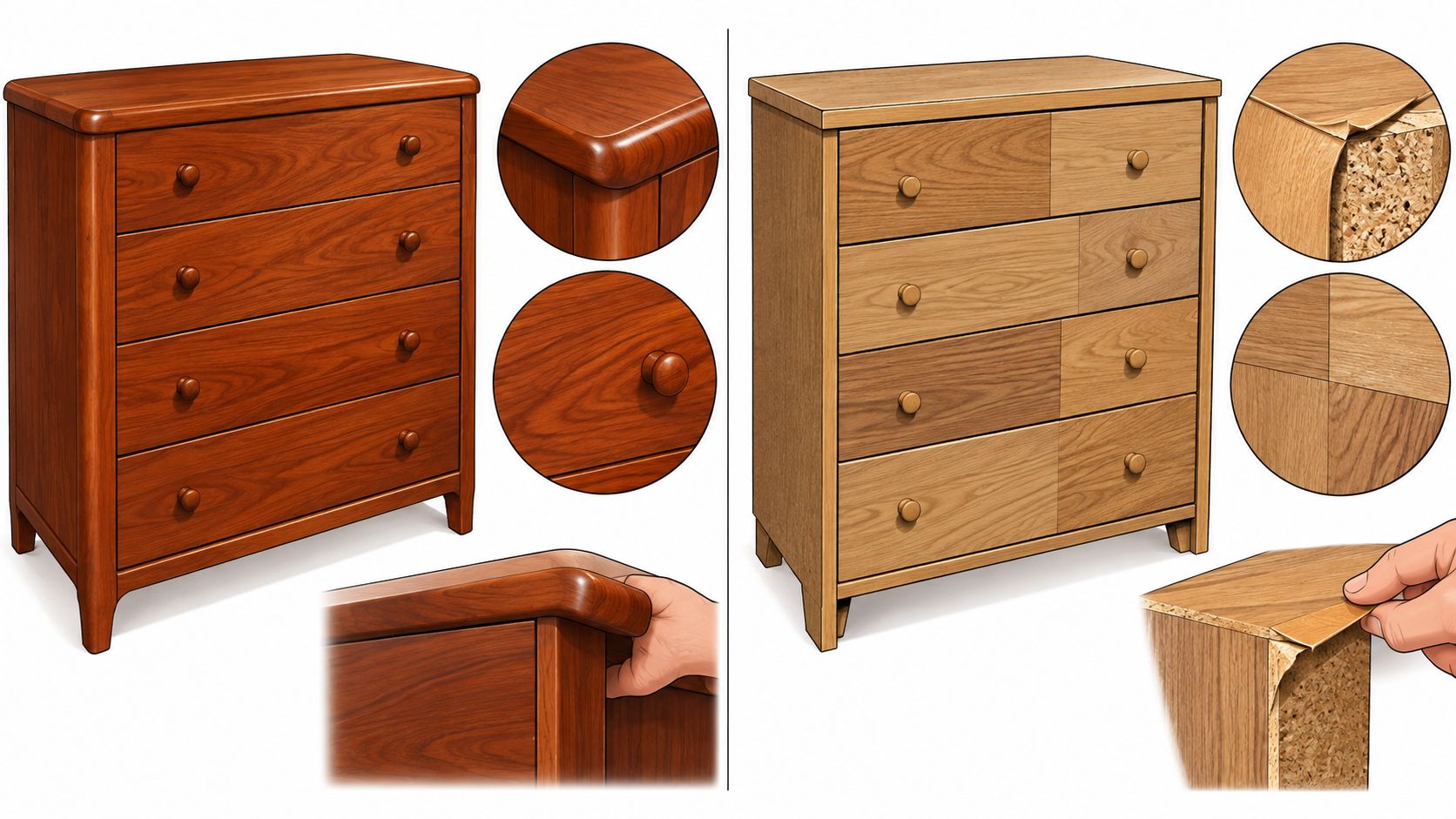
A shopper standing in a showroom may compare two dressers that look similar from across the room. One has the reassuring weight of solid cherry wood and a grain that continues across its face. The other has a smooth printed surface, a hollow-sounding side, and an edge band covering the material beneath. Both may be described with warm language, but they aren't built the same way.
Solid wood means the primary wood components are cut from lumber rather than formed from fiber, chips, or a composite core. Veneer is different. It uses a thin layer of real wood over another substrate, while particleboard and similar engineered cores rely on compressed wood particles or fibers. Veneer can be attractive and useful, but shoppers shouldn't assume that a real wood surface means the entire piece is solid hardwood.
Country of origin and material composition are separate questions. A piece may use solid wood while including imported hardware, or it may be assembled domestically from a mixture of domestic and imported components. The Federal Trade Commission standard for an unqualified U.S.-origin claim is “all or virtually all” made in the United States, and furniture may still contain imported hardware, veneers, or mixed subassemblies when the final product carries an American-made description. The distinction is explained in this guide to furniture made in the USA.
Questions that clarify the label
A trustworthy conversation should identify:
- The carcass: Where were the frame, case, drawers, and structural panels made?
- The material: Is the piece solid hardwood throughout, solid in selected areas, veneered, or built with a composite core?
- The hardware: Were hinges, slides, knobs, and fasteners sourced domestically or imported?
- The finishing: Where was sanding, staining, spraying, and curing completed?
- The documentation: Can the maker explain the claim in plain language rather than relying on a patriotic phrase?
Practical rule: “Made in USA” describes origin. “Solid wood” describes construction. A careful buyer verifies both.
That distinction helps replace the fast-furniture mindset with an heirloom mindset. A well-built piece should make sense not only on delivery day, but after years of seasonal use, cleaning, moving, repair, and possible refinishing. The American-made solid wood furniture collection gives shoppers a starting point, but the most useful decision comes from examining how each piece is built.
How Solid Wood Compares to Veneered and Mass Market Furniture
Solid wood, veneer, and composite construction each have a place in furniture design, but their behavior differs under daily use. A solid cherry dining table carries a dense, grounded feel when a hand rests on its edge. A veneered table can also have a beautiful surface, yet the substrate beneath it determines how much sanding, moisture exposure, and repair it can tolerate.
Start with the edges. Solid lumber shows a consistent material through the top, side, and edge. Veneer usually requires an edge treatment, and composite panels often reveal a layered or fibrous core beneath that treatment. A close look at a drawer front, tabletop edge, and underside can tell more than a broad product label.
What hands and eyes can verify
A showroom inspection should move through four simple checks:
- Lift the impression, not necessarily the whole piece. Press gently on a side panel and open a drawer. Solid construction generally feels more substantial, while a thin panel or hollow section may flex.
- Follow the grain. On a solid component, the grain and end grain make physical sense as the piece changes direction. A printed surface can look convincing until the edge or underside interrupts the pattern.
- Inspect the drawer joinery. A smooth hand over dovetailed corners reveals interlocking wood rather than a simple fastener connection. The joint matters because drawers receive repeated pulling force.
- Ask about repair. Solid hardwood can often be sanded, refinished, or repaired when the design and finish allow it. Thin veneer has less material available for refinishing, and damaged composite cores may be difficult to restore cleanly.
The solid wood versus engineered wood guide offers a useful vocabulary for discussing these differences without treating every engineered material as automatically poor. The better question is whether the construction matches the intended service life.
Why joinery predicts the future
Mass-produced furniture often prioritizes repeatable assembly and efficient shipping. Hand-crafted Amish furniture places more attention on material integrity, fitted joints, sanding, and the way a piece responds to years of opening, closing, leaning, and moving. A mortise-and-tenon connection, dovetail drawer, or properly designed floating panel can distribute stress more gracefully than a rigid connection forced to resist every seasonal change.
Solid wood also has a visual advantage that becomes more noticeable with age. Small marks can become part of the character, and a finish may be refreshed rather than discarded. That doesn't make every solid wood piece automatically superior. Poorly dried lumber, weak joinery, or an unsuitable finish can undermine good material. Construction remains the standard that separates a durable heirloom from a decorative imitation.
American Hardwoods and Why Material Control Matters More Than Species Alone
Cherry, oak, and maple are familiar American hardwoods, but species alone doesn't guarantee stable furniture. The same species can perform differently depending on how the lumber was graded, dried, stored, machined, and assembled. A beautiful board can't compensate for moisture that isn't suited to the home where the finished piece will live.
The North American hardwood framework establishes grading rules and product tolerances for traded American hardwoods. ANSI/HPVA HP-1-2024 also addresses moisture content, tolerances, sanding, grade marking, and formaldehyde emissions for hardwood plywood and decorative plywood, as summarized by the Decorative Hardwoods Association standard reference.
Moisture is part of the design
Wood continually exchanges moisture with surrounding air. In Southeast Michigan, heated winters can make indoor air dry, while humid summers can push moisture back into the material. Movement across the grain is inevitable, so the goal isn't to stop wood from moving. The goal is to control the movement and give it somewhere to go.
Kiln-dried hardwood held near its in-service equilibrium moisture content reduces dimensional movement after installation. That can lower joint stress, finish checking, and seasonal warp in solid wood casegoods and dining pieces. Properly designed joinery then allows small changes without forcing the entire structure to fight the material.
| Material factor | What it affects | What buyers should ask |
|---|---|---|
| Grade | Clear surfaces, usable yield, and visual consistency | How was the lumber graded? |
| Moisture control | Seasonal movement and joint stress | Was the lumber kiln-dried and stored appropriately? |
| Joinery | Load distribution and long-term stability | Can the joints accommodate movement? |
| Finish preparation | Surface feel, checking, and appearance | How was the piece sanded and cured? |
Species is a design decision, not a durability shortcut
Cherry brings a warm, refined character that deepens with time. Oak offers a more pronounced grain and a familiar, sturdy presence. Maple can provide a cleaner, more restrained appearance. Those differences matter to an interior design plan, but the durable result depends on the full material system.
Tyner's North American hardwood furniture information helps shoppers begin with species, then move toward the more important questions about grading, drying, and construction. The most dependable solid wood furniture is usually made from properly graded, well-dried lumber and assembled with joints that respect wood movement. That principle applies to a dining table, a bedroom chest, a Home Office desk, or a built-to-order cabinet.
Inside Heirloom Craftsmanship Joinery Finishes and Customization
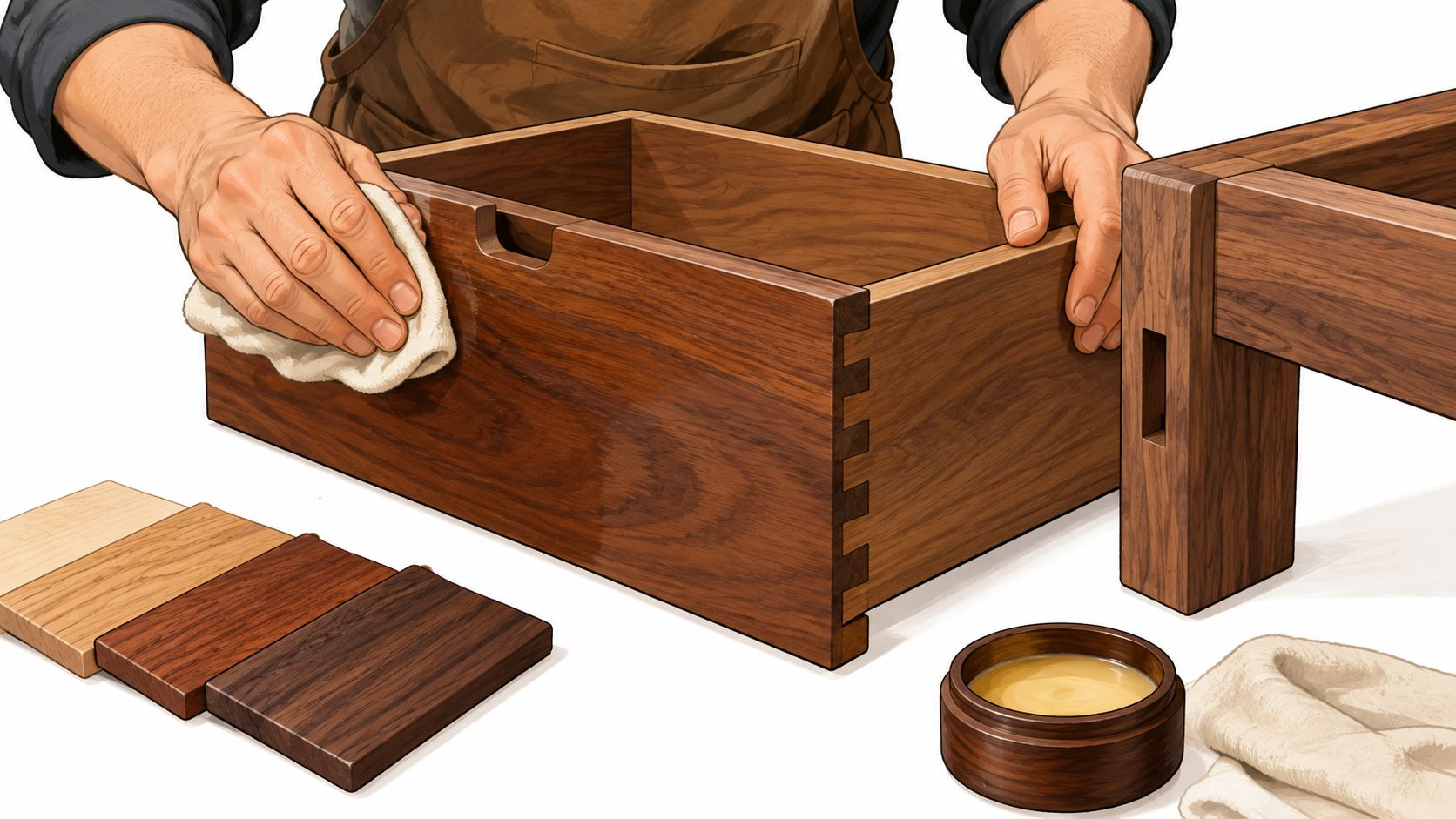
A finished table can look simple because the best construction hides inside it. Open a drawer and the logic becomes visible. Dovetail pins interlock at the corners, mortise-and-tenon joints connect structural members, and carefully prepared surfaces allow the finish to sit evenly rather than mask rough work.
Joinery carries the daily load
Dovetailing is particularly useful in drawers because the interlocking shape resists the pulling force created by repeated use. Mortise-and-tenon construction joins one member into another, giving the frame a strong mechanical connection that can be reinforced with suitable adhesives or pins. A mortise-and-tenon construction guide can help buyers recognize why this method appears so often in heirloom furniture.
Hardware deserves attention, too. Hinges affect alignment, door movement, and the way a cabinet ages. A clear, illustrated hinge design guide from Henson's Designs provides useful background for shoppers who want to understand how a small component can influence a larger piece.
Finish chemistry changes more than appearance
Finishing is one of the major environmental and performance variables in wood furniture manufacturing. EPA material describes conventional wood furniture finishing as a substantial source of organic-solvent emissions, with older operations emitting roughly 630 to 680 Mg of organic solvents per day across the sector, and most of those emissions coming from spray booths and flashoff areas. A typical dining-room table finishing process using conventional nitrocellulose-style coatings can emit about 9 kg of VOCs and 4.5 kg of HAPs, according to the EPA wood furniture finishing source.
Lower-VOC, well-controlled systems can reduce emissions and improve consistency, but buyers should ask specific questions rather than assume a finish is responsible because it feels natural. Useful questions include:
- Application: Is the coating sprayed, wiped, or applied through another controlled method?
- Cure: How does the manufacturer control drying and curing?
- Indoor environment: Are relevant formaldehyde and emission requirements addressed?
- Care: Can the surface be touched up or professionally refinished later?
Customization makes craftsmanship useful
In-stock is just the beginning. A bespoke, made-to-order piece can reflect the room's proportions, the household's habits, and the desired visual character. Canadel dining furniture allows shoppers to consider combinations involving leg styles, table edges, finishes, and distress levels, while Amish hand-crafted furniture can be selected around wood species, stain, size, and configuration.
Stressless adds an ergonomic dimension to the same philosophy. Stressless recliners are offered in Small, Medium, and Large sizes, with fit commonly tied to body height and leg length rather than weight, according to published sizing guidance. One official Consul listing gives the Small model as 29.92 inches wide, 27.95 inches deep, and 39.37 inches high, with a 15.75-inch seat height. Those dimensions show why a sit test matters more than choosing a recliner by appearance alone.
The True Value Behind American Craftsmanship and Long Term Investment
A higher purchase price becomes easier to evaluate when the question changes from “What does this cost today?” to “How long can this serve the household?” Solid wood furniture can last 20 to 50 or more years with basic care, while high-quality solid hardwood pieces may last 100 years or longer, according to this solid wood furniture longevity reference. Those are broad lifespan ranges, not promises for every product, but they provide a useful framework for cost-per-year thinking.
Domestic supply also helps explain why well-built American hardwood furniture deserves careful evaluation. In 2023, the U.S. wood industry produced 13.084 million m3 of sawn hardwood, down 22.4% from 2022. U.S. furniture industries used 1.08 million m3 of sawn hardwood in 2020, compared with 1.00 million m3 in 2013 and 6.14 million m3 in 1999, representing a 468.9% decline from the 1999 peak, according to the UNECE U.S. forest products market analysis.
Domestic Hardwood Furniture Supply Context
| Indicator | Data Point | Implication for Buyers |
|---|---|---|
| U.S. sawn hardwood production in 2023 | 13.084 million m3 | Domestic lumber remains substantial, but supply is not unlimited. |
| Change from 2022 | Down 22.4% | Material availability and careful sourcing matter. |
| Furniture hardwood use in 2020 | 1.08 million m3 | Furniture remains a meaningful hardwood user. |
| Furniture hardwood use in 1999 | 6.14 million m3 | The domestic hardwood furniture supply chain is much smaller than its earlier peak. |
A federal Forest Service analysis found that furniture manufacturing represented 36% of total wood-products manufacturing use in 2019, up from 31% in 2010, while solid wood products accounted for 12% of all wood-product usage in 2019. The same U.S. Forest Service analysis noted that furniture industries historically ranked among the largest consumers of grade hardwood lumber.
Longevity needs support after delivery
Sustainability isn't just a species label. A durable piece earns value when it can be repaired, refinished, reupholstered, and maintained rather than replaced. Buyers should ask whether the maker documents sourcing, controls finish emissions, and offers service after installation.
Tyner Furniture's local legacy since 1957 includes custom-order planning, Special Financing subject to credit approval, and a Low Price Promise. Those options can lower the barrier to an heirloom purchase without changing the standard used to judge material integrity. The right investment is still the piece that fits the room, supports the body, and can remain useful as the household changes.
How to Choose Your Perfect Piece With Confidence in Ann Arbor
The strongest purchase decision begins before a shopper settles on a color. A piece should fit the room, the body, the maintenance routine, and the expected years of use. Ann Arbor shoppers can make that process more reliable by bringing room measurements, photographs, and a short list of daily needs to the South State St. showroom.
A practical showroom checklist
- Start with the task. A dining table needs comfortable knee clearance and stable construction. A Home Office desk needs an appropriate working height and durable surface. Outdoor Spaces require materials and finishes suited to exposure.
- Compare the wood in person. Look at grain continuity, touch the sanded edge, and notice the weight and balance of a solid component.
- Ask about movement. The salesperson should be able to explain moisture control, panel construction, and how the joinery handles seasonal change.
- Test the finish. The surface should feel even and intentional. Ask about application, cure, care, and future touch-up options.
- Test the seating. The buttery feel of top-grain leather tells only part of the story. Seat depth, lumbar support, arm position, and ease of reclining determine ergonomic comfort.
- Review customization. Confirm available wood species, finishes, fabrics, dimensions, leg styles, table edges, and configurations.
- Clarify support. Ask about delivery, installation, repair, reupholstery, and the process for special orders.

Showroom habit: A five-minute sit test can reveal more about a recliner's fit than several pages of specifications.
Use the numbers only where they help
Stressless sizing gives a useful example. Small, Medium, and Large are fit-based categories, and published dimensions can help with clearance planning, but comfort still depends on leg length, posture, and how the chair supports movement. For special orders, online Quick Specs can help shoppers review dimensions before visiting or before requesting design guidance.
Cost-per-year thinking belongs in this conversation, too. A made-to-order piece may require more planning, but its value can improve when the household keeps it in service, repairs it, and adapts it through a future finish or upholstery update. Special Financing and a Low Price Promise can make the planning easier while keeping the focus on durability rather than a temporary purchase.
Bringing Your Heirloom Home and Experiencing Tyner Today
A confident furniture purchase doesn't depend on a patriotic label alone. It depends on answers about the wood, the origin, the joinery, the moisture content, the finish, the fit, and the support available after delivery. Those details turn a broad promise into a construction decision.
A useful final review includes:
- Material clarity: The buyer knows which components are solid wood, veneered, or composite.
- Origin clarity: The maker explains where the carcass, hardware, assembly, and finishing occurred.
- Construction clarity: Dovetails, mortise-and-tenon joints, floating panels, and other methods make sense for the piece's use.
- Finish clarity: The coating system, cure process, care requirements, and relevant emissions questions have been addressed.
- Fit clarity: The dimensions suit the room, and seating has passed a real sit test.
- Future clarity: Repair, refinishing, reupholstery, delivery, and special-order support are understood.
Tyner Furniture's selection reaches beyond a single dining table or bedroom collection. The showroom serves projects across living rooms, Home Offices, bedrooms, dining spaces, entertainment areas, mattresses and sleep systems, ergonomic seating, and Outdoor Spaces. Canadel customization supports bespoke dining decisions, Stressless provides size-based comfort options, and Amish hand-crafted solid wood pieces bring material integrity and traditional joinery into a forever home.
Delivery also belongs in the value conversation. A carefully built piece deserves careful handling, placement, and setup, which is why shoppers should review the available white-glove delivery service before ordering a substantial or made-to-order item. The process should feel guided rather than rushed, with clear specifications and practical answers at each stage.
Since 1957, the local legacy has been rooted in helping Southeast Michigan households choose furniture for real life. The most rewarding result is not just a room that looks finished. It's a room filled with heirloom pieces that feel right in the hand, support daily routines, and remain worth repairing years from now.
Tyner Furniture offers Amish hand-crafted solid wood furniture, made-to-order Canadel dining, and ergonomic Stressless seating for homes throughout Ann Arbor and Southeast Michigan. Visit Tyner Furniture at the South State St. showroom for a personal sit test, or browse online Quick Specs when planning a special order.